
FTC opens a fight over personalized pricing just as consumer advocates brace for abuse
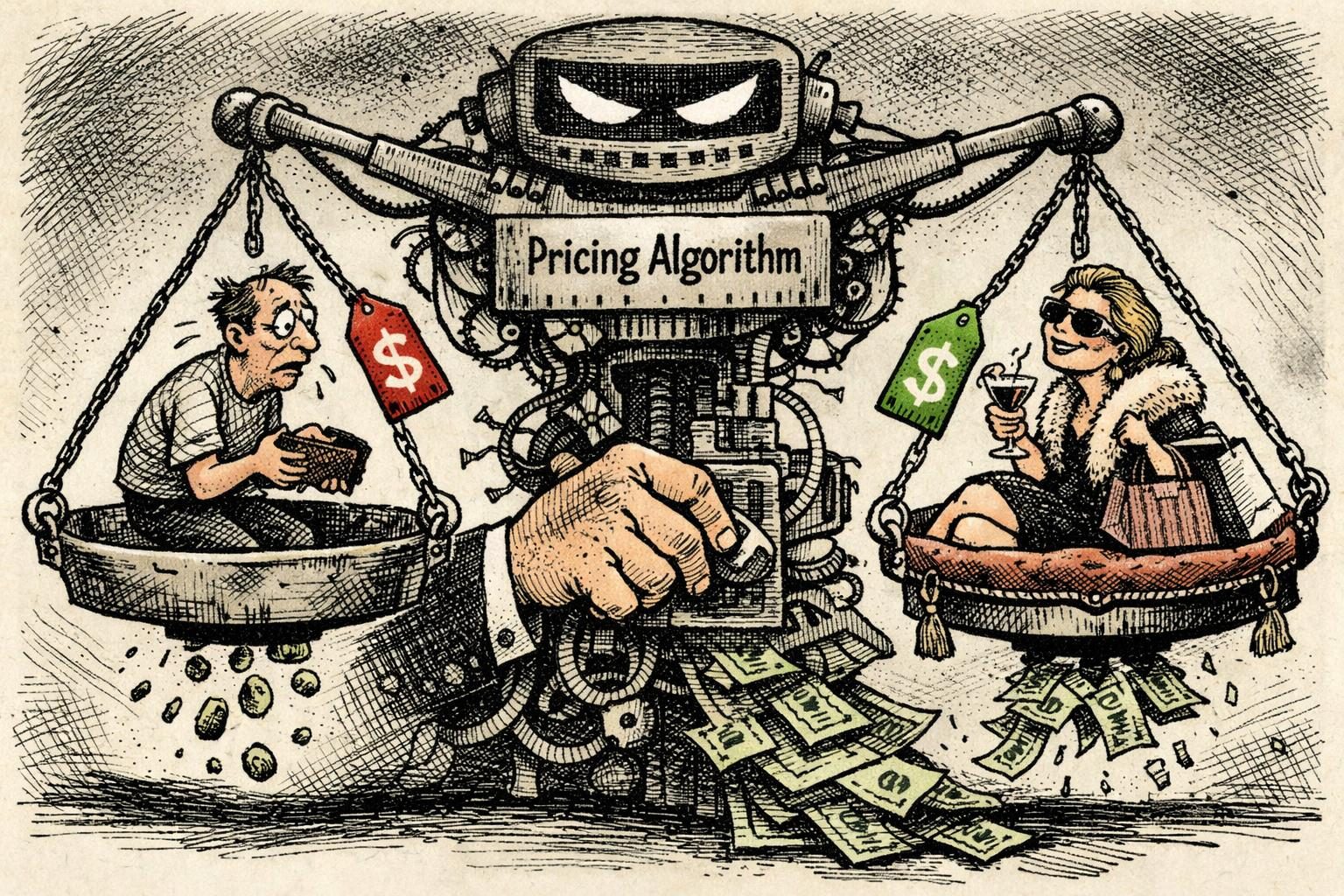
The Federal Trade Commission said Tuesday that it is seeking public comment on a proposed enforcement policy statement covering personalized pricing, putting a sharp regulatory spotlight back on the practice of using consumer data to charge different people different prices for the same product or service. On its face, the idea can sound almost harmless, even efficient: companies have long adjusted prices based on time, location, inventory, demand, and customer behavior. But personalized pricing goes further than ordinary market fluctuation, because it relies on what a company can infer about a specific person’s willingness or ability to pay. That makes the issue less about simple competition and more about asymmetry, opacity, and leverage. If a business can quietly decide that one shopper gets a higher price because an algorithm thinks they can absorb it, the result is not a fair market so much as a digitally assisted shakedown. The commission’s move signals that it is at least willing to treat that possibility as a real consumer-protection problem rather than a theoretical worry.
The timing matters because personalized pricing sits at the intersection of two trends that have been building for years: the expansion of data brokerage and the normalization of algorithmic decision-making in everyday commerce. Consumers are already used to recommendation engines, dynamic fares, loyalty offers, and flash sales that seem to appear and disappear without warning. What makes personalized pricing more troubling is that it can be nearly invisible to the person paying the bill. A shopper may never know whether a quoted price reflects a broad market condition, a targeted marketing tactic, or a system trained on their browsing history, device data, location, purchase patterns, or some other signal they never knowingly handed over. That lack of transparency makes meaningful consent close to impossible, and it also makes it hard to challenge discrimination because the evidence is hidden inside the vendor’s model. Advocates have long argued that when pricing is individualized in secret, the ordinary protections of competition do not work the way they are supposed to. The consumer does not see the game, cannot judge the rules, and often cannot prove the fix is in.
The FTC’s decision to seek comment suggests the agency is still trying to define where legitimate pricing strategy ends and abusive discrimination begins. That boundary is not always easy to draw, especially in online markets where prices can change quickly and where businesses routinely use data to segment customers for promotions. Yet the commission’s action implies it believes the problem is not merely that prices vary, but that the variation can be tied to personal attributes and hidden predictive models in ways that may exploit information gaps. In practical terms, the agency is asking whether it should treat certain forms of personalized pricing as a consumer-protection issue that deserves clearer enforcement standards. That question is particularly significant because the market has moved faster than the law. Many consumers assume price is still a posted number, or at least a number negotiated in the open. Increasingly, however, the price may be generated in the background, with the customer seeing only the final figure and no clue how it was assembled. Once that happens, a transaction stops looking like a market exchange and starts looking like individualized extraction.
There is also a broader political fight underneath the policy statement, one that reaches far beyond retail discounts or airfare. Critics of surveillance-driven business models have argued for years that a data-hungry economy naturally invites forms of exploitation that are hard to detect and even harder to deter. Personalized pricing is one of the cleanest examples of that concern because it turns personal information into a direct pricing input. Supporters of data-driven commerce will likely respond that tailored prices can reflect demand, improve efficiency, or help businesses offer discounts to customers who need them. Those arguments may not be frivolous, but they do not answer the core fairness problem: if a company can figure out how much a person is likely to tolerate, then the system may stop rewarding shopping skill and start penalizing vulnerability. The FTC’s review could therefore become a test of how seriously regulators want to confront algorithmic price discrimination before it becomes further embedded in everyday transactions. For now, the agency has only opened the door by asking for comments. Whether it follows that with enforcement, guidance, or a narrow policy statement with little practical bite remains to be seen. But the fact that the commission is even taking the issue back up is a sign that personalized pricing is no longer a niche concern buried in the margins of tech policy. It is now part of a larger argument about what consumers are owed when the price tag itself becomes a moving target.
Comments
Threaded replies, voting, and reports are live. New users still go through screening on their first approved comments.
Log in to comment
No comments yet. Be the first reasonably on-topic person here.