
The House voted to pull U.S. forces out of Iran hostilities
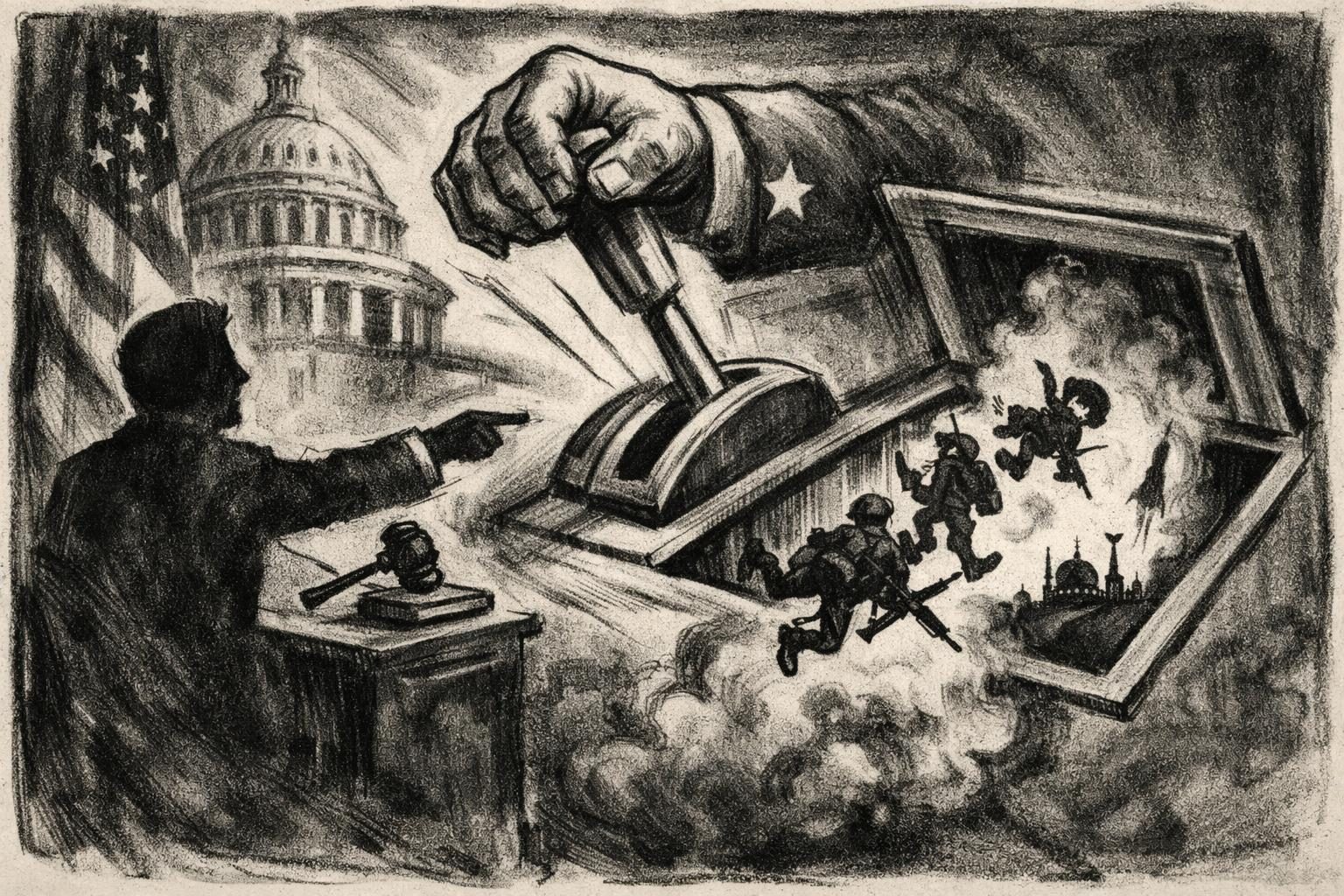
The House moved on Tuesday to force a reckoning over U.S. military involvement with Iran, approving a war-powers resolution that directs the president, under section 5(c) of the War Powers Resolution, to remove U.S. Armed Forces from hostilities with Iran. The vote was visible in the House Republican cloakroom’s published tally for August 26, which shows H. Con. Res. 89 clearing the chamber. That is not the kind of procedural item lawmakers usually bury in a stack of routine business. It is a direct legislative assertion that Congress, not the executive branch alone, should have the final say over whether American forces are committed to hostilities that could widen into something far harder to unwind. Even in a week when the House was otherwise operating in pro forma status, the recorded result carried the unmistakable message that at least some lawmakers are prepared to put a constitutional marker down where military authority begins and ends.
The resolution’s passage matters less as a ceremonial rebuke than as a sign that the old war-powers fight is still alive and capable of producing an actual floor vote. Congress has spent decades arguing about whether presidents may keep Americans in armed conflict without coming back for new authorization, and that argument tends to flare when tensions spike overseas. This time the target is Iran, which immediately raises the stakes because the category of “hostilities” can be broad enough to cover everything from direct strikes to escalatory exchanges that fall short of a formally declared war. Supporters of the measure are likely to say that the administration cannot be allowed to slide into military engagement by accretion, one response or one counterresponse at a time, while avoiding a clean vote on the record. Opponents, by contrast, will almost certainly argue that a war-powers cutoff can constrain deterrence and leave commanders navigating a crisis with one hand tied behind their back. Both readings are familiar, but the fact that the House acted anyway suggests that lawmakers are not content to leave the decision entirely in executive hands. In other words, this was not merely an expression of concern. It was Congress trying to use the tools it still has.
That point becomes sharper because the same vote sheet also records House passage of H.R. 8884, the Removing Barriers to Work for Disabled Americans Act, a far less combustible item that would normally dominate a day’s legislative headlines. Instead, the Iran measure is what turns the page into a constitutional fight. The juxtaposition is useful because it shows how quickly routine legislative traffic can coexist with a serious challenge to presidential war-making authority. Even if the House was in a limited or pro forma posture for much of the day, the vote itself was concrete, counted, and official. That is why the argument over war powers cannot be dismissed as pageantry. A chamber does not need to be in full theatrical session for a recorded vote to matter. It is still part of the legal and political ledger, and once lawmakers put their names to a measure like this, the administration has to decide whether to ignore the warning, contest it, or try to narrow the issue before it grows. None of those options is especially comfortable, which is part of the point.
The broader politics are also predictable, though no less consequential for being predictable. Lawmakers inclined toward restraint will frame the vote as a necessary correction to an executive branch that too often treats military action as a flexible instrument rather than an exceptional one. They will say Congress is reasserting a constitutional role that has been weakened by habit, crisis, and the long drift toward open-ended overseas force. Critics will answer that the resolution sends the wrong signal at the wrong time, especially if the White House believes it needs room to respond to attacks, threats, or shifting conditions involving Iran. That clash is the old war-powers argument in fresh clothes, but it is not abstract. The outcome helps define how much latitude any president has when the line between deterrence and conflict blurs. For now, the House has at least shown there is appetite for restraint, or at minimum for forcing a more explicit public debate. Whether the Senate will match that posture is another question entirely, and an important one, because war-powers resolutions can fade quickly if the upper chamber declines to echo the House. Even so, this vote leaves a mark. It says members are watching, they are willing to record a position, and they are not entirely prepared to let military engagement proceed as though Congress were just a spectator section in the gallery.
Comments
Threaded replies, voting, and reports are live. New users still go through screening on their first approved comments.
Log in to comment
No comments yet. Be the first reasonably on-topic person here.