
House panel opens hearing on cutting red tape for workers and job creators
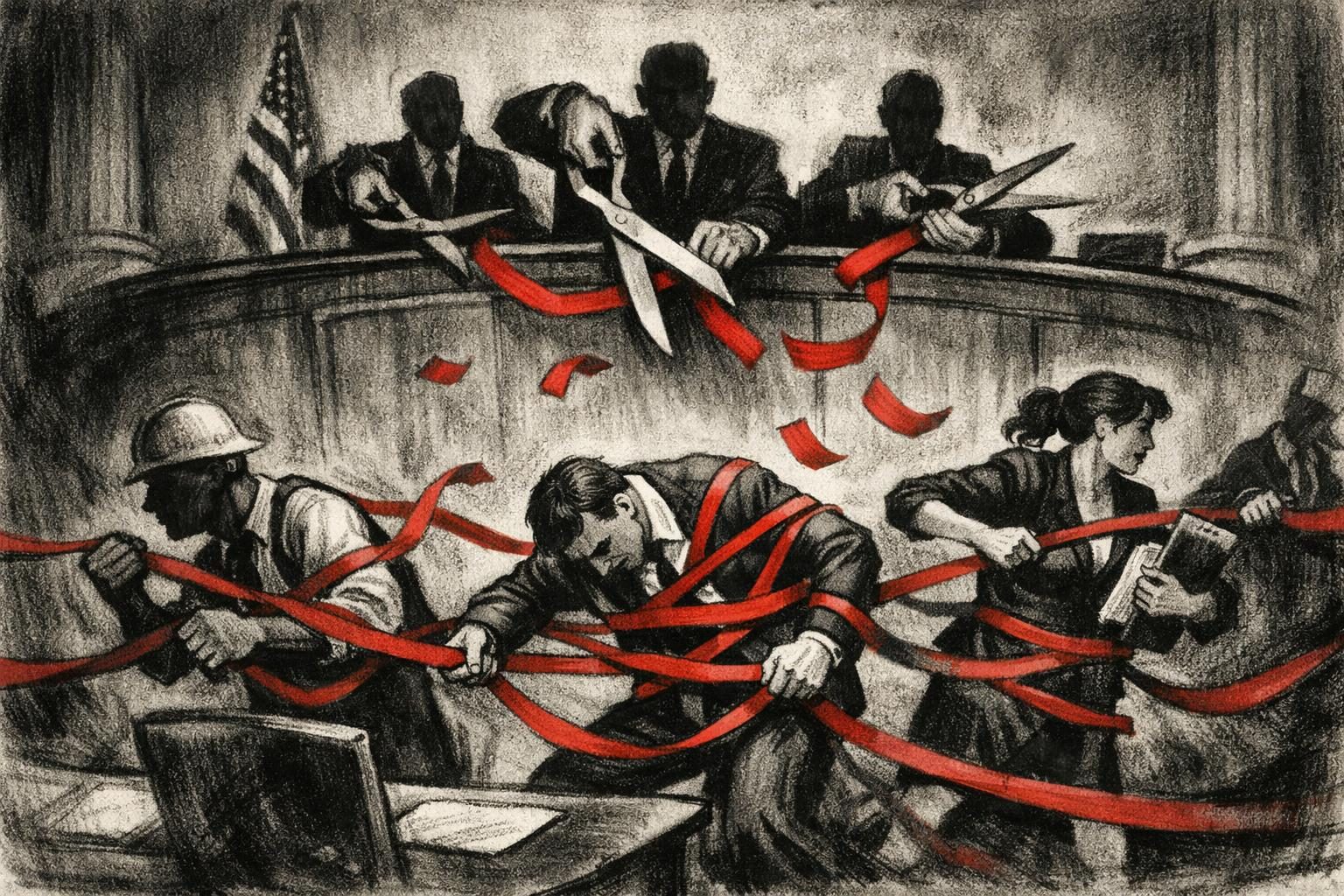
A House subcommittee on workforce issues convened an August 26 hearing built around a familiar phrase that carries a lot of political weight: “cutting red tape for American workers and job creators.” On paper, that sounds like an anodyne promise to simplify government processes and make work life smoother for everyone involved. In practice, it is also a phrase that usually signals a deregulatory push, especially when it comes from Republicans on a committee that oversees labor standards, workplace enforcement, and the rules that shape day-to-day protections for employees. The hearing is a real and current development, and it matters because these kinds of sessions often reveal where lawmakers are trying to steer the labor debate before the next round of legislative or oversight fights. Even when no immediate vote follows, the hearings themselves help establish the political vocabulary that later gets used to justify policy changes. In that sense, this was less a random Hill event than a useful snapshot of where labor messaging is heading right now.
The timing also matters. Labor policy is not always the loudest subject in Washington, but it is constantly moving underneath the larger political noise, and hearings like this are part of how that movement happens. Members of Congress use them to define the problem, frame the stakes, and signal to agencies, advocates, employers, and workers what kind of solutions they are willing to entertain. When a subcommittee chooses to center “red tape,” it is not just talking about paperwork, forms, or administrative friction. It is also making a broader claim that regulation is the obstacle and deregulation is the answer. That framing can sound commonsense to some audiences, especially employers who complain about compliance burdens, but it often lands very differently for workers who rely on those rules to protect wages, safety, scheduling, and basic accountability. The hearing does not by itself change any law, and it does not prove that any rollback is imminent. Still, it is a concrete indicator that labor standards remain in the crosshairs of a policy environment that increasingly treats enforcement as an inconvenience rather than a necessity.
That is why advocates on the other side of these fights tend to hear the phrase “cutting red tape” and translate it into something sharper: reducing oversight, weakening enforcement, and making it harder for workers to hold employers or agencies accountable when something goes wrong. Whether the issue is wage theft, workplace injuries, retaliation, misclassification, or other labor violations, the complaint from worker-side groups is usually the same. The rules that get labeled as bureaucratic often exist because someone was harmed when those rules were absent or not enforced. A hearing like this may not announce a direct assault on any single protection, but it contributes to a broader political atmosphere in which limits on employer power are treated as optional extras rather than core safeguards. That atmosphere matters because policy erosion rarely arrives all at once. More often, it comes through steady normalization: first the rhetoric changes, then the oversight priorities shift, and then the legal or regulatory architecture starts to look less inevitable and more contestable. The hearing is part of that process, which is why it deserves attention even without dramatic theatrics or a headline-making confrontation.
It is also worth noting that congressional hearings are not only about the testimony that happens in the room. They are about building a paper trail, creating a record, and giving lawmakers and staff a platform to lay out the arguments they want repeated later. That record can matter when agency guidance is challenged, when future legislation is drafted, or when a different committee picks up the same theme in another form. In this case, the message appears to be that labor policy should be described through the lens of efficiency, flexibility, and burden reduction rather than through the lens of worker protection and enforcement capacity. That is a meaningful shift in emphasis because political language often determines what counts as common sense and what gets cast as excess. The hearing also underscores that labor politics remains active even when it is not dominating the news cycle. There may be no immediate rule change attached to this particular session, but the institutional energy behind it points to continued pressure on labor safeguards, continued attempts to recast regulation as the real problem, and continued conflict over who pays the price when “streamlining” becomes the governing slogan. In a Washington environment where messaging often previews action, this hearing is best understood as an early warning of the arguments that are likely to shape the next round of labor battles.
Comments
Threaded replies, voting, and reports are live. New users still go through screening on their first approved comments.
Log in to comment
No comments yet. Be the first reasonably on-topic person here.