
Judge lets Trump’s mail-voting changes proceed, handing the administration a dangerous opening
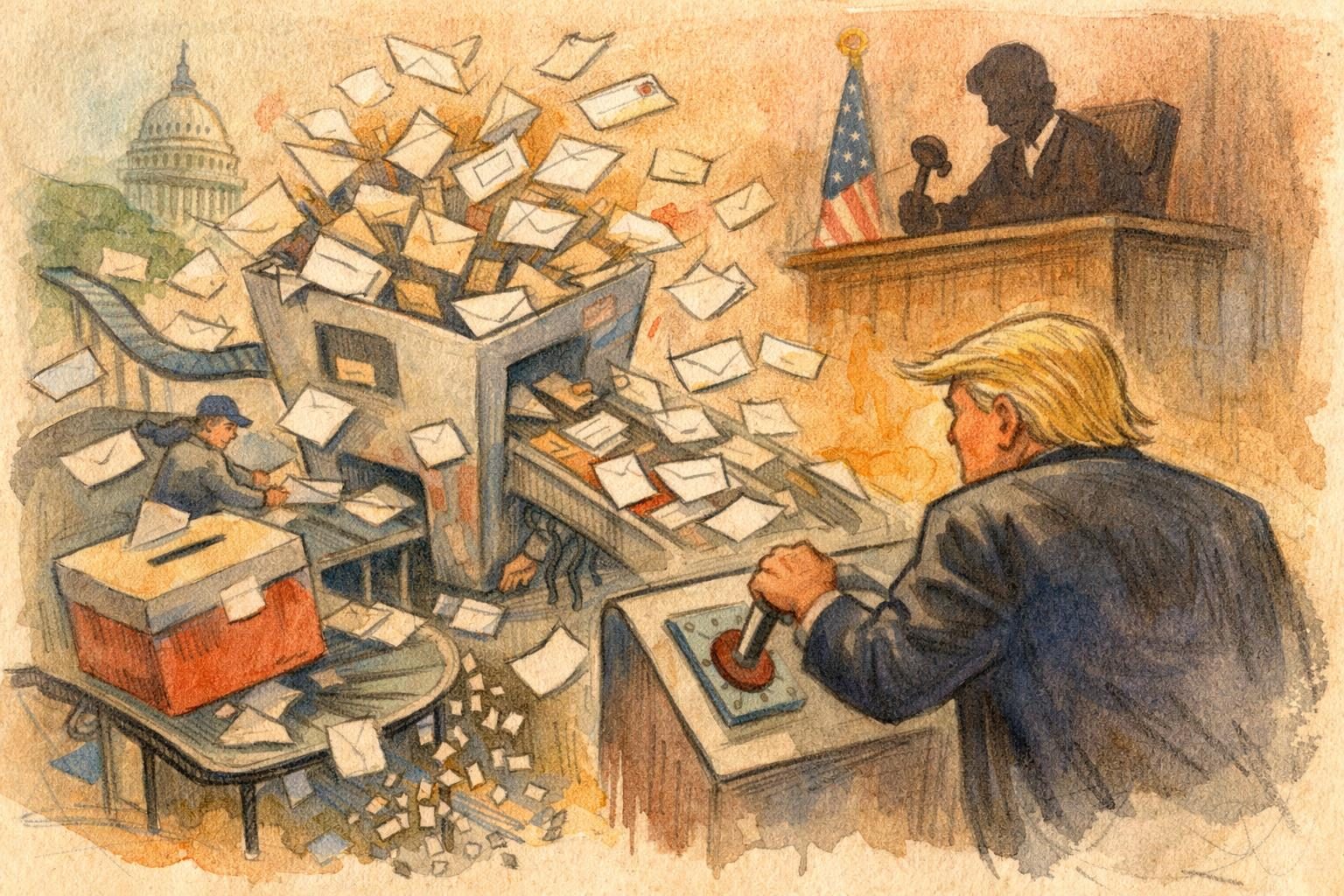
A federal judge’s decision on August 26 to lift a block on President Trump’s changes to mail voting gives the administration something it badly wanted: a chance to start turning a sweeping election-order fight into real-world policy before the broader legal battle is over. The ruling does not end the case, and it does not settle whether the underlying changes will survive the rest of the litigation. But it does remove an important restraint for now, which means the administration can begin pressing ahead while states, voters, and election officials are still trying to figure out what the final rules will be. That is not a small procedural detail. In election administration, timing is policy, and a temporary green light can create consequences that last long after judges revisit the issue. For the White House, this is at least an interim victory. For everyone else who has to run elections, it is another round of uncertainty dropped into an already overworked system.
The fight matters because mail voting is not some niche convenience for a tiny slice of the electorate. It is a core part of how millions of Americans cast ballots, including people who work irregular hours, parents juggling child care, older voters, people with disabilities, and voters who simply depend on the mail because in-person voting is impractical or difficult. When the federal government pushes abrupt changes to that system, it does not just affect political messaging or legal theory; it changes the practical conditions under which people vote. That is why critics have described the administration’s approach as a kind of chaos by design. The phrase is blunt, but it captures the reality that election rules can be used not only to regulate the vote but also to complicate it, narrow it, or make it harder to navigate. The administration has framed its mail-voting hostility as a fraud-prevention effort, but the policy effects are easier to see in the burdens it can impose on ordinary voters. New restrictions or shifting requirements may be sold as safeguards, yet in practice they often mean more confusion, more paperwork, more room for error, and more opportunities for eligible ballots to be delayed or rejected.
The judge’s ruling does not make those effects inevitable, and it does not mean every piece of the administration’s plan will stand. The case is still active, and opponents can keep pressing their legal arguments while the order remains in motion. But a live policy change is still a live policy change, even if it sits under a cloud of appeals and counterclaims. That is what makes this moment dangerous. Once federal guidance starts moving, states may have to revise procedures, election offices may have to rewrite instructions, and advocates may have to spend time warning voters about rules that could change again before Election Day. The resulting friction is not hypothetical. It increases the risk of uneven implementation from state to state, or even county to county, depending on how officials interpret what they are allowed to do while the litigation plays out. And when election systems are forced to operate in that kind of haze, the burden tends to fall hardest on the people with the fewest resources to keep up. A wealthy, politically tuned-in voter can often adapt to a shifting rulebook. A worker with limited time, a rural voter with limited access to services, or a disabled voter trying to manage paperwork and deadlines may not have that luxury.
This ruling also fits a larger pattern that should worry anyone who thinks election administration ought to be stable, predictable, and boring. The administration does not need to win every case outright to shift the terrain. It only needs enough courtroom openings to keep driving policy into the system, forcing opponents to chase it from one injunction hearing to the next while state officials absorb the administrative burden. That strategy can be effective even when the underlying legal questions remain unresolved. Every partial success creates pressure on election offices, more confusion for voters, and more work for voting-rights groups trying to explain what is happening. It also increases the chance that different places will respond differently, which is its own form of chaos. That is the ugly truth of using litigation-heavy governance as a political tactic: the process itself becomes the weapon. If the goal is public confidence in elections, this is a terrible way to pursue it. If the goal is to make voting harder while the courts sort things out, then this ruling gives the administration exactly the kind of opening it was looking for. For now, the legal fight continues, but the policy damage can begin before the final chapter is written.
Comments
Threaded replies, voting, and reports are live. New users still go through screening on their first approved comments.
Log in to comment
No comments yet. Be the first reasonably on-topic person here.