
Meta cuts a giant check to settle teen-harm claims
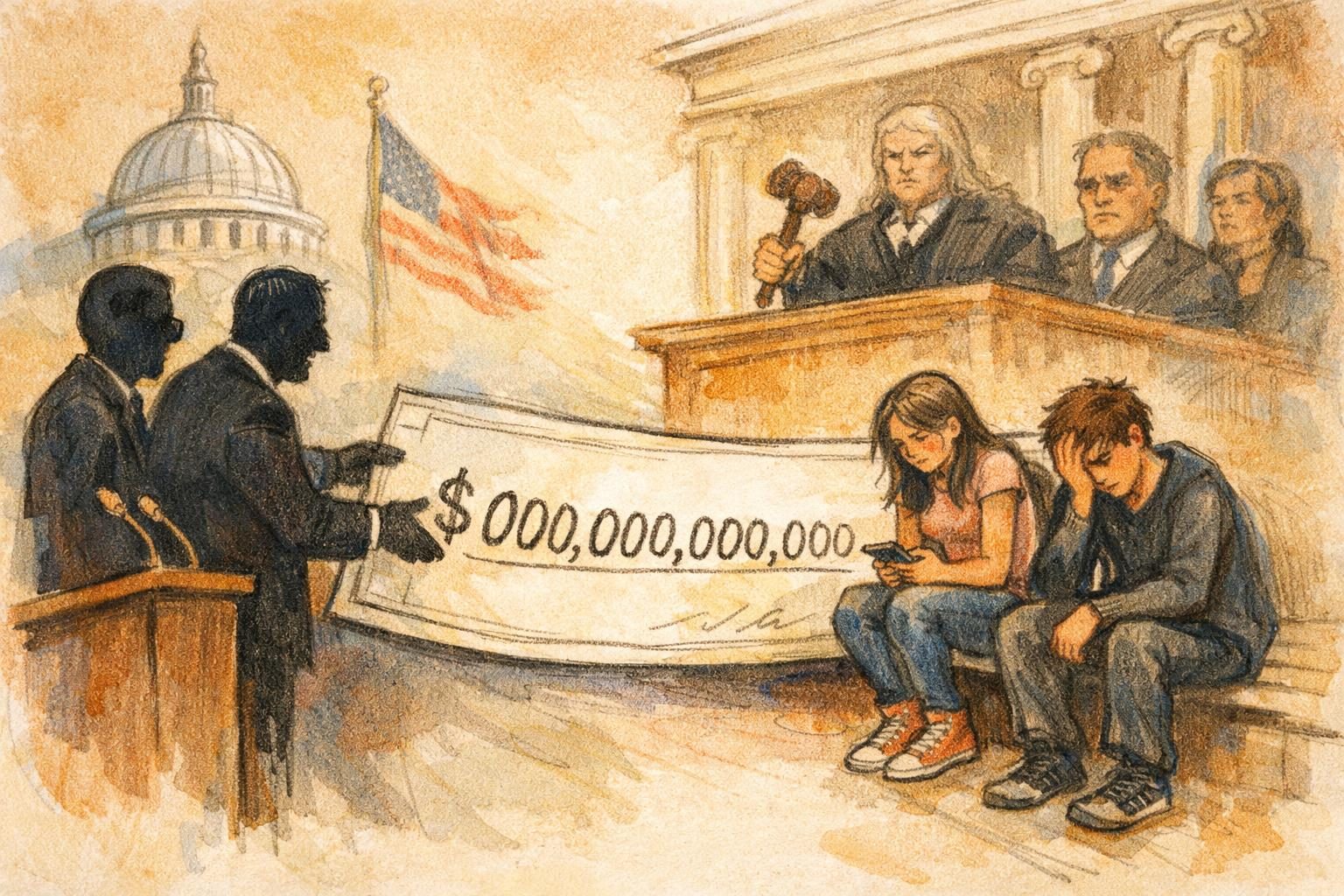
Meta has agreed to pay $17 billion and accept tougher child-safety obligations on Facebook and Instagram to resolve a sweeping case brought by 47 states over allegations that the company helped fuel teen social-media addiction. The settlement, announced Wednesday, ends a federal trial that was poised to put Mark Zuckerberg and Meta’s internal decision-making under a harsh public spotlight. It also closes a chapter in a fight that has been building for years as state attorneys general argued that the company’s products were designed to keep young users hooked. The size of the deal alone makes it impossible to brush aside as a routine legal expense. For a company of Meta’s scale, $17 billion is still survivable, but it is also large enough to signal that the legal and political costs of these claims have become real and unavoidable.
The case was about more than teenagers spending too much time on their phones. State officials accused Meta of building features that encouraged compulsive use, then downplaying the risks while presenting its platforms as benign tools for connection. That accusation has hovered over the company for years, but the settlement gives it a much harder edge because it now comes with enforceable consequences rather than only public criticism and expert warnings. Virginia’s attorney general said the company had misled the public about the dangers, and other officials cast the deal as long-overdue accountability for a platform that shaped daily habits for millions of children and adolescents. The financial penalty matters, but the safety commitments matter too, because they could affect how Facebook and Instagram are designed and marketed going forward. In other words, this is not just a payout; it is a constraint on how Meta can operate one of the world’s most influential digital ecosystems.
That is why the agreement carries significance well beyond the headline number. The states appear to have forced Meta into a position where the company has to acknowledge, at least implicitly, that its child-safety narrative did not survive legal scrutiny in the same form it once relied on in public. Critics have long argued that the company benefited from a business model built around attention capture, even as it insisted that any harms were incidental or overstated. What makes this moment different is that those arguments are no longer floating in the abstract. They are now tied to a concrete settlement, a federal trial that was ready to proceed, and a record of sustained pressure from government lawyers. There will almost certainly be debate over whether $17 billion is enough, especially given Meta’s revenue and market power, but that debate does not erase the fact that the states extracted meaningful leverage. For regulators, the deal offers evidence that sustained legal pressure can force a major platform to change behavior rather than merely issue promises.
The consequences are likely to spread beyond Meta. Other tech companies will read this settlement as a warning that child-safety complaints are no longer just public-relations problems that can be managed with a few policy updates and a press release. The deal also gives state officials a model for future cases centered on product design, not just content moderation, privacy, or data collection. That distinction matters because the political fight over Big Tech often gets stuck in broad arguments about speech, innovation, or regulation, while the sharper issue is whether companies can build systems that encourage compulsive use and then treat the downstream harm as an unfortunate accident. This settlement suggests the answer, at least from the perspective of state attorneys general, is increasingly no. It may not end the broader debate over social-media addiction, youth mental health, or the responsibilities of platform owners, but it does show that those debates can now produce serious financial and operational consequences. For Meta, that is a painful reminder that the company’s child-safety story has moved out of the realm of branding and into the courtroom, where the costs are measured in billions and the promises come with teeth.
Comments
Threaded replies, voting, and reports are live. New users still go through screening on their first approved comments.
Log in to comment
No comments yet. Be the first reasonably on-topic person here.