
New Mexico sues the federal government over alleged illegal water use for border wall work
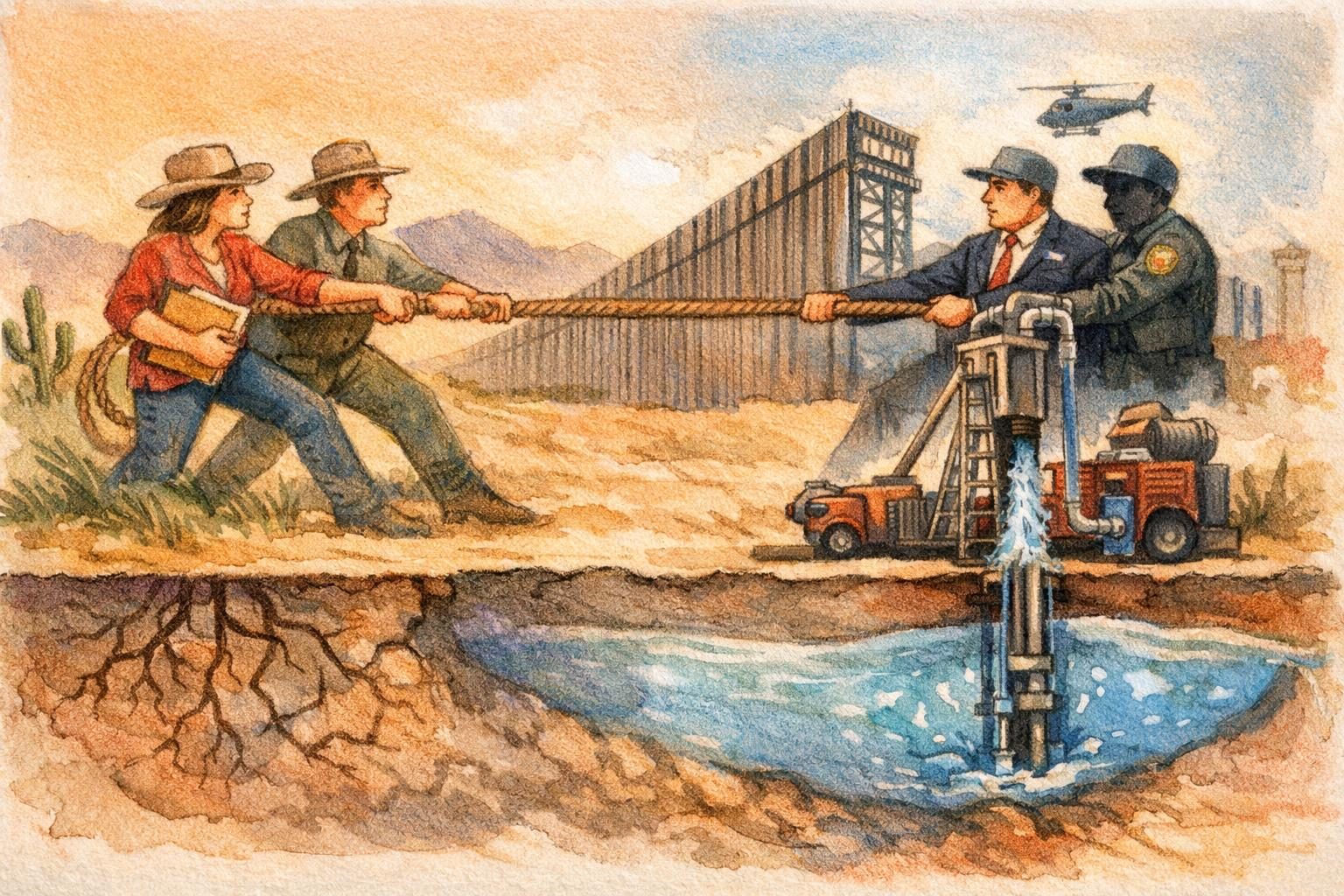
New Mexico has opened a new legal front in the long-running border wall fight, filing suit on Aug. 26 to accuse the federal government and its contractors of repeated unauthorized well drilling and water use in protected underground basins tied to border infrastructure work. The state says the activity took place without the permits required under state law, putting the dispute squarely in the realm of environmental enforcement and water rights rather than the usual abstract arguments over immigration politics. In other words, this is not just another complaint about border policy in the abstract. It is a concrete challenge to the way federal construction has been carried out on the ground. And if the allegations hold up, the consequences could reach far beyond a single worksite.
The heart of the case is groundwater, a resource that New Mexico treats as tightly regulated for good reason. According to the state, the wells in question were drilled into protected aquifers and underground basins without the approvals that are normally required before anyone can start pumping or altering access to water. That may sound like a technical dispute, but in practice it is exactly the kind of technical dispute that can stop a project in its tracks. Water in the Southwest is scarce, politically sensitive, and often contested even when the parties involved are not building a border barrier. The state is effectively arguing that federal contractors cannot simply treat groundwater as an invisible line item in a construction plan. If state officials are right, the work may have relied on resources that should never have been tapped in the first place.
The lawsuit also highlights a familiar tension between federal power and state sovereignty, one that tends to sharpen when border enforcement is involved. Federal agencies have broad authority to carry out immigration and border-related operations, but that authority does not automatically erase state permitting rules, environmental protections, or the practical limits of local water supplies. New Mexico’s filing appears designed to force a court to decide where those boundaries lie, especially when the government claims urgency and the state says it sees unlawful conduct. For critics of wall construction, the case offers a vivid example of how border hardlining can create environmental and financial fallout that local communities are left to absorb. For supporters of stronger border barriers, it sets up yet another battle over whether procedural requirements are being used to obstruct federal priorities. Either way, the conflict is now in court, where the arguments will have to be translated into specific facts, permits, and timelines.
The immediate stakes go beyond legal theory. A suit like this can lead to injunctions, delays, and additional compliance costs, any of which can complicate ongoing construction or planning. It can also force the federal government and its contractors to account for whether work already performed was lawful, and whether more drilling or water use must stop while the case moves forward. That matters in a region where water is not just another project input but a limited public resource with long-term consequences for farms, communities, ecosystems, and local governments. The case may also become a marker for how aggressively states are willing to challenge border work they believe is being done outside the law. If New Mexico succeeds, it could encourage more scrutiny of similar projects elsewhere. If it fails, federal agencies may see it as confirmation that emergency border work can proceed despite state objections. Either outcome will shape the next round of fights over who gets to define lawful border construction and what environmental costs are acceptable along the way.
Comments
Threaded replies, voting, and reports are live. New users still go through screening on their first approved comments.
Log in to comment
No comments yet. Be the first reasonably on-topic person here.