
State Department floats a visa revocation sweep for asylum seekers
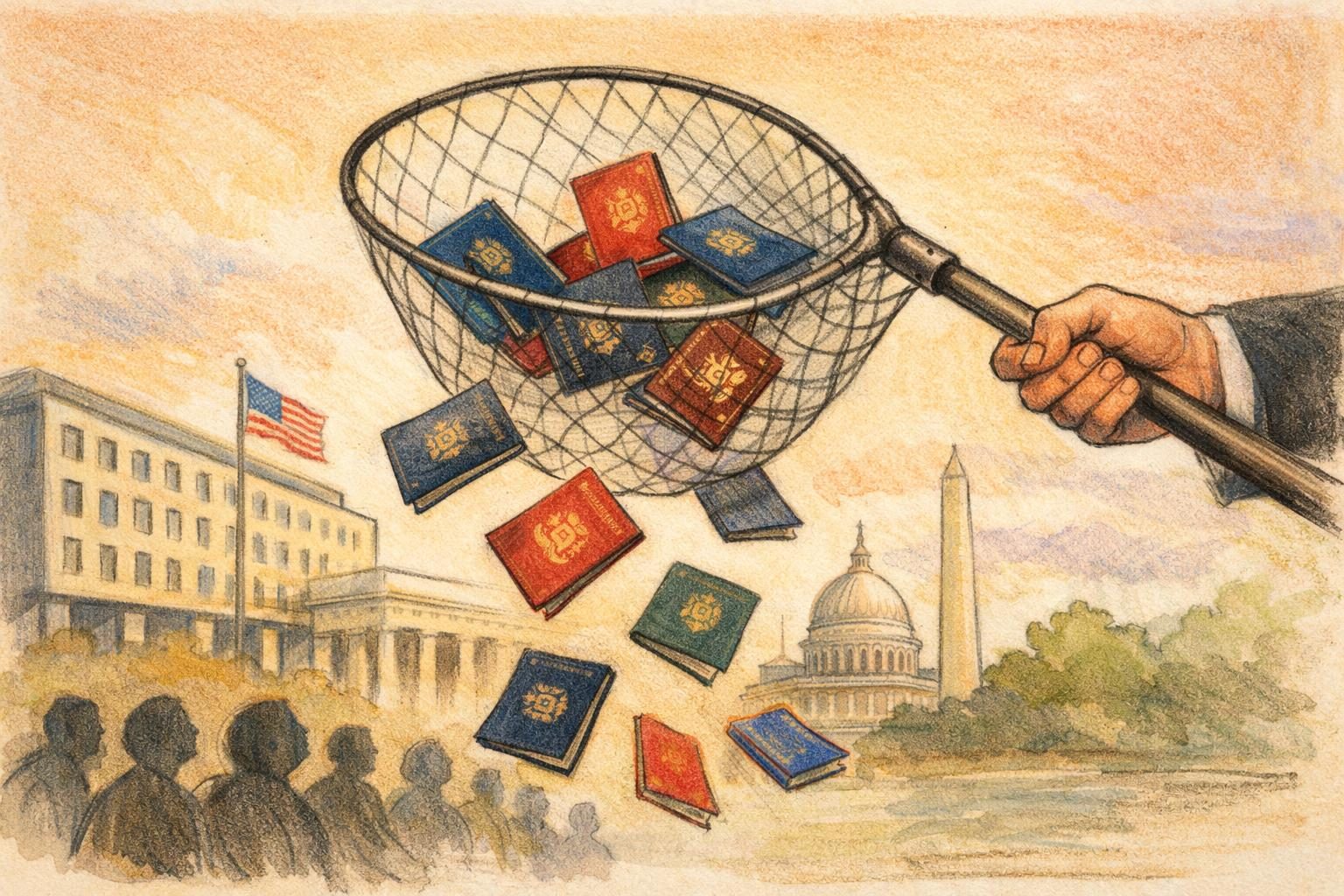
The administration is signaling a far broader immigration and visa crackdown, and one of the sharpest edges so far is a reported plan to revoke business and tourist visas for as many as 200,000 foreign nationals who have applied for asylum or are currently seeking it in the United States. According to a White House summary of recent actions that references State Department documents and unnamed officials, the sweep would target B-1 and B-2 visas issued between 2016 and 2026. That is a huge range, and it suggests something more than routine enforcement housekeeping. If the plan moves beyond a summary and into actual implementation, it could affect an enormous number of people who entered the country legally on one type of visa and later shifted into the asylum process. The public signal on August 26 is strong enough to treat this as a real development, even if the final mechanics are still unclear. In other words, this is not yet a finished policy package, but it is far enough along to set off alarms.
What makes the proposal so jarring is the way it collapses several different policy areas into one blunt administrative action. Visa issuance, asylum claims, and consular discretion are normally separate domains, each with its own standards and review processes, even if they often overlap in practice. Here, they appear to be getting folded into a single enforcement theory: if someone later seeks protection in the United States, their earlier travel authorization may be treated as suspect or disposable. That is a dramatic escalation, especially because the visas in question were already issued over a long period of time and would likely include a wide variety of travel histories and personal circumstances. The government’s political logic is obvious enough. It wants to send the message that migration status itself is a marker of suspicion, and that the administration is prepared to revisit old files in search of leverage. The legal and operational logic is much harder to defend with the information currently available. Retroactive review of this scale would almost certainly create confusion, trigger appeals, and raise immediate questions about notice, fairness, and how much discretion the government is allowed to use in revoking documents that were once valid.
That is where the due-process problem comes into focus. If this sweep is carried out broadly, it could ensnare people who followed the rules at the time they traveled, only to later seek asylum because their circumstances changed or because conditions in their home countries deteriorated. It could also sweep up people whose asylum claims are still pending, meaning the government would be using visa revocation as an extra pressure point before any final decision on protection has been made. The scale alone suggests that collateral damage is not just a possibility but a built-in feature. Even a narrow administrative review can become chaotic when it touches hundreds of thousands of records, and this looks much larger than narrow. There is also the question of how the State Department would sort out old visas from people who may have long since changed status, departed the country, or otherwise moved through the immigration system in ways that are not visible in a quick database pass. A policy built on broad retroactive review can produce a lot of churn before anyone has the first coherent explanation for what counts as a trigger, what counts as an exception, or who gets a fair opportunity to respond. That is especially true when the source material is a White House summary rather than a formal final rule or public notice with the usual procedural detail.
Supporters are likely to argue that the move is about security, system integrity, and stopping abuse of the visa process. That framing will probably come with the familiar claim that the government is simply identifying people who used temporary travel visas as a backdoor into a different immigration track. But the scale of the reported sweep makes that argument hard to separate from punishment by association. If the plan reaches anywhere near the 200,000 figure cited in the summary, then the government is not talking about a few bad actors. It is talking about a mass administrative response that could hit large numbers of people all at once, including people whose individual circumstances may differ dramatically. For that reason, the immediate criticism will center on overreach, indiscriminate treatment, and the use of bureaucratic power as a substitute for more careful enforcement. The public information available right now does not prove that the policy is fully in force, but it does show that the administration is actively considering or preparing a step that would fit squarely within its broader immigration crackdown. That alone is enough to make it a live issue. It also says something important about the direction of the crackdown itself: the government appears to be moving away from targeted enforcement and toward a system of mass administrative punishment, where the threat of revocation becomes another tool for shaping behavior long after a visa was issued.
Comments
Threaded replies, voting, and reports are live. New users still go through screening on their first approved comments.
Log in to comment
No comments yet. Be the first reasonably on-topic person here.