
State Department pauses immigrant visas as the administration widens its legal-immigration squeeze
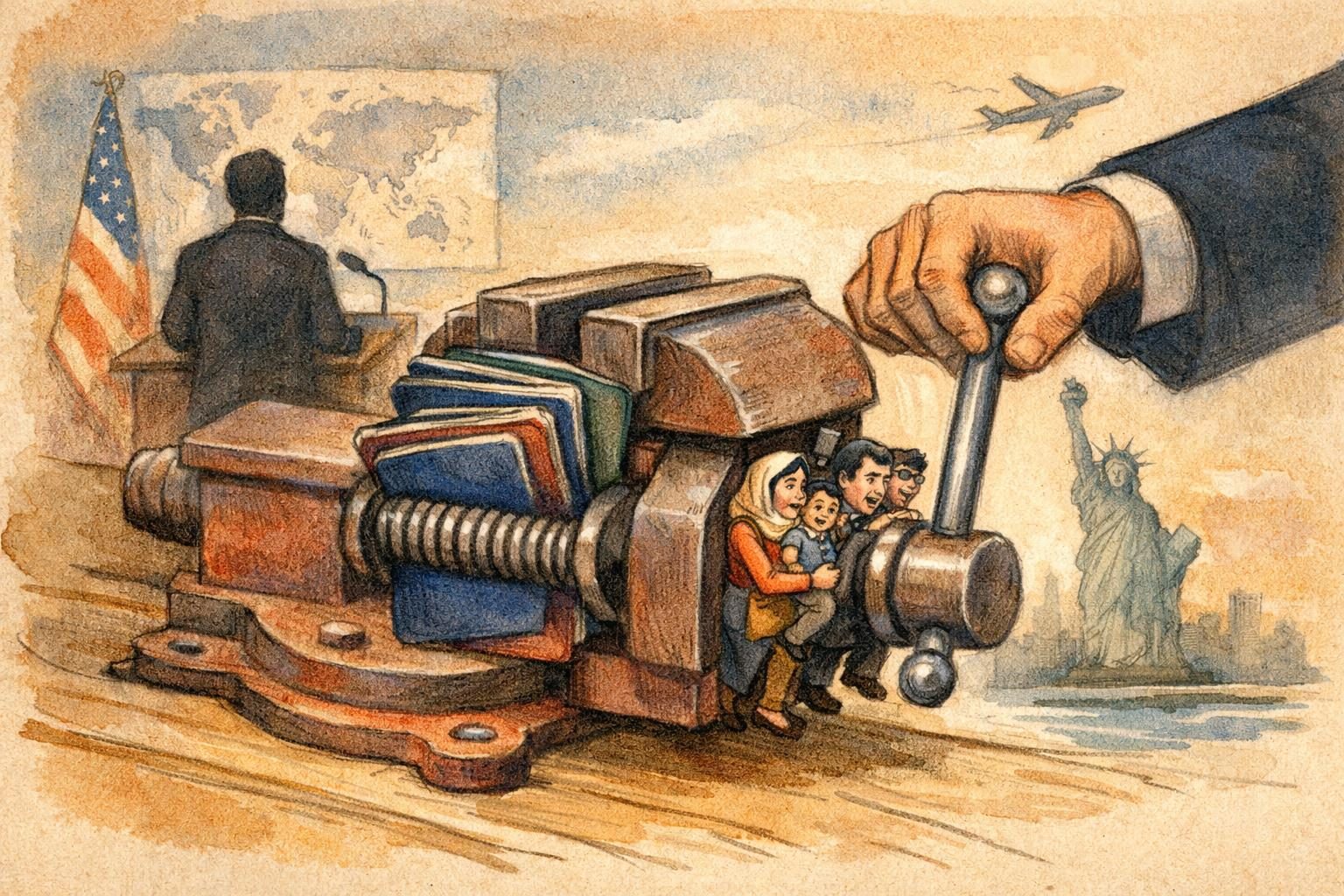
The administration’s immigration crackdown widened on August 26 with a move that reaches far beyond the border and into the machinery of legal entry. The State Department paused all immigrant visa applications while consular officials were briefed on a tougher public-charge policy, effectively putting one of the main pathways to permanent residence on hold as the government works out how it wants the rules applied. At the same time, officials are preparing to revoke business and tourist visas issued to as many as 200,000 people who later applied for asylum, a sweeping step that would amount to one of the largest single visa cancellation efforts in modern U.S. history if it is carried out as described. The policy shift also revives a standard that can make green-card approval harder for immigrants who are judged likely to rely on certain public benefits. Taken together, the moves signal an effort to tighten the legal-immigration system at the same time the administration continues to talk about enforcement as if the problem begins and ends at the border. The immediate effect is uncertainty, delay, and the possibility that lawful immigration channels will be chilled even before any final legal fights are resolved.
What makes this development more consequential than a familiar round of immigration rhetoric is that it pushes the dispute into the procedures that normally govern family reunification, employment-based migration, and consular processing. In practice, that means the government is not just trying to block unauthorized crossings or speed removals; it is also deciding who gets a fair shot at entering the country lawfully in the first place. The public-charge concept has long been politically charged because it turns a deeply moral question into a bureaucratic one: who should be considered self-sufficient enough to deserve admission, and who can be excluded on the theory that they may someday need help? Supporters of the administration will likely frame the move as a common-sense safeguard meant to prioritize financial independence and reduce misuse of public resources. Critics, however, will see a familiar anti-immigrant impulse dressed in administrative language, one that may especially burden lower-income applicants, mixed-status families, and people from countries where seeking asylum often means first entering on another visa. The result is not simply a harder standard, but a broader signal that legal immigration itself is being recast as something suspicious rather than ordinary.
The possible revocation of business and tourist visas for asylum applicants adds another layer of risk and confusion. If the administration follows through on plans affecting up to 200,000 people, the consequences could spread well beyond the individuals directly targeted, because visa cancellations of that scale would create a wave of downstream legal, diplomatic, and bureaucratic problems. Employers, universities, families, and travel networks all depend on predictable visa processing, and even temporary freezes can leave people unable to start jobs, join relatives, attend school, or complete long-planned travel. The revocation effort would also raise obvious questions about retroactivity and fairness, since many of the affected people would have entered the country legally under one set of rules before later seeking asylum under another. That makes the policy harder to defend as a simple housekeeping measure and easier to attack as a punitive rewrite of the immigration system after the fact. Consular officers, meanwhile, are left to carry out a major policy shift before courts or internal guidance have fully settled what the rules are supposed to mean. Even if some parts of the plan are later narrowed, delayed, or struck down, the disruption begins now, and the uncertainty itself becomes part of the punishment.
The larger political message is hard to miss. The administration is not only intensifying the fight over who can cross the border unlawfully, it is also narrowing the space for lawful entry and lawful residence, which is a much more ambitious and more disruptive project. That shift has obvious legal consequences, since any broad revocation campaign or new public-charge interpretation is likely to face immediate litigation from immigrant-rights groups, employers, and other affected parties. It also has diplomatic consequences, because large-scale visa interruptions send a blunt message to foreign governments and to the people trying to travel or settle in the United States under the rules those governments understand. In that sense, the administration is treating the immigration system as a political battlefield rather than a stable administrative process, with the bureaucracy itself turned into an instrument of deterrence. The practical fallout could be messy and prolonged: delayed interviews, suspended adjudications, court injunctions, inconsistent guidance across posts, and anxious applicants trying to guess whether their paperwork still means anything. However the courts eventually sort it out, the direction is clear enough already. Legal immigration is being squeezed as deliberately as illegal immigration, and that is a major policy change whether the administration says so plainly or not.
Comments
Threaded replies, voting, and reports are live. New users still go through screening on their first approved comments.
Log in to comment
No comments yet. Be the first reasonably on-topic person here.