
States Sue to Block USPS From Carrying Out Trump’s Mail-Voting Clampdown
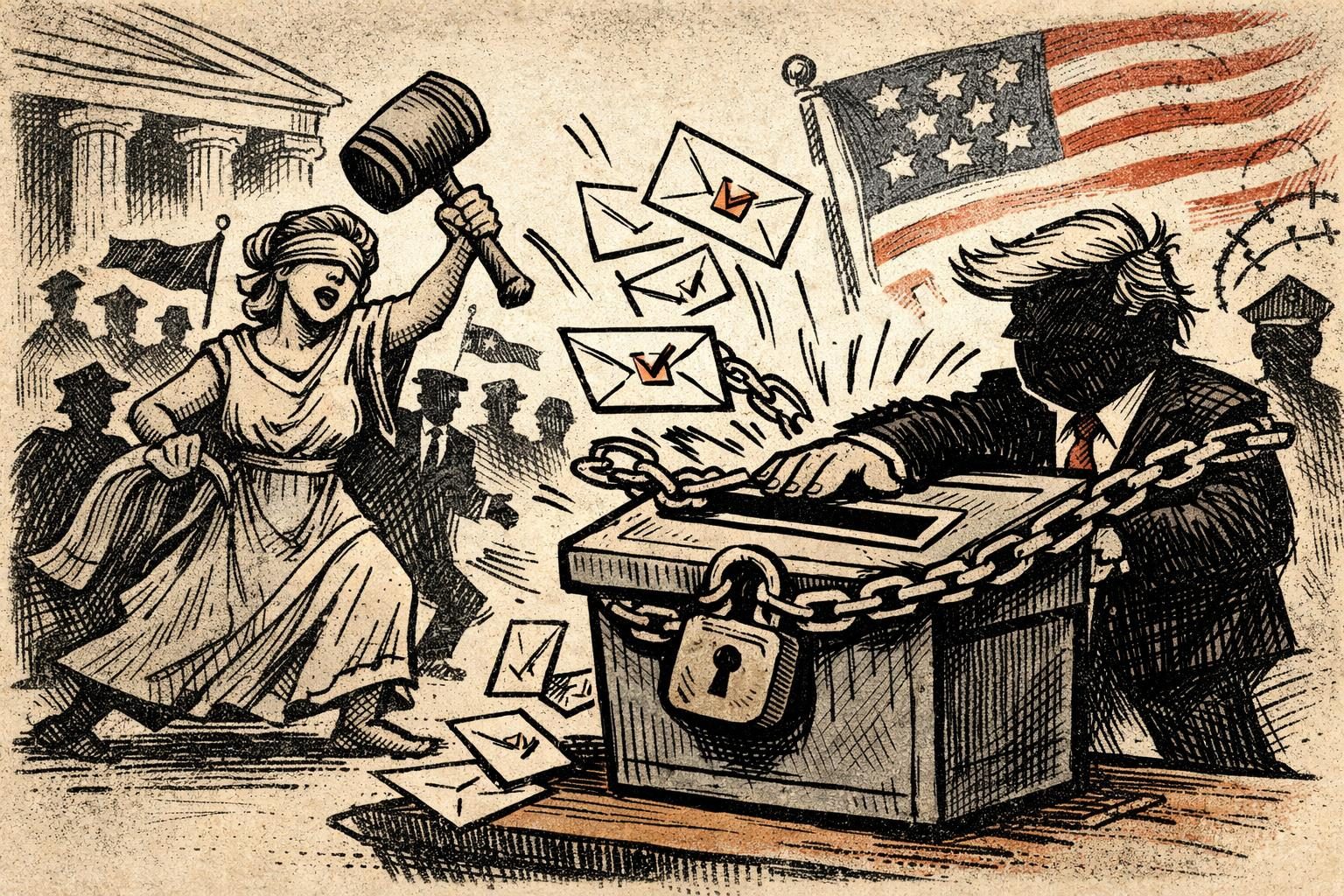
A coalition of Democratic-led states went to federal court on August 26 in an effort to stop the U.S. Postal Service from carrying out the Trump administration’s new restrictions on mail voting, escalating a fast-moving fight over who gets to control the mechanics of American elections. The lawsuit argues that the Postal Service is being pushed into a political role it was never meant to play, and that federal officials are trying to impose rules that clash with state election laws and long-established vote-by-mail systems. At its core, the case is about more than one mailing rule or one round of ballot processing. It is about whether a president can use a federal agency to narrow access to voting in states that have built their election systems around mail ballots. The timing matters, because the dispute is landing just as states are setting their plans for the next major election cycle and trying to avoid confusion that could discourage or delay voters.
The states behind the suit say the Postal Service cannot simply invent barriers because the White House wants to police voting by mail. Their argument is rooted in the Constitution and in the basic structure of election administration, which gives states primary authority to run their elections. They contend that the administration’s restrictions are not just questionable policy but an unlawful intrusion into a domain the federal government cannot commandeer at will. That claim is part of a wider legal assault that has already begun to take shape in multiple courts, with state officials moving quickly to preserve existing mail-ballot procedures. Oregon’s attorney general and election officials have been among those voicing alarm, saying the federal government is meddling in a system voters and counties already know how to use. From their perspective, this is not a technical adjustment. It is a disruptive rewrite of election operations being pushed from Washington without regard for how ballots actually move through the system.
The immediate stakes are practical as much as legal. If the restrictions survive, states say they could complicate how millions of voters receive, return, and have their ballots counted on time. Mail voting has become a central part of election administration in many states, especially for voters in rural areas, older voters, disabled voters, people with unpredictable work schedules, and anyone who relies on the postal system because in-person voting is difficult. The lawsuit reflects the fear that even small administrative changes can create large downstream problems when millions of ballots are involved. Election officials are already building calendars, printing materials, training staff, and planning public guidance, and they warn that uncertainty from the federal level can ripple through every part of that process. The states also argue that the Postal Service does not have the authority to set up new hurdles to voting just because the administration wants a tougher posture on mail ballots. In their telling, this is a blunt attempt to turn an ordinary service agency into an instrument for restricting participation.
The legal battle comes against a backdrop of sharply intensified conflict over election control, and the timing makes it more combustible. The suit was filed one day after the Supreme Court gave Trump room to move forward on the issue, which only increases the pressure on lower courts to sort out what federal agencies can and cannot do. That does not guarantee the administration will prevail, but it does make clear that the White House is determined to press its advantage while the calendar still leaves time for the rules to matter. The states, for their part, are trying to lock in the principle that election administration is not subject to ad hoc presidential improvisation. They say the machinery of democracy cannot be subjected to one-sided changes whenever a president decides to treat voting rules as a political target. This kind of conflict is especially destabilizing because it forces state officials to fight in court while still trying to run elections on schedule, a burden that consumes time, money, and staff attention that would otherwise go into actual administration.
The broader effect may be less visible than the court filings themselves but no less significant. Even if the administration ultimately loses, it is already imposing costs by forcing states to prepare emergency responses, consult lawyers, and warn voters about uncertainty that should not exist in the first place. That is part of why election officials are describing the policy as both unlawful and operationally reckless. They are not just defending an abstract legal principle; they are trying to keep a functioning system from being destabilized by politically driven rule changes. If the federal government can pressure the Postal Service into narrowing ballot access, then every state that relies on mail voting has to wonder what other election procedures might be next. The fight is therefore not only about whether a particular set of postal restrictions survives. It is about whether the White House can convert a policy grievance into administrative machinery and then use that machinery to reshape the voting process itself. That is the deeper anxiety driving the lawsuit, and it is why the case is likely to remain a major flashpoint as the election season moves forward.
Comments
Threaded replies, voting, and reports are live. New users still go through screening on their first approved comments.
Log in to comment
No comments yet. Be the first reasonably on-topic person here.