
Former tribal officer indicted after alleged choke-and-cover-up combo
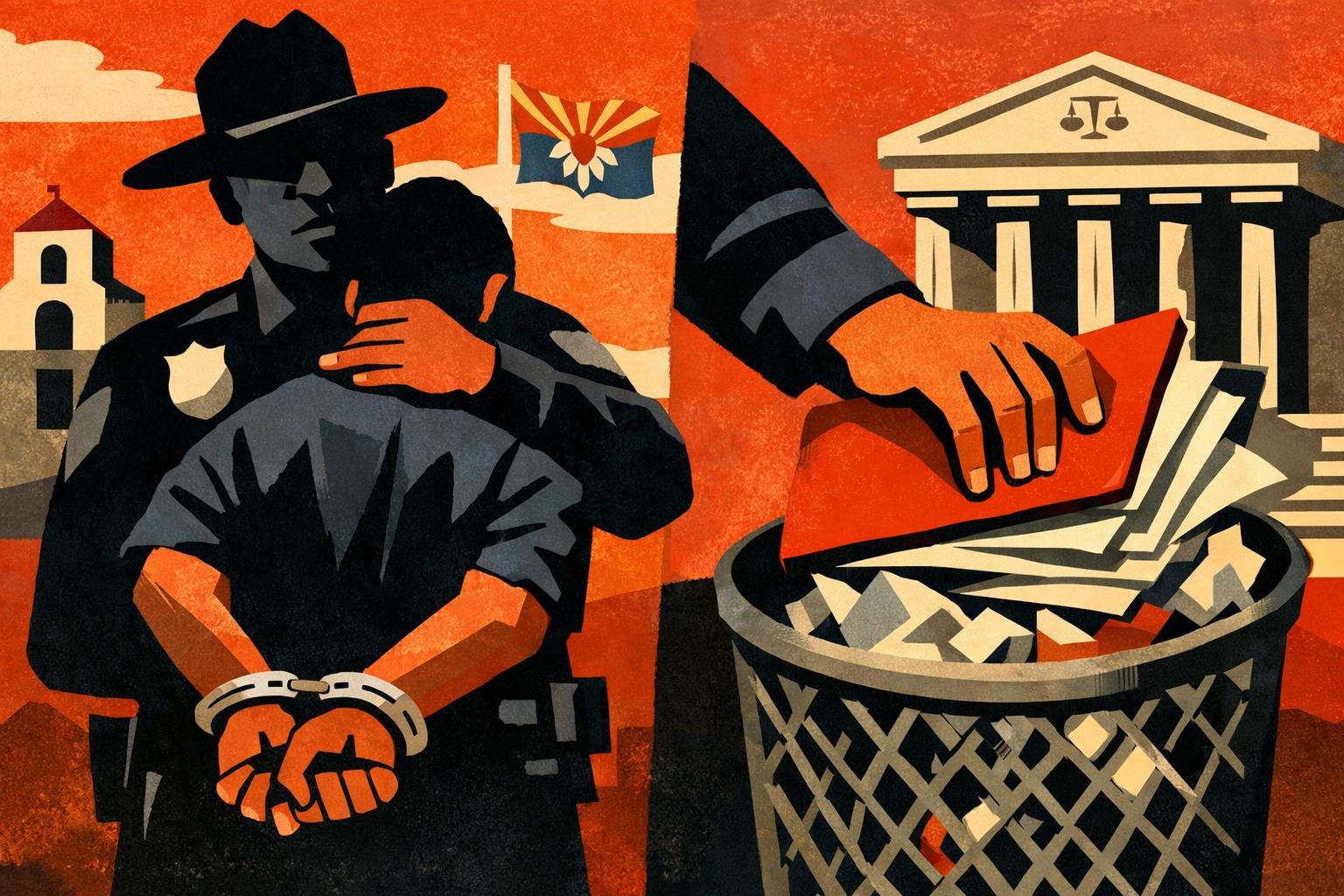
A former San Carlos Apache Police Department officer has been indicted on federal charges that he used excessive force against a handcuffed arrestee and then tried to conceal what happened by falsifying his report. According to the Justice Department, the alleged conduct took place during an arrest in which the officer punched the restrained man, dragged him from a vehicle, and caused bodily injury. Prosecutors say the officer later altered the written account after learning he was under investigation, a detail that turns the case from a single use-of-force allegation into a broader question about deception and accountability. The indictment was announced on August 26, and while it is only an accusation at this stage, the facts laid out in the charging document are severe enough to ensure the case will draw close attention. In a policing context, the alleged combination of force and falsification is especially corrosive because it suggests not only an abuse of authority but also an attempt to control the story afterward.
Cases like this tend to land hard because they expose the gap between what police power is supposed to look like and what can happen when oversight fails or is treated as optional. A handcuffed person is, by definition, already under control, which makes allegations of punching and dragging all the more troubling. If prosecutors can prove the allegations, the force itself could represent a serious civil-rights violation, but the alleged report tampering may prove just as important in showing intent. False reports are not merely paperwork mistakes; they are often the mechanism that allows misconduct to survive initial review, delay intervention, or blunt public scrutiny. When a report is allegedly edited after an officer learns an investigation has begun, it raises the possibility of a conscious effort to build a defensible record rather than a truthful one. That kind of conduct can poison the entire accountability process, because internal reviews, prosecutorial decisions, and public trust all depend on the integrity of the original account.
The tribal policing setting makes the case more sensitive, not less. Law enforcement on tribal land operates in a complicated environment that often involves overlapping jurisdictions, limited resources, and deep community concerns about whether misconduct will be taken seriously. When allegations involve an officer from a tribal police department, the fallout is rarely confined to one case file. It can affect the willingness of residents to cooperate with officers, complicate efforts to recruit and retain officers, and intensify skepticism about whether outside review is strong enough to deter abuse. The federal government’s involvement signals that prosecutors are treating the matter as a civil-rights issue rather than a routine employment dispute, which is significant even before any court findings are made. That framing suggests the alleged actions were viewed as serious enough to warrant federal criminal attention, not just department-level discipline. At the same time, an indictment is not a conviction, and the government still has to prove its case in court. The officer remains accused, not adjudicated, and the legal process will determine whether the government’s version of events can be substantiated.
What follows now is likely to be a criminal case that will test both the strength of the evidence and the credibility of the systems meant to catch abuse before it becomes a scandal. If the allegations are borne out, the department and the broader tribal policing structure may face renewed scrutiny over training, supervision, and the handling of use-of-force incidents. If the report was indeed altered after the officer learned of an investigation, that detail could become central to showing consciousness of guilt and a deliberate attempt to obstruct accountability. Even beyond the courtroom, the case will probably be read as another example of how quickly a badge can become a shield for conduct that should never be hidden or excused. Public confidence is hard enough to maintain when officers are accused of crossing the line; it becomes even harder when the line is allegedly crossed and then scrubbed from the record. For communities already carrying the burden of fragile trust, a case like this is not just about one officer’s conduct, but about whether the institutions meant to police the police can still be believed when they say they are in control.
Comments
Threaded replies, voting, and reports are live. New users still go through screening on their first approved comments.
Log in to comment
No comments yet. Be the first reasonably on-topic person here.