
Florida health system agrees to a $541.5 million Medicare fraud settlement
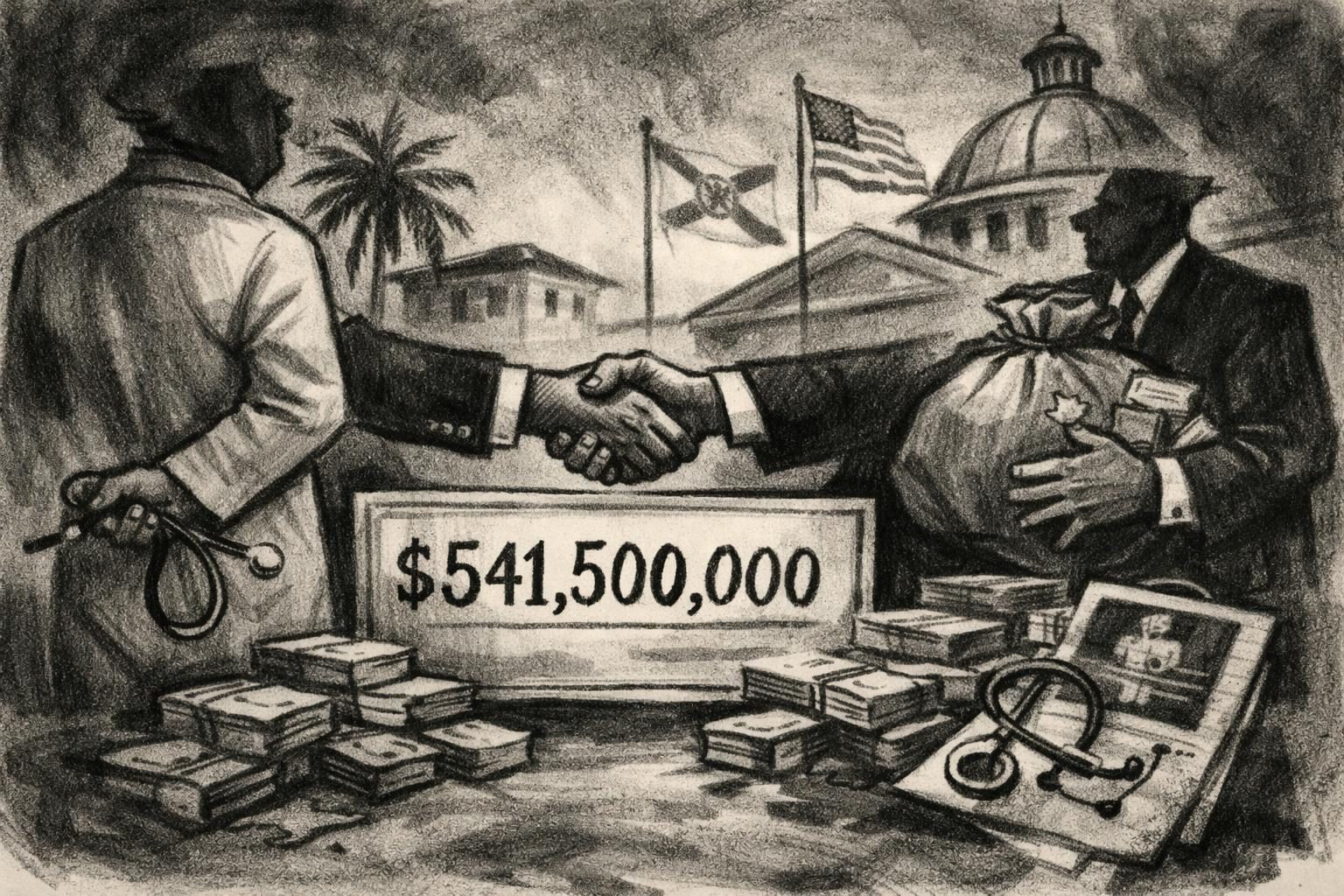
The Justice Department said on August 26 that The Villages Health System has agreed to pay $541.5 million to resolve allegations that it submitted false diagnosis codes in order to inflate Medicare Advantage payments. The size of the settlement alone puts the case in a category that draws attention well beyond central Florida. It is the kind of figure that suggests prosecutors believed they had a serious paper trail, serious exposure, and a case substantial enough to justify a very public resolution. The government did not frame the matter as a minor billing dispute or an accounting error that drifted out of control. Instead, it presented the settlement as a response to conduct that allegedly bent the rules of a federal health program designed to reimburse insurers and providers based on how sick patients are supposed to be.
At the center of the allegations is the risk-adjustment system used in Medicare Advantage, which pays more when patients are documented as having more serious health conditions. That structure is meant to reflect real medical need, but it also creates a built-in incentive for providers and plans to make diagnoses look more severe than they are. The Justice Department’s account says false diagnosis codes were used to drive up payments, turning paperwork into a revenue stream. If that sounds dry, it is only because the mechanics of the scheme are bureaucratic; the consequences are not. Inflated coding can siphon money from taxpayers, distort the program’s finances, and give an unfair advantage to organizations willing to play close to the edge or, as alleged here, cross it. A settlement of this magnitude suggests the government wanted to send a message that this kind of behavior is not being treated as an acceptable cost of doing business in Medicare Advantage.
The department also said the case involved self-disclosed conduct and a coordinated federal response, which matters because it hints at how these matters are often built and resolved. Self-disclosure can soften the landing in some enforcement actions, but it does not make a case disappear, and it does not prevent a massive payout when the alleged conduct is serious enough. Coordinated investigations typically mean multiple government components are examining claims, records, and payment patterns from different angles, which can make it harder for a defendant to narrow the story to a bookkeeping mistake. The settlement does not, by itself, tell the public everything about how the alleged false coding was identified or how long it continued, and it is worth preserving that uncertainty. Still, the headline number makes one thing plain: the government believed the matter involved more than isolated sloppiness, and The Villages Health System evidently decided that settling for more than half a billion dollars was preferable to extending the fight.
Politically, the case lands in a familiar but important place. Health-care fraud enforcement is one of the few arenas where Washington can still point to a concrete recovery of money after allegations that a provider or plan manipulated a federal program. That does not make the underlying problem go away, because the real issue is what happened before the settlement: taxpayers and the Medicare system are the ones who absorbed the costs while the billing entries allegedly became more generous than the medical facts justified. Medicare Advantage has long been criticized for rewarding over-documentation, and cases like this feed the argument that the program’s incentives can be gamed too easily. They also raise the awkward question of how often aggressive coding stops short of illegality and how often it does not, a line that regulators and defense lawyers spend years arguing over. For the federal government, though, this settlement is a reminder that when the paper trail is strong enough, even a large and established health system can be made to pay a price that is impossible to ignore.
Comments
Threaded replies, voting, and reports are live. New users still go through screening on their first approved comments.
Log in to comment
No comments yet. Be the first reasonably on-topic person here.