
States sue USPS over a mail-voting rule that could make election chaos official
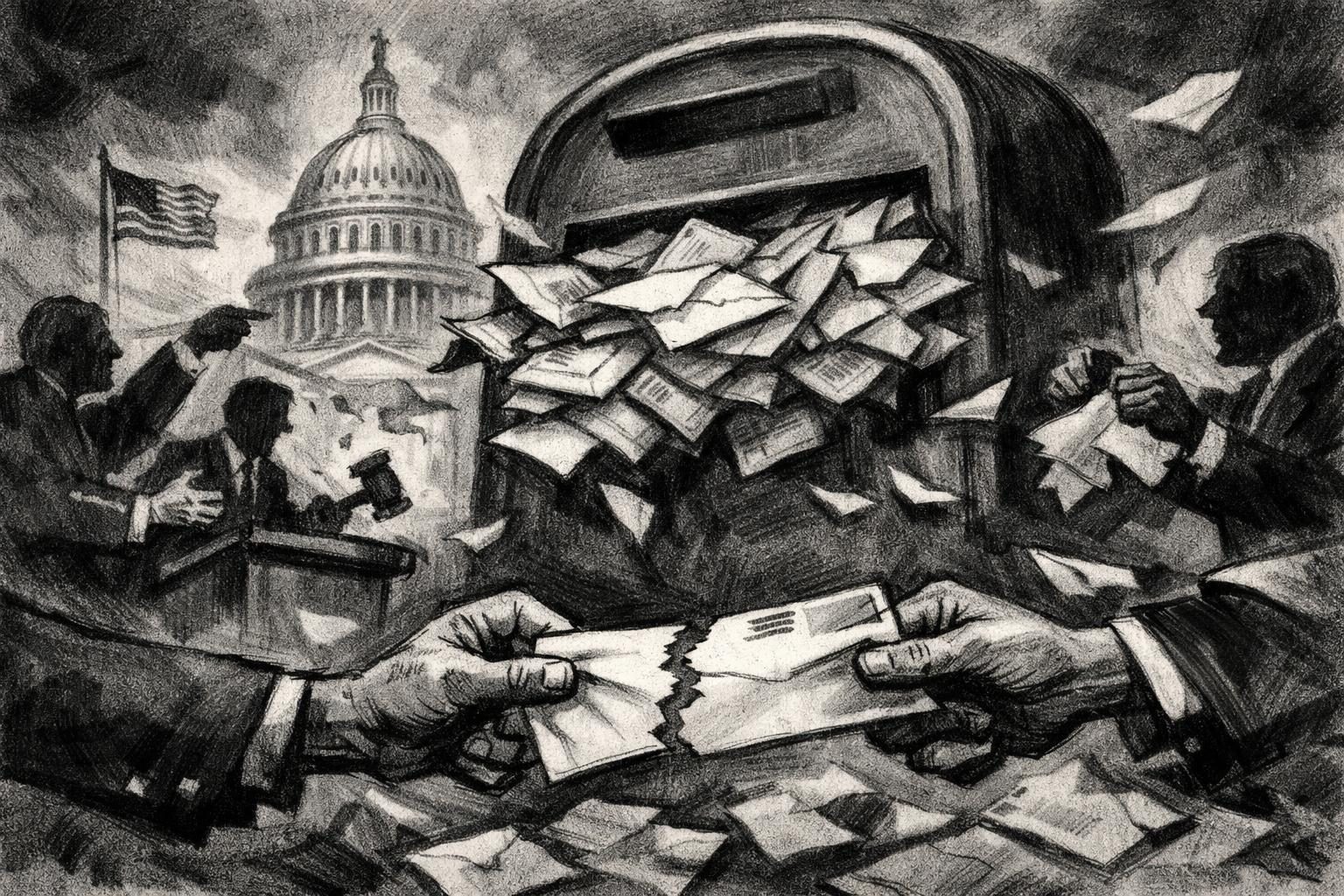
A coalition of state attorneys general led by California has gone to court to stop a new U.S. Postal Service rule that they say would make voting by mail harder to manage and easier to disrupt. The lawsuit, filed Aug. 26, targets a policy the states describe as an illegal intrusion into election administration, one that could give federal postal officials new leverage over how ballots are handled and whether election-related mail moves as expected. Joining California are 24 attorneys general, along with the governor of Pennsylvania, in what amounts to a broad state-level pushback against a federal change they argue was designed with elections in mind. Their complaint says the Postal Service is not just adjusting internal procedures, but attempting to insert itself into a part of election administration that has traditionally belonged to the states. With the midterms approaching and election offices already under pressure to prepare for large-scale mail voting, the states are framing the rule as a potential choke point rather than a technical fix.
At the center of the challenge is a rule that, according to the filing, would let the Postal Service reject mail, provide non-postal services, and create a new enrollment system for ballot mailing. The states say those changes would give postal officials far more power over election mail than Congress ever authorized and could create confusion for voters, county registrars, and local election workers. They argue that if the Postal Service can impose new conditions on mail ballots or ballot-related deliveries, it risks slowing, sorting, or blocking mail in ways that election administrators cannot easily predict or control. That concern is especially sharp because ballot handling depends on tight deadlines and clear rules, and even small interruptions can become major problems once absentee and vote-by-mail deadlines start stacking up. The coalition says the rule is unlawful because it does not merely improve delivery efficiency; it alters the terms on which election mail enters the system in the first place.
The lawsuit also places the postal rule in a broader political and legal context. The complaint points to the administration’s election-related executive order and to the Supreme Court’s recent stay of an injunction that had blocked key parts of that effort, presenting the postal rule as part of a larger push to place more federal control around voting access. That framing matters because it suggests the states are not treating the USPS action as an isolated bureaucratic development. Instead, they see it as one more piece of a coordinated effort that could reshape how elections are administered by moving responsibility away from state and local officials and toward Washington. Whether the postal rule would ultimately have that effect is a question that the court will now have to sort through, but the plaintiffs are clearly trying to show that the risk is immediate and concrete, not speculative. Their filing suggests that if the rule survives, election offices could face new uncertainty just when they need the clearest possible procedures for processing ballots by mail.
The practical stakes are high because the modern mail-voting system depends on reliability, speed, and public trust all at once. States that expanded vote by mail during recent election cycles built their systems around the assumption that ballot delivery would remain governed by ordinary postal operations, not a separate enrollment or rejection process for election mail. The coalition argues that changing those assumptions this close to a major federal election could jam up preparation across multiple states, forcing officials to revise procedures, retrain workers, and reassure voters that their ballots will still count if they arrive through the mail. Even if no ballots are ultimately lost, the states say the damage could show up in delays, confusion, or litigation over whether postal restrictions were applied fairly. The result, they warn, would be a system where the right to vote by mail depends less on state election law than on federal postal discretion. That is the basic fear driving the lawsuit: that the Postal Service rule would turn ordinary election logistics into a new source of conflict, and possibly make the next round of voting messier before it has even begun.
Comments
Threaded replies, voting, and reports are live. New users still go through screening on their first approved comments.
Log in to comment
No comments yet. Be the first reasonably on-topic person here.