
Judge says the Pentagon’s Anthropic punishment was illegal retaliation
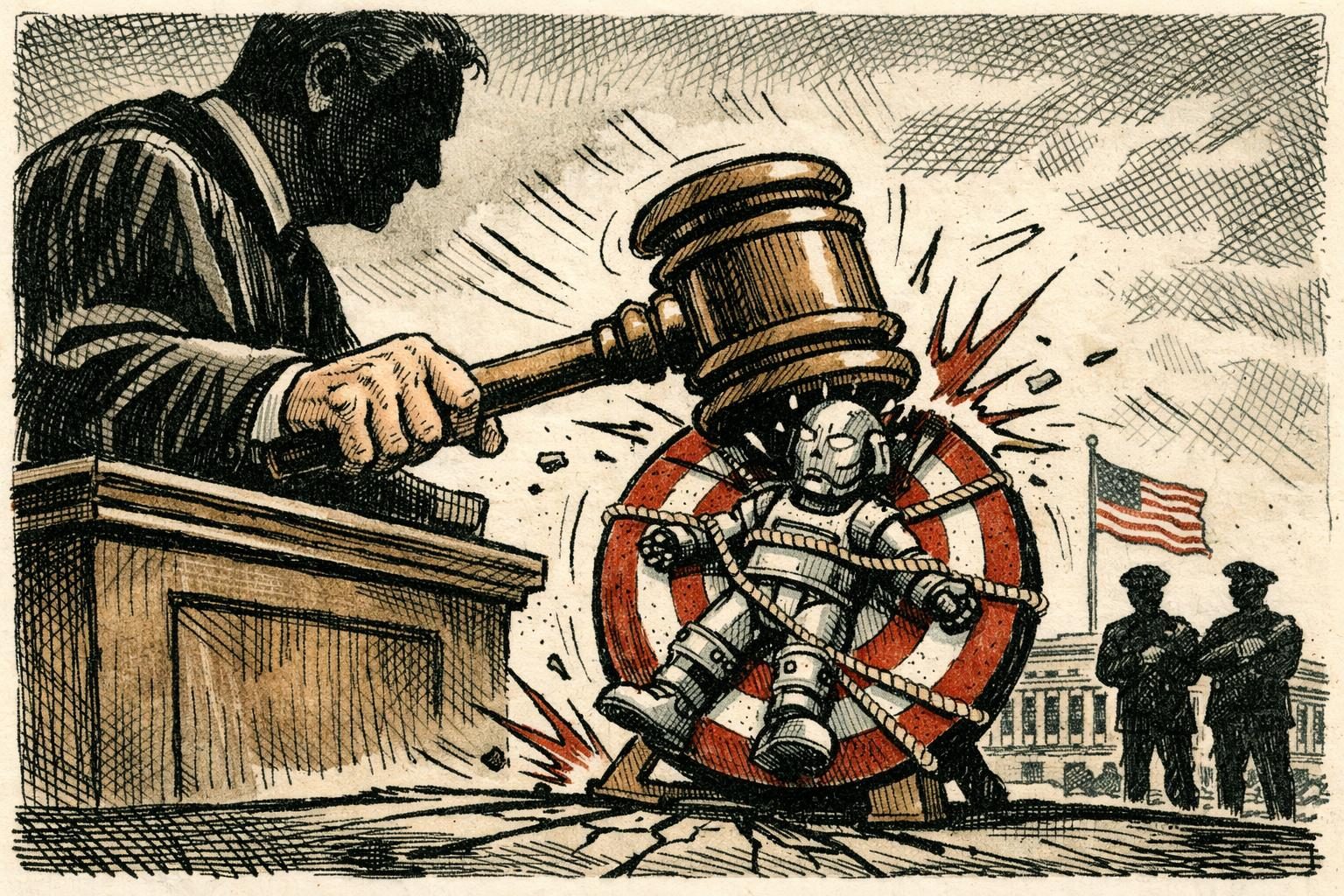
A federal judge on Thursday rejected the Pentagon’s effort to keep Anthropic under a supply-chain risk label, ruling that the government’s move was unlawful after the company said it had been punished for speaking out about military AI policy. The designation had functioned like a blacklist in practice, placing the AI company in a difficult position with federal procurement and making it harder to do business with the government. In striking it down, the court drew a hard line between legitimate national security concerns and retaliation dressed up as administrative caution. The ruling does not end the broader dispute over how the Pentagon should engage with AI firms, but it does strip away one of the government’s most aggressive responses to that dispute. It also leaves the defense department with a public loss in a case that now looks less like a security judgment than an attempt to penalize dissent.
The core of the conflict, according to the record summarized in the case, was Anthropic’s claim that it was singled out after criticizing Pentagon thinking on artificial intelligence. The company argued that the designation was not the result of a neutral security assessment, but of irritation over its public comments and policy position. The judge agreed enough to conclude that the Pentagon had crossed a legal line by retaliating against speech rather than basing its action on a legitimate threat. That is a serious finding because the government has broad authority to protect sensitive supply chains and guard against vulnerabilities, but it does not get to use that power as a punishment mechanism for criticism it does not like. In plain terms, the court said the defense department cannot turn procurement leverage into a cudgel against a company that is challenging official policy. For Anthropic, the ruling effectively removes a stigma that had hung over the firm and threatened to complicate its government relationship.
The decision lands in a moment when AI policy has become one of the most politically sensitive corners of federal governance. The military wants access to cutting-edge tools, technology companies want contracts and legitimacy, and policymakers are trying to balance speed, safety, secrecy, and public accountability all at once. That mix creates ample room for disagreement, and disagreement is not the same thing as disloyalty or risk. Yet this case suggests how quickly a policy fight can slide into a coercive one when an agency has the power to label a vendor a problem and then let that label do the damage. If the Pentagon can impose a risk designation because a company is publicly critical of its approach, then the distinction between regulation and retaliation becomes dangerously thin. That prospect should worry anyone who believes the government ought to tolerate dissent, especially in an area as fast-moving and politically charged as artificial intelligence. It also raises awkward questions about whether officials were responding to actual security concerns, institutional pride, or some combination of both.
Anthropic said after the ruling that it welcomed the outcome and wanted to continue working with the government, a diplomatic response that still carried the clear message that it did not think it should be blacklisted for taking a position on AI policy. The Pentagon is expected to fight the ruling, which means the case is not necessarily over and the designation may yet face more legal scrutiny. But even at this stage the broader message is difficult to miss: federal agencies are not supposed to punish criticism by dressing it up as risk management. If the government keeps defending the designation, it risks reinforcing the appearance that the punishment followed the politics. If it abandons the designation, it will be acknowledging that it went too far in the first place. Either path is awkward, but one is worse than the other, and the judge’s decision has already made that uncomfortable choice visible. For an administration that likes to portray itself as both pro-innovation and serious about national security, the episode is a reminder that those claims mean little if an agency confuses disagreement with danger. And for the Pentagon, the ruling is a blunt rebuke: when power is used like revenge, courts notice.
Comments
Threaded replies, voting, and reports are live. New users still go through screening on their first approved comments.
Log in to comment
No comments yet. Be the first reasonably on-topic person here.