
Trump administration starts border wall construction in Arizona over tribal objections
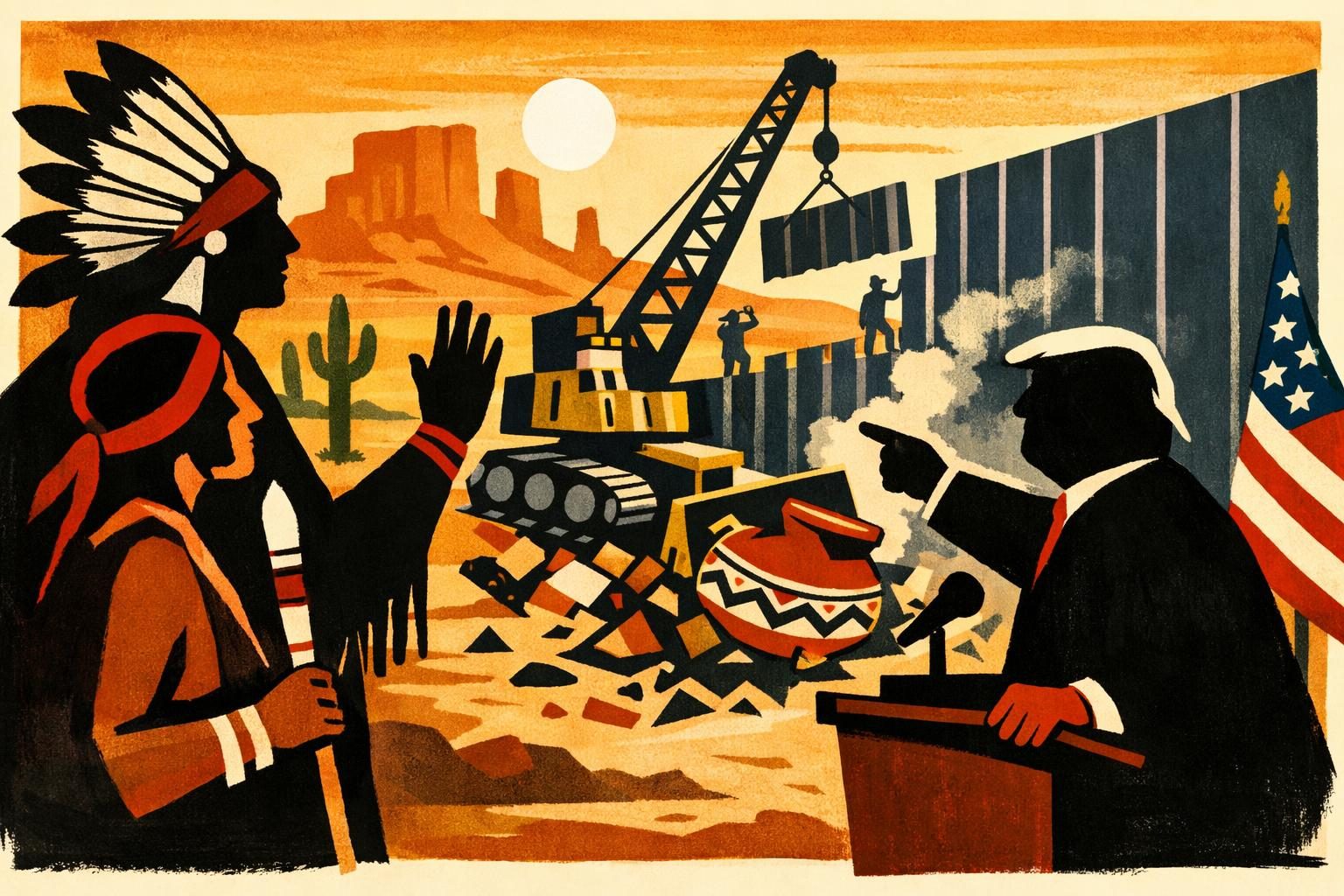
Construction on a new border wall segment in Arizona began on August 27 after a federal judge sided with the government, clearing the way for the Trump administration to move ahead over objections from the Tohono O’odham Nation. The project is taking shape in a federally owned strip of land known as the Roosevelt Reservation, which the administration argues gives it the legal footing to proceed. Once the ruling came down, work appeared to start quickly, underscoring how little time tribal leaders had to do anything besides object. That is a familiar pattern in the administration’s border policy: ask for broad power, win a court order, and then treat the resulting construction as proof that the policy itself has been settled. But the people living closest to the project know better, because for them the wall is not a slogan or a talking point. It is a physical barrier moving into an existing homeland.
The Tohono O’odham Nation’s opposition has long rested on more than a general dislike of barriers. Leaders have argued that wall construction cuts through ancestral lands, restricts movement, and deepens the federal government’s habit of treating tribal sovereignty as something to work around rather than respect. The Arizona segment is especially contentious because the border there is not just a line on a map; it is a lived landscape with cultural, environmental, and family connections that do not vanish because federal authorities decide to pour concrete and drive steel into the ground. Even if the land itself falls under a federal designation, that does not erase the practical impact on the people who have relied on it for generations. The administration may frame the project as a matter of orderly enforcement, but the on-the-ground effect is to force an Indigenous community to absorb another round of disruption in the name of a policy it did not choose. That is why the legal victory, while important to the White House, does not resolve the deeper political and moral dispute. It simply confirms that the government can, with the help of the courts, press ahead anyway.
This latest stretch of wall also lands in the middle of a broader argument about what border enforcement is supposed to accomplish. The administration continues to present the wall as a straightforward answer to migration, as if more steel automatically produces more security and less disorder. In practice, the border wall has become a symbol of how the federal government likes to confuse visible construction with effective policy. A wall segment is easy to point to at a rally or in a press statement. It is much harder to prove that it meaningfully solves the problems that drive migration, cross-border movement, or the smuggling networks officials say they want to stop. Meanwhile, the costs are real and immediate: environmental damage, habitat disruption, legal battles, and strained relationships with communities who are left to deal with the consequences. The administration can claim momentum when a judge rules in its favor, but momentum is not the same thing as success. It is often just the speed with which a bad idea gets built.
For tribal communities, that distinction matters because the damage is not symbolic. Wall construction can interrupt travel across traditional lands, complicate access to important sites, and reinforce the sense that federal authorities are willing to override Indigenous voices whenever convenient. The Tohono O’odham Nation has already been living with the consequences of border militarization for years, and each new construction project adds another layer of pressure. The administration’s defenders may insist that the Roosevelt Reservation gives Washington the legal right to proceed, but legal permission is not the same as legitimacy, and neither is it the same as wisdom. Courts can decide what the government may do; they cannot decide whether it should. That gap is where this fight keeps getting uglier. Every new section of wall proves that the administration can keep pushing until it finds a narrow legal opening, but the repeated need to push also reveals how contested the policy remains. The government may win the immediate round, yet the larger argument about sovereignty, harm, and political theater is still very much alive, and this Arizona project only sharpens it.
Comments
Threaded replies, voting, and reports are live. New users still go through screening on their first approved comments.
Log in to comment
No comments yet. Be the first reasonably on-topic person here.