
CDC chief out, top health officials bolt, and the public-health wreckage gets worse
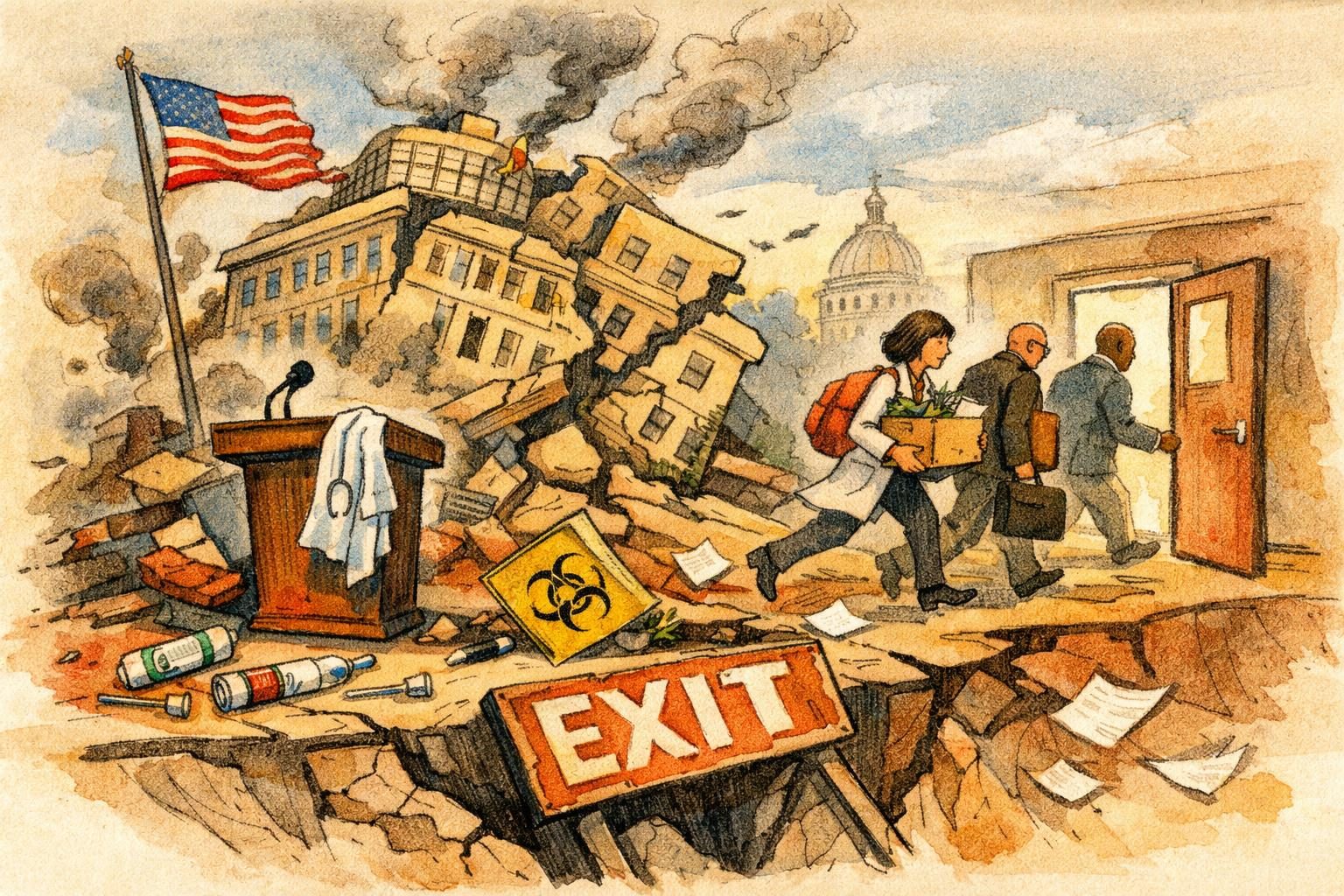
The Centers for Disease Control and Prevention went into another tailspin on August 27 as its director was pushed out and several senior leaders resigned, turning an already ugly internal dispute into a public rupture. The departures arrived after months of tension over political interference, budget pressure, and vaccine policy, and they made clear that the agency’s crisis is no longer confined to back rooms or anonymous frustration. What had looked like a slow, grinding erosion of authority has now become an open contest over who gets to define the CDC’s mission. The result is a federal health agency that appears to be losing both leadership and confidence at the same time. That is a dangerous combination for any institution, but especially one that is supposed to stand at the front line of the nation’s public-health response.
The CDC is not just another bureaucracy with a large staff and a complicated chain of command. It is the country’s early-warning system for outbreaks, the source of vaccine guidance for doctors and families, and one of the main federal institutions responsible for translating scientific evidence into practical public advice. When senior officials leave in a wave, the damage goes beyond vacancies on an organizational chart. Institutional memory gets scrambled, long-running projects lose momentum, and the people left behind have to spend time managing chaos instead of managing disease threats. The departing leaders said budget cuts, reorganizations, and political pressure had made it impossible to do the work in good faith, which is a severe indictment of the environment inside the agency. Their exits, combined with the firing of the director, suggest that the fight is no longer only about policy details. It is about whether the agency can function as a scientific body at all.
The accusations surrounding the upheaval are familiar, but no less serious for being familiar. Critics say the administration and Health Secretary Robert F. Kennedy Jr. have been pushing reckless directives that weaken the CDC’s scientific independence and force health officials to answer to ideology instead of evidence. That criticism matters because public-health agencies depend on credibility in a way that most departments do not. If clinicians, state health departments, and ordinary Americans start to believe that guidance is shaped by political loyalty rather than medical judgment, the agency’s recommendations lose power before they are even issued. The latest departures therefore carry a symbolic weight that is larger than the personnel changes themselves. They signal a breakdown in the basic relationship between the CDC and the people expected to rely on it. And once that relationship is damaged, repairing it is much harder than replacing a few executives.
Lawmakers and departing officials responded with unusually sharp warnings, framing the episode as a direct threat to evidence-based decision-making. That reaction was not just about one director or one round of resignations. It was about a pattern of upheaval that has already consumed months and now appears to be accelerating. The CDC has been under pressure from budget reductions and internal restructuring, and the latest walkouts deepen the sense that the agency is being stripped down while asked to keep carrying the country’s public-health load. If health policy becomes a test of ideological obedience, the consequences can reach far beyond Washington. Vaccine programs, emergency response planning, outbreak tracking, and disease prevention all depend on a stable and trusted CDC. The immediate fallout is more confusion and instability. The longer-term risk is that the public, already wary after years of polarization and pandemic fatigue, will have even less reason to believe federal health guidance when the next crisis arrives. That is the deeper wreckage now spreading through the agency: not just empty offices, but an institution that may take years to recover its authority, if it can recover it at all.
Comments
Threaded replies, voting, and reports are live. New users still go through screening on their first approved comments.
Log in to comment
No comments yet. Be the first reasonably on-topic person here.