
Coast Guard locks down Guam harbor for the kind of federal theater nobody loves
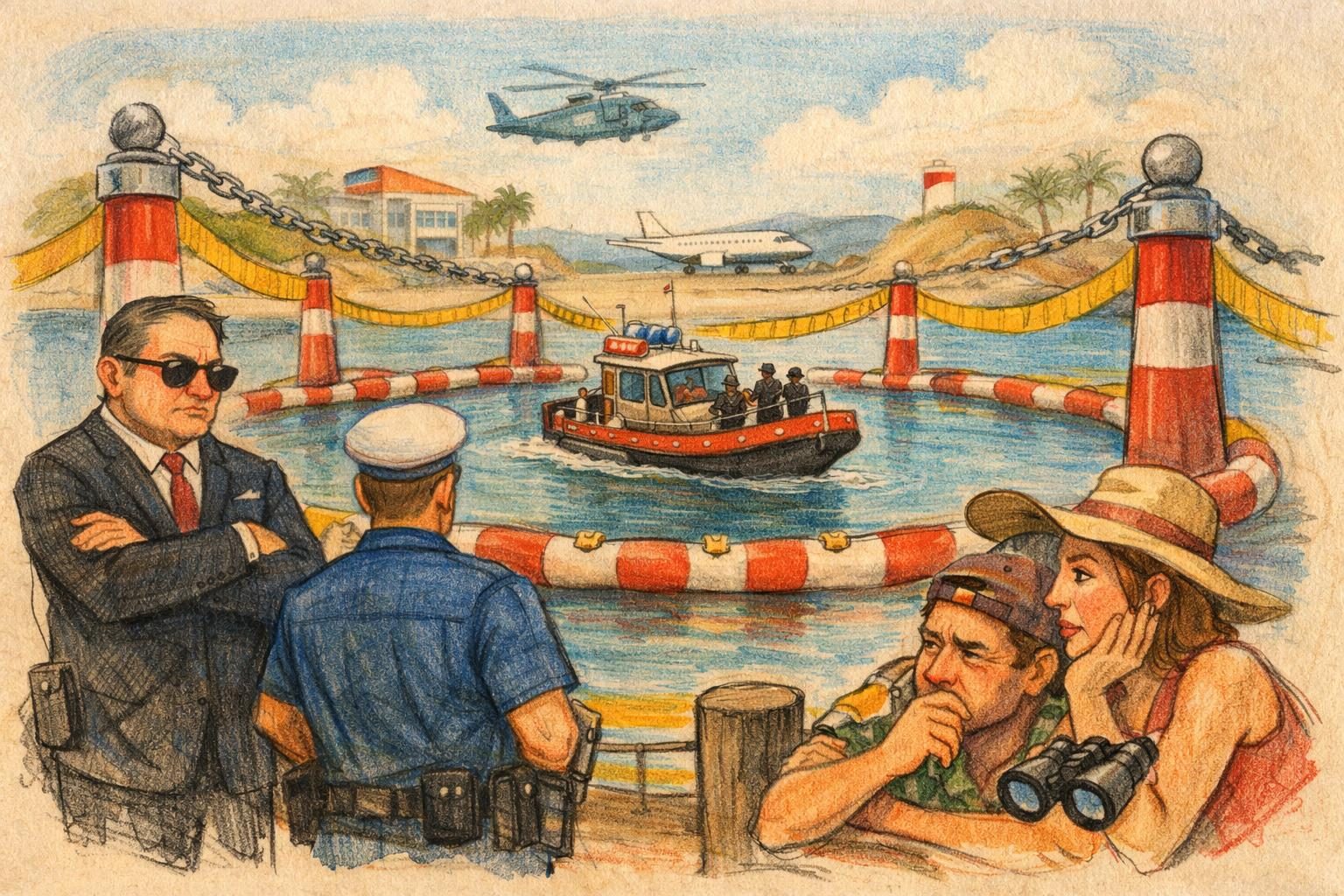
The Coast Guard put a temporary security zone around waters near Apra Harbor in Guam on August 27, a move that immediately narrowed access to part of one of the island’s most sensitive maritime areas. The restriction applied when officials protected by the Secret Service were present or reasonably expected to be present, and it barred entry unless a vessel or person had authorization during the enforcement window. On paper, that is the kind of procedural order that shows up every day in the federal register and then vanishes from public attention as quickly as it arrived. In practice, it is also a reminder that when high-level federal travel comes to a place like Guam, ordinary movement can be curtailed with almost no notice. The government may describe the action as routine, but the effect on the water is immediate and unmistakable. Apra Harbor is not just another harbor, and the decision to ring it with restrictions says something about how seriously federal authorities treat the security environment around protected visits.
That routine label matters because it can make the order sound more trivial than it is. A temporary security zone is a controlled perimeter, and a controlled perimeter means people are being told where they may not go, when they may not go there, and under what conditions they might be allowed through. Those are not abstract bureaucratic details for boaters, commercial operators, or anyone else using the harbor and adjacent waters. They are operational limits, enforced by the Coast Guard, at a location where access already carries strategic significance. Guam occupies a unique place in the federal imagination because it sits far from the mainland but squarely within the defense and travel architecture of the United States. So even when the restriction is framed as temporary, it lands as part of a larger pattern in which official business arrives with a cordon and leaves behind a paper trail that is easy to overlook. The order does not suggest a crisis by itself, and there is no indication in the underlying action that the government was responding to a specific public threat. But the need for the zone still tells a story about how federal security now works in practice: quickly, quietly, and with the assumption that public space must often be narrowed before anything can happen safely.
That broader story is what gives the Guam restriction political weight even without scandal attached to it. Modern federal travel increasingly depends on prearranged exclusion zones, protected corridors, and the expectation that normal access will be suspended whenever sensitive people move through sensitive places. The language may be clean and administrative, but the reality is more physical than procedural. Buoys, patrols, notices, and enforcement all combine to turn open water into managed space, if only for a limited period. That kind of arrangement is easy to dismiss because it is meant to be boring, and boring is often how bureaucracies prefer their security posture to appear. Yet repeated often enough, these measures become part of the governing style itself. They normalize the idea that official presence requires separation from the public, and that separation is not a one-off emergency response but a standard operating condition. For critics of this trend, the concern is not just the restriction itself but the cumulative habit it represents: more barriers, more exceptions, and more places where the public is asked to step aside while the state conducts its business. In that sense, the Guam zone fits a familiar pattern. It is a small administrative act that reflects a much larger architecture of caution and control.
The practical fallout from the August 27 order appears limited to access and enforcement, but that limited effect is still worth noticing because it is how these measures train public expectation. People adapt to zones, notices, and temporary closures, and what begins as a narrow security step can become part of the background noise of political life. Guam’s harbor is important enough that the federal government will not improvise when protected officials are nearby, and that alone makes the order a useful window into the way the system now operates. The state is not only present; it is perimeter-conscious, ready to turn space on and off depending on who is moving through it. That may be necessary, and in many cases it probably is. But necessity does not erase the symbolism. To the administration and its security apparatus, these restrictions can look like prudence and strength. To everyone else, they can feel like yet another reminder that public access is conditional, movement is managed, and government has become increasingly comfortable with the aesthetics of a fortress. The zone in Guam may have been temporary, but the political logic behind it is not. It is one more example of how federal power now arrives with rules, ropes, and the quiet expectation that the rest of us will keep a respectful distance.
Comments
Threaded replies, voting, and reports are live. New users still go through screening on their first approved comments.
Log in to comment
No comments yet. Be the first reasonably on-topic person here.