
Schumer and Schiff blast secrecy push over Trump advisers
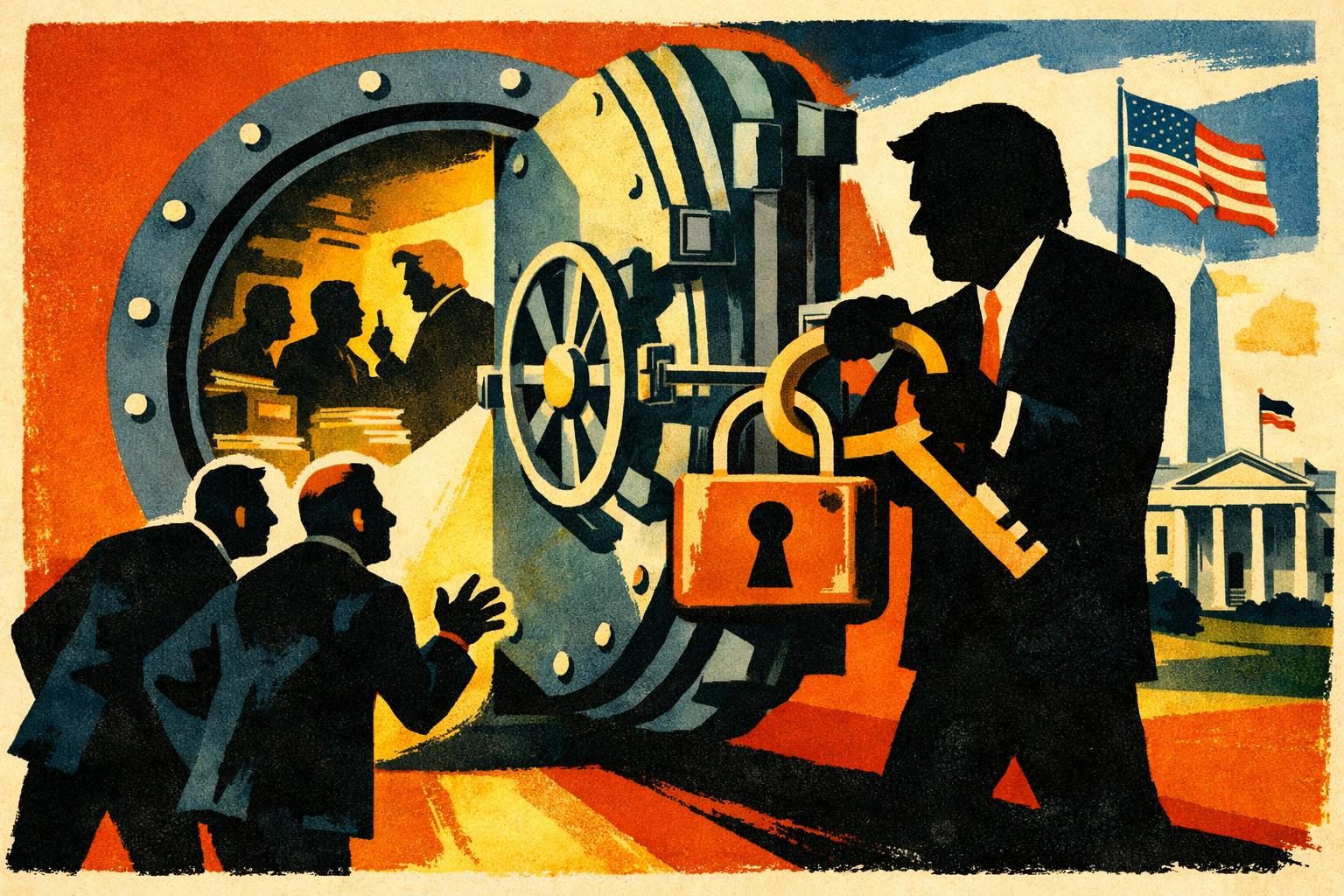
Senate Minority Leader Chuck Schumer and Sen. Adam Schiff on Wednesday sharply criticized a Trump administration effort they say is designed to keep communications between the president and private advisers out of congressional view. The dispute centers on whether the administration is trying to stretch executive privilege beyond the people and conversations it was meant to cover. According to the Democrats, the claim would let the White House treat private advisers as if they were part of the formal machinery of government simply because they have the president’s ear. That is a significant leap, and one that critics say would undermine basic standards of oversight. It also raises a familiar Washington question: when does confidentiality protecting legitimate executive deliberation turn into a blanket excuse to keep politically useful information hidden?
The criticism is not just about one set of messages or one legal theory. Schiff and Schumer argue that the administration’s position would blur the line between official government business and private influence, a line Congress relies on to do its job. Their concern is that if outside advisers can be folded into the privilege shield without holding government posts, taking public oaths, or being subject to ordinary ethics and records rules, then the public loses a meaningful way to see who is shaping policy and how. That matters because many of the most consequential decisions in modern Washington are not made in a neat public hearing room; they are often shaped in back channels, informal meetings, and private conversations that only become visible later through investigations or litigation. If those conversations are locked away by a broader reading of privilege, lawmakers may have a harder time tracing whether advice was given in the public interest or in service of friends, donors, family, or political allies. The Democrats’ broader point is that secrecy can be a governance tool, but it can also become a cover for favoritism and unaccountable decision-making.
The administration’s move, as the Democrats describe it, also appears to build on prior executive-branch legal reasoning that has already drawn scrutiny in court. That is part of what makes this fight more than a procedural squabble over document requests. The argument touches on a larger and recurring battle over how far a president can go in defining the limits of oversight when the political stakes are high. Executive privilege is a real doctrine, but it has never been an unlimited one, and it has historically been tied to the need for candid advice among government officials carrying out official duties. Extending that protection to private advisers would invite a harder question: if close informal advisers can be treated like protected presidential confidents, what stops a future administration from designating an ever-wider circle of political allies as untouchable? That possibility is exactly what critics are warning against, because once a secrecy rule becomes flexible enough to fit almost anyone in the president’s orbit, the rule starts to lose its meaning.
For Schumer and Schiff, the issue is ultimately about whether oversight is treated as a nuisance or a constitutional requirement. They are arguing that the administration’s interpretation is not a narrow legal defense but a unilateral expansion of secrecy that could weaken Congress’s ability to police corruption, favoritism, and back-channel policymaking. The immediate consequences may play out first as a political fight, with Democrats pressing the case publicly and the White House likely defending its legal position as routine protection for presidential decision-making. But the broader implications are structural and could outlast the current dispute. If the executive branch can successfully shield private-adviser communications from scrutiny simply by invoking proximity to the president, then future administrations of either party would have a powerful incentive to hide more and reveal less. That is why the clash matters even to people who are not following the details of any one memo or subpoena. It is another test of whether the boundaries between public power and private influence still mean anything, or whether they can be quietly erased whenever someone in the White House decides the view is too inconvenient.
Comments
Threaded replies, voting, and reports are live. New users still go through screening on their first approved comments.
Log in to comment
No comments yet. Be the first reasonably on-topic person here.