
Justice Department Publishes Fresh Records Report and Firearms-Relief Notice
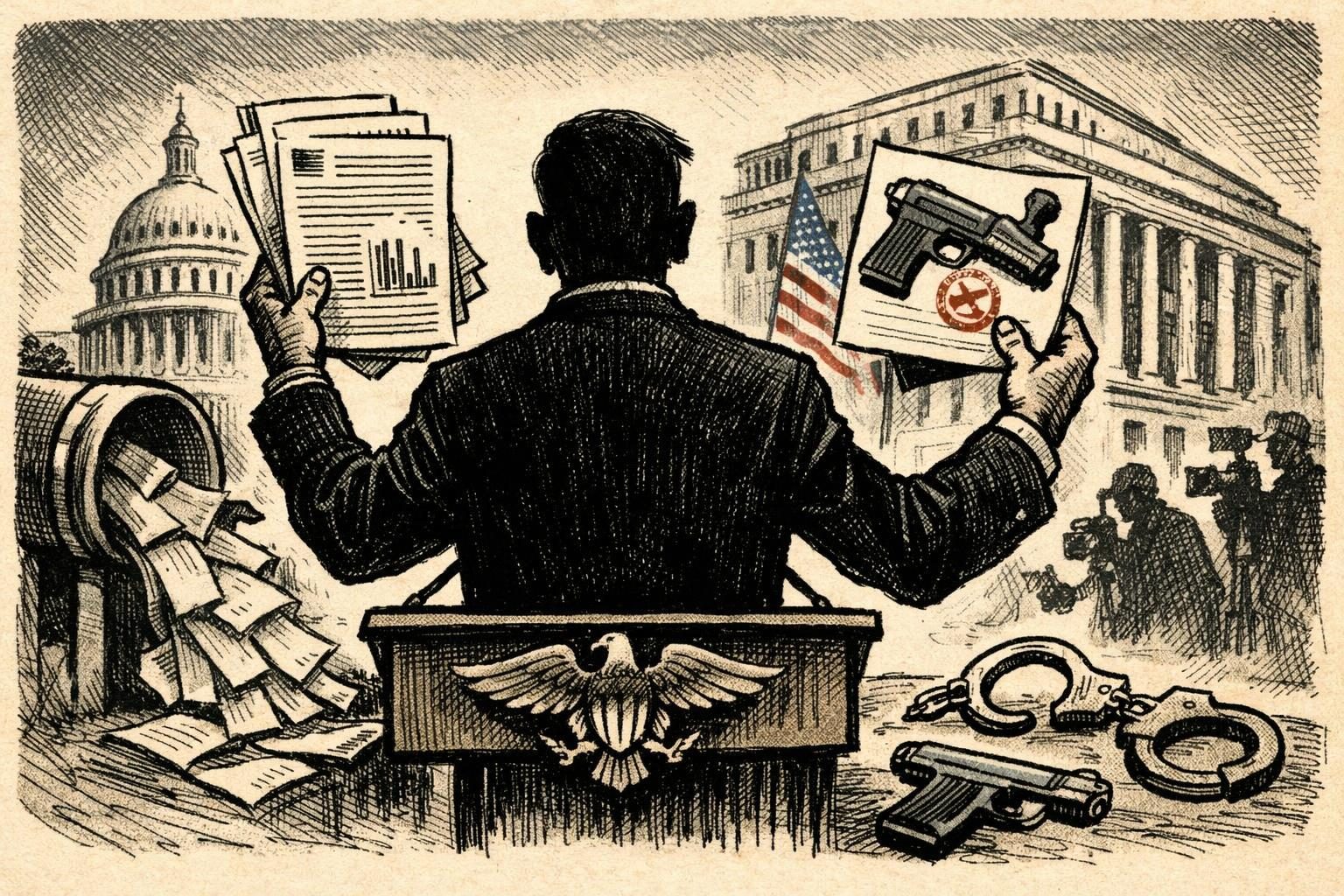
The Justice Department quietly added two more items to the Federal Register pipeline on August 27, and while neither one is the sort of thing that would normally dominate a news cycle, both carry the kind of administrative weight that can ripple far beyond the page they occupy. One document is a report issued under Public Law 119-38 that lays out what records the department released, what it withheld, and the legal grounds it relied on in making those decisions. The other is a separate notice tied to the restoration of federal firearms privileges for certain individuals, a niche but consequential corner of federal law where public safety, legal standards, and executive discretion overlap. Taken together, the notices show an agency still moving sensitive material through formal channels, and doing so in a way that can matter a great deal to lawyers, oversight staff, and anyone tracking how aggressively the government is managing access to information. That may sound like paperwork in its purest form, but in Washington paperwork often is the policy.
The records report is the more significant of the two because it offers a rare, structured glimpse into how the department is drawing the line between disclosure and secrecy. Any time DOJ publishes a list of what it released, what it withheld, and why, it creates an opening for outside scrutiny of the department’s judgment calls. That is especially true when the material touches politically sensitive figures, public officials, or other people whose names may carry extra weight in an oversight dispute. The document does not, on its face, resolve the bigger questions that usually follow such a publication. It does not tell the public whether every redaction was necessary, whether the department took the narrowest lawful path, or whether it used secrecy as a shield where disclosure would have been possible. But it does mark the point where those questions become concrete rather than hypothetical, because once the department has put its reasoning into the record, other actors can start testing it. That includes members of Congress, watchdog groups, litigants, and anyone else inclined to ask whether the agency’s legal explanation matches the facts on the ground.
The firearms-relief notice is less sprawling, but it should not be dismissed as merely routine housekeeping. Restoration of federal firearms privileges sits at the intersection of law enforcement, rehabilitation, and executive branch judgment, and those decisions can draw attention precisely because they tend to be made out of the public spotlight. Even a notice that looks narrow on its face may reflect a broader administrative posture about how the government treats old disabilities, how it interprets statutory requirements, and how much discretion it is willing to exercise in close cases. For people who believe the system is too opaque, a notice like this raises familiar concerns about consistency and accountability. For those who defend the process, it represents ordinary execution of a legal framework that already contemplates individualized relief under defined standards. Either way, it is an official action with real consequences, not a symbolic flourish. And because it appears alongside the records report, it reinforces the impression that the department is still actively managing a stream of politically and legally sensitive matters through formal notice procedures rather than through public drama.
The larger story is not that either item is explosive. It is that the government continues to use low-profile publication mechanisms to handle issues that can later become central to oversight fights, litigation, or congressional inquiry. That is often how the most important disputes begin: not with a headline splash, but with a document that says the agency released some material, withheld some material, and believes the law supports that split. From there, the arguments about transparency, privilege, and administrative discretion can grow quickly. Supporters of openness will likely focus on whether the department has been too aggressive in redacting names or shielding context, particularly if the underlying records involve politically exposed people or officials. Skeptics of the whole exercise may insist the public is reading too much into a standard Federal Register entry and turning routine compliance into conspiracy theory. But routine and consequential are not mutually exclusive, and this is exactly the kind of bureaucratic action that can look dull until someone asks for the underlying file. In that sense, the department’s August 27 notices are a reminder that the government’s real battles often start where almost nobody is looking, in the fine print that tells everyone else what they are allowed to know.
Comments
Threaded replies, voting, and reports are live. New users still go through screening on their first approved comments.
Log in to comment
No comments yet. Be the first reasonably on-topic person here.