
DOJ turns an old FBI memo into a fresh weaponization spectacle
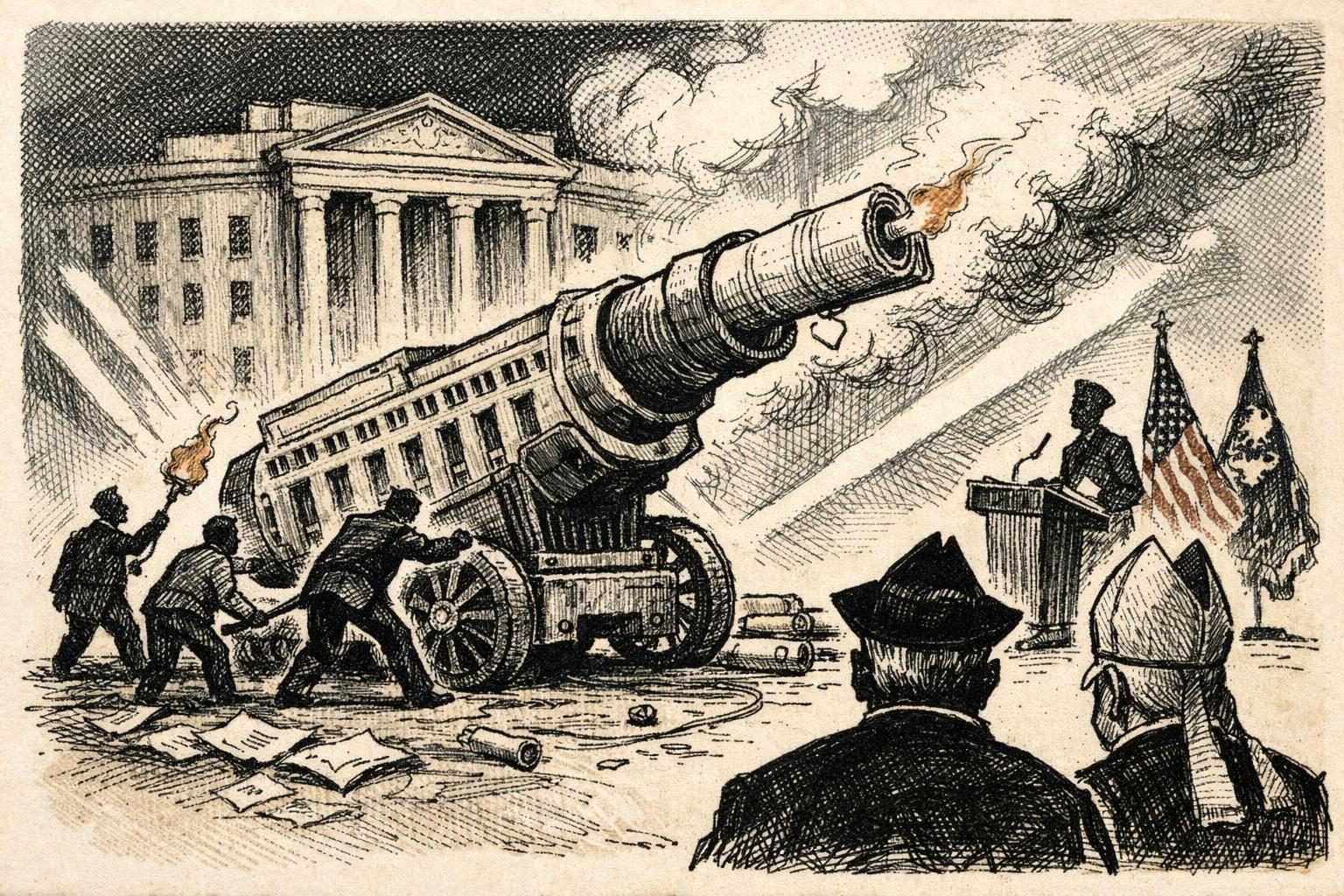
The Justice Department on Aug. 27 released a report on the FBI’s Richmond Field Office memo that drew a straight line between some non-mainstream Catholics and domestic extremism, a move that immediately reopened one of the more politically radioactive episodes of recent law-enforcement history. The memo itself had already become shorthand for the danger of turning ideology into suspicion, and the department’s new report now recasts that controversy as evidence of abuse inside the prior administration’s FBI. According to the department, the document described supposed rising extremism among people with conservative Catholic beliefs and helped justify investigative activity that alarmed civil-liberties advocates. It also says the memo contributed to the investigation of two priests, with surveillance of one of them included in the fallout. In other words, the release is not just a historical footnote; it is a formal effort to define the memo as proof that political assumptions slipped into national-security judgment.
That framing matters because it does two things at once. It gives the administration a fresh example to point to when it talks about government overreach, especially against religious conservatives, and it allows the Justice Department to present itself as the institution doing the cleanup after someone else’s excesses. The report lands in a political environment where “weaponization” has become a recurring accusation, and the department is plainly hoping to show that it is correcting prior misconduct rather than repeating it. But the optics are more complicated than that. A government that says it is exposing abuse can also use the exposure to reinforce its own power, justify personnel changes, and sharpen the case that internal enemies were the real problem all along. The result is a familiar Washington loop: one side’s accountability becomes another side’s purge narrative, and the language of reform ends up sounding a lot like a warning shot.
The department said the key FBI personnel responsible for the memo had already been removed, which suggests the report is part of an ongoing internal reckoning rather than a purely archival exercise. That detail gives the announcement a harder edge, because it ties the document to real career consequences instead of treating it as a lesson everyone can safely file away. For critics, the memo is still a cautionary tale about what happens when an intelligence judgment starts from ideology and works backward toward suspicion. For supporters of the current cleanup effort, it is evidence that the bureau’s mistakes were serious enough to warrant stronger internal discipline. The unresolved question is how much of this is accountability and how much is score-settling dressed up as institutional hygiene. In practice, those categories are often hard to separate once a report becomes part of an active political brand. The department can say it is restoring trust, but it is also investing in a story that trust was broken by people who needed to be removed.
There is also a broader civil-liberties issue here that goes beyond this one memo. When a law-enforcement agency starts associating a religious community, or a subset of that community, with extremism based on ideological priors rather than individualized evidence, the line between intelligence analysis and political profiling gets dangerously thin. That is the central concern civil-rights advocates have raised for years, and this report will likely give them fresh material even as the department frames the episode as proof that it is finally cleaning house. The public is left to process a contradiction that has become increasingly common in modern governance: the same institution that warns about weaponization often depends on the political usefulness of the charge. That creates a distrust spiral, because people hear the word “weaponization” and then watch a government continue to weaponize the language of weaponization for its own purposes. The Richmond memo may have been a real abuse, and the report may contain legitimate findings, but the political uses of those findings are their own separate phenomenon. In this administration, even a deweaponization announcement arrives with the unmistakable scent of fresh ordnance attached."}]}
Comments
Threaded replies, voting, and reports are live. New users still go through screening on their first approved comments.
Log in to comment
No comments yet. Be the first reasonably on-topic person here.