
Court Keeps the Farmworker Wage Cut in the Crosshairs
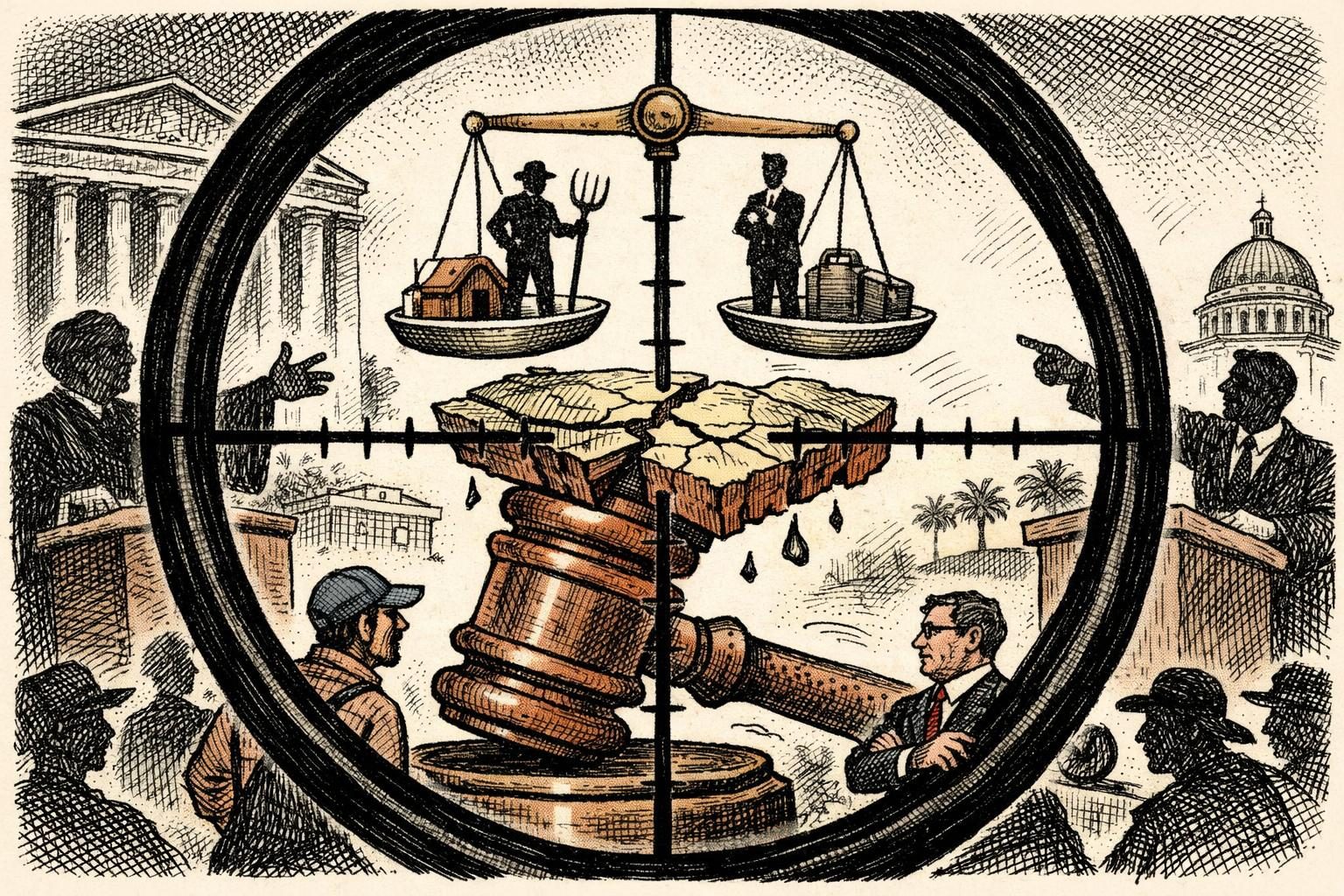
The Trump administration’s effort to push down farmworker pay ran into another legal pothole on August 27, when a court ruling left the Department of Labor’s wage-cutting rule hanging on uncertain ground. The fight centers on the adverse effect wage rate, the benchmark that sets pay floors for many workers in the H-2A guestworker program and shapes wages far beyond the small circle of employers who rely on it directly. That number is not some dusty bureaucratic footnote. It is one of the main guardrails meant to keep foreign labor from being used to depress wages for domestic farmworkers, and when the government moves it, the consequences ripple through fields, payrolls, and state labor budgets. The administration has argued that it needs more flexibility in how it calculates the rate, but the latest ruling suggests that flexibility may have been exercised in ways the courts are not willing to accept without a fight.
California Attorney General Rob Bonta immediately treated the decision as another validation of the argument that the administration’s interim rule was unlawful. His reaction matters because it shows how quickly state officials have lined up against the policy and how little patience they have for what they view as an effort to chip away at wage protections through administrative maneuvering. The opposition is not limited to one state’s politics, either. States that depend heavily on agricultural labor have a direct stake in how the wage formula is written because it affects labor costs, recruitment, and the broader balance between employers who want cheaper hires and workers who want some predictable floor under their pay. In practical terms, the ruling keeps the rule in limbo while the administration tries to defend a policy that has already become a magnet for litigation and public criticism. That is a hard place for any administration to be in, but especially one that promised to make government more efficient while instead turning a basic wage rule into a rolling legal mess.
The deeper problem is that farm wage policy is never just a technical question, even when it is dressed up as one. The adverse effect wage rate exists because Congress and the executive branch have long treated farm labor as a sector where market forces alone can produce ugly results, especially for workers with limited bargaining power and few realistic alternatives. For H-2A employers, the rate determines whether hiring guestworkers remains affordable. For domestic workers, it can influence whether agricultural jobs stay above the lowest rungs of the labor market. For states, it can become a flashpoint when federal policy appears to shift costs downward onto local workers and public systems. That is why Bonta’s office moved fast to denounce the ruling and why labor and immigrant-rights advocates have been so aggressive in framing the administration’s approach as a direct threat to worker protections. The administration may insist it is trying to give growers breathing room, but the legal record so far suggests that the way it has gone about that goal is inviting the exact instability it claimed to be fixing.
What makes this round of litigation so awkward is that the administration is not just dealing with critics; it is now stuck with a policy that may be too legally fragile to provide the clarity employers say they need. Growers want to know what they will have to pay before they hire crews, plan harvests, or sign contracts. Workers want to know whether the wage floor is real or whether it can be revised downward every time the political winds change. State governments want to know whether they are being asked to absorb the fallout from a federal rule that could be struck down, narrowed, or rewritten yet again. That is the opposite of stable labor policy, and the uncertainty itself becomes a cost. If the Department of Labor has to keep revising guidance or defending new versions of the rule, the result will be more confusion for compliance officers, more headaches for farm operators, and more ammunition for anyone arguing that the administration’s regulatory approach is built on subtraction rather than coherence. The federal government is supposed to provide a baseline of order. Instead, it has managed to turn a key wage-setting tool into yet another fight over whether it is trying to govern the labor market or simply squeeze it until the workers feel the pressure first.
Comments
Threaded replies, voting, and reports are live. New users still go through screening on their first approved comments.
Log in to comment
No comments yet. Be the first reasonably on-topic person here.