
FAA doubles down on drones with a major BEYOND expansion
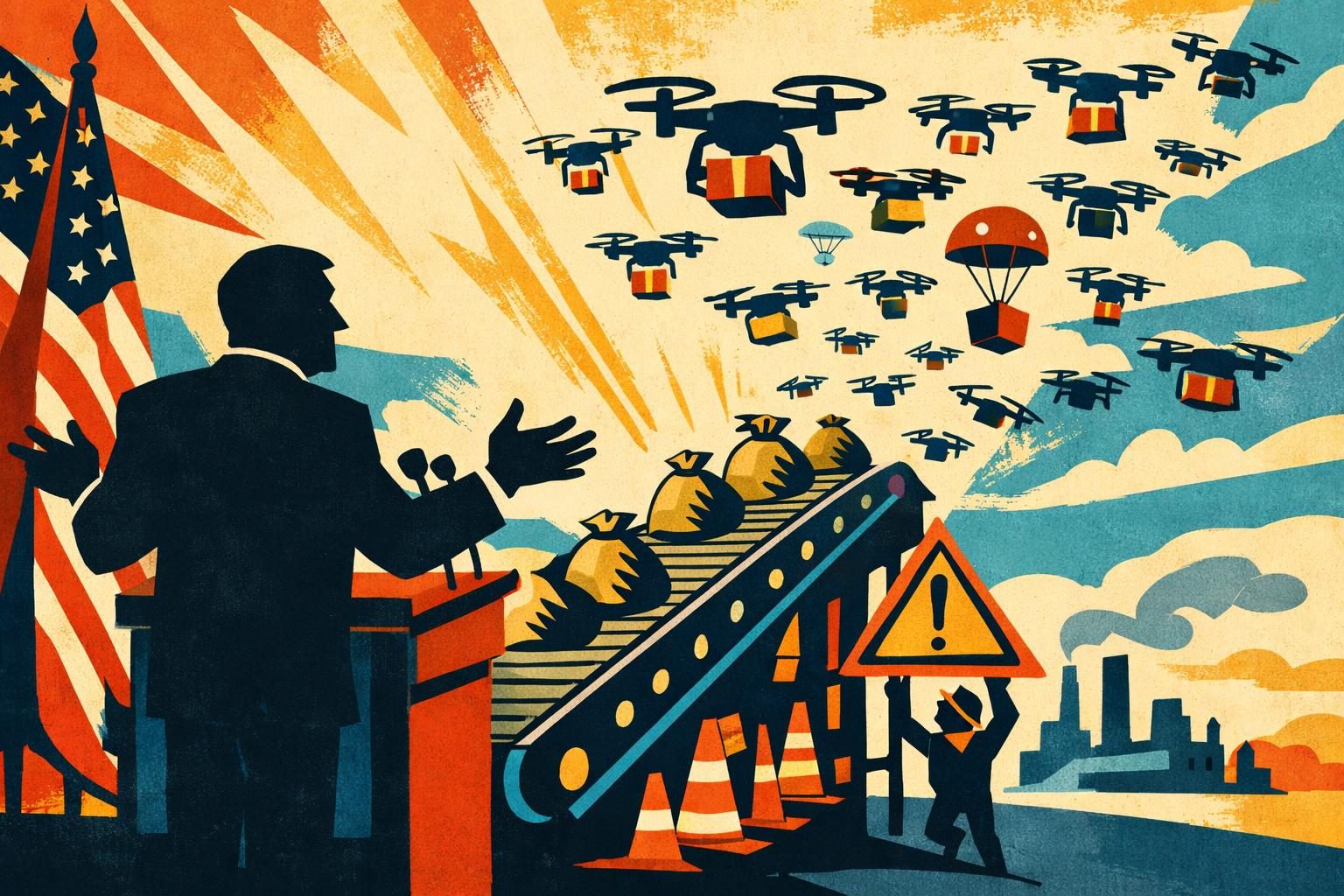
Transportation Secretary Sean P. Duffy on Thursday announced a major expansion of the FAA’s BEYOND program, a move that will effectively double the program’s current footprint by bringing in up to eight additional state, local, tribal, and territorial participants. On paper, it is a straightforward policy decision: more participants, more test beds, more data, and a broader runway for advanced drone operations to move from experiment to routine use. In practice, it is also a clear signal that the administration wants to push drone integration faster and frame that push as an innovation story rather than a regulatory fight. The FAA says Phase 2 of BEYOND is intended to accelerate the incorporation of drones into the national airspace system and to strengthen U.S. leadership in aviation technology. That is a real change in how the federal government is choosing to manage the sector, even if the immediate effect is mostly to widen the circle of agencies and jurisdictions allowed to help shape the rules.
The significance of the expansion goes beyond the simple arithmetic of adding more participants. BEYOND is not just a branding exercise; it is one of the mechanisms the FAA uses to gather operational experience, test new drone use cases, and learn what kinds of regulations or waivers may be needed to normalize advanced unmanned aircraft activity. By expanding the program now, the agency is effectively betting that it can scale up drone integration without first triggering the kind of safety or privacy backlash that often accompanies rapid transportation policy changes. That bet matters because drone policy has a way of becoming a proxy fight over much bigger issues. It can raise questions about surveillance, commercial access to public airspace, labor displacement, emergency response, delivery systems, and the balance between innovation and oversight. The administration is clearly leaning into the argument that faster adoption is itself a public good, but that argument tends to get more complicated once communities start asking who benefits, who bears the risk, and how much scrutiny is enough before new uses are normalized.
There is also a political angle here that is difficult to miss. The announcement fits a broader deregulatory posture that presents government as most effective when it clears obstacles out of the way for technological progress. That message is attractive to industry, especially in a field where companies have long argued that federal caution has slowed investment and limited commercial deployment. It is also a useful talking point for an administration eager to show competence, modernization, and a willingness to embrace emerging technology. But the same approach can invite skepticism, especially when the public is being asked to trust that safety oversight will keep pace with rapid expansion. Aviation regulators do not get many second chances when a policy designed to speed adoption runs into a headline-making mistake. Even if BEYOND is being presented as incremental and carefully managed, critics will likely look at the expansion and see another example of the government moving quickly in a space where the consequences of error are not abstract.
For now, the likely fallout is more regulatory than dramatic, but that does not make it insignificant. Adding more participants means more local and regional stakeholders operating in a system that is already complex, and that increases the odds of conflicting priorities, delayed approvals, or disputes over what kind of drone activity should be allowed and where. It also gives the FAA more opportunities to gather evidence that could support broader policy changes, while simultaneously creating more chances for the agency to be accused of favoring industry convenience over careful public safeguards. The administration can point to the expansion as proof that it is helping the United States keep pace in a strategically important sector, and that argument will probably land with supporters who want the government to be more aggressive about emerging technology. But the broader political reality is less tidy. Drone expansion is never just about drones, and once the policy starts affecting airspace use, privacy concerns, local control, and safety expectations, the debate usually gets louder rather than quieter. This does not amount to a scandal in the usual sense, but it is a real move with real stakes, and in this policy environment that is enough to make it worth watching closely.
Comments
Threaded replies, voting, and reports are live. New users still go through screening on their first approved comments.
Log in to comment
No comments yet. Be the first reasonably on-topic person here.