
Federal judge freezes the core of the USPS mail-voting mess
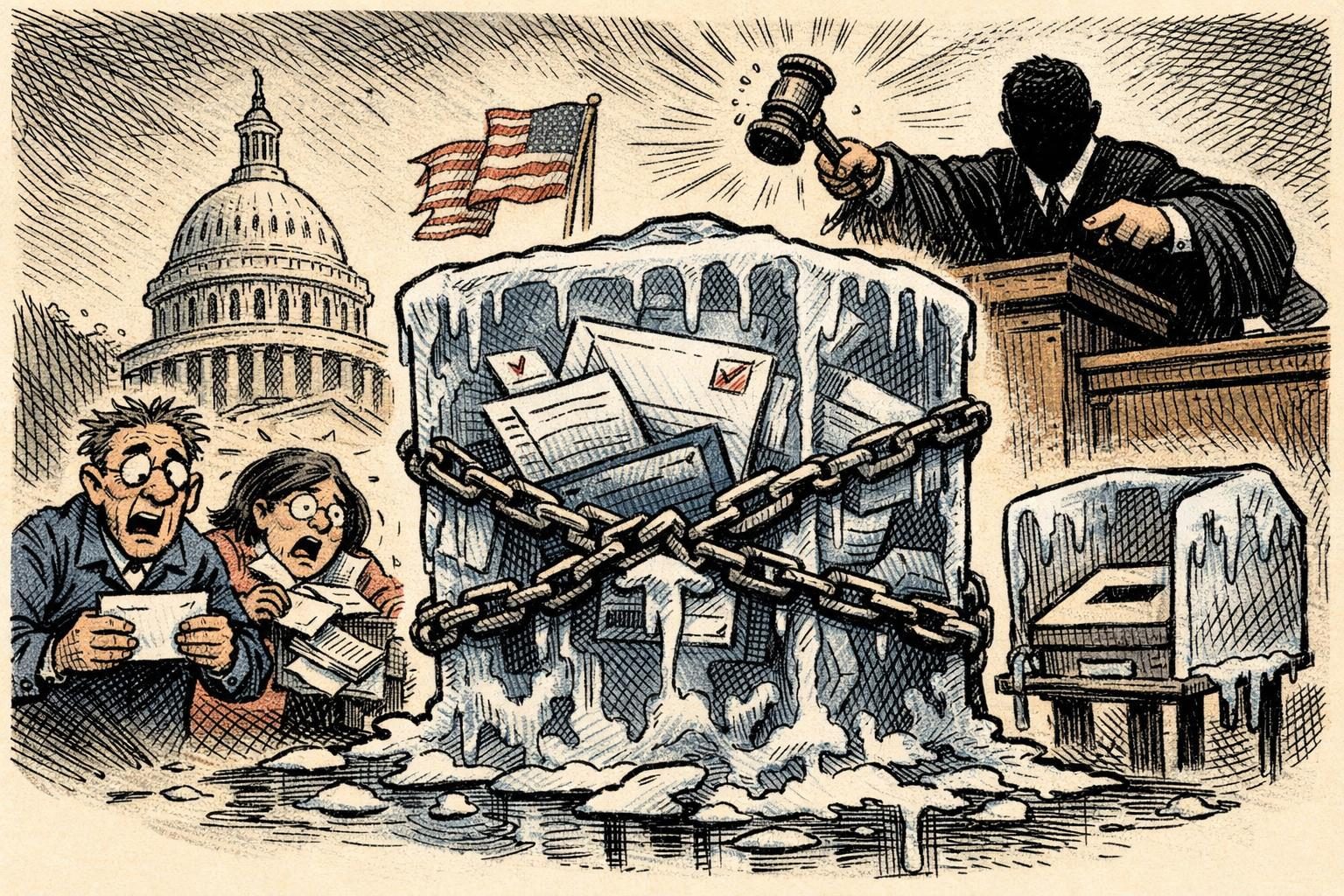
A federal judge in Massachusetts has put a temporary restraining order on the most consequential parts of a new USPS rule that would have rewritten how states handle mail ballots, handing election officials an early legal victory and forcing the administration to defend a policy that was moving faster than the courts were willing to tolerate. The blocked provisions were not minor adjustments to postal procedure. According to the states challenging the rule, they would have required election administrators to redesign ballot envelopes, create new federal-style steps for voters to enroll with the Postal Service, and accept a system in which the Postal Service could reject mail ballots that did not line up with the new requirements. That is a huge intervention in a process that has traditionally been run by the states, and the court’s decision suggests the judge saw enough risk to pause the rule before it could take root. The result is not a final defeat for the administration, but it is a blunt warning that the legal road ahead is steep and the political optics are already bad. For a policy sold as a postal cleanup, it quickly looked like a federal takeover attempt with an election-season timetable.
The fight began with a coalition of states arguing that the rule intruded on powers reserved to them under the Constitution and tried to insert the Postal Service into an area where it does not normally get to act as referee. Their core complaint was simple: election rules are not supposed to be rewritten by postal administrators from the top down, especially when the practical effect would be to force states to change longstanding ballot-handling systems on short notice. State attorneys general said the rule would have created confusion for voters, headaches for election workers, and new costs for state and local governments already preparing for another national election cycle. They also argued that the Postal Service was being turned into a gatekeeper over ballots in a way that could disqualify valid votes for reasons tied to a federal form of compliance, not actual voter intent. The judge’s order did not settle every legal question, but it did stop the most disruptive parts of the plan and left the administration with a rule that now exists mostly as a legal headache. In practical terms, that means states do not have to immediately retool their mail-voting systems to satisfy a federal mandate that many of them say was never lawful in the first place.
The administration’s move fits a broader pattern of trying to exert control over election machinery through federal agencies that were not designed to run elections, and that is why the response has been so sharp. Even supporters of tighter postal oversight would have to acknowledge that a rule like this can have outsized effects long before a judge reaches a final ruling. Election administrators do not work in a vacuum; they need time to print materials, update instructions, train staff, and tell voters what is changing. A temporary restraining order freezes all of that uncertainty in place and protects the existing system from being forced into immediate compliance with a disputed federal scheme. That is especially important when the alleged harm is not theoretical. If ballot envelopes have to be redesigned, if voter enrollment is pushed through a USPS channel, and if ballots can be rejected under a new federal test, then even a short-lived rule could create confusion that lingers well beyond the court docket. The judge did not have to endorse the states’ entire legal theory to see that the balance of harms favored a pause, and that alone is a meaningful setback for the administration.
Politically, the ruling gives state officials a ready-made argument that this was not routine bureaucratic modernization but an unlawful overreach into the machinery of voting. The filing and the public statements from state attorneys general make clear that they intend to frame the case as a defense of state election authority against federal interference. California Attorney General Rob Bonta and New York Attorney General Letitia James both moved quickly to describe the order as a win for voters, and their offices cast the rule as an attempt to impose federal control where it did not belong. That messaging matters because it turns a technical postal dispute into a broader argument about who gets to set the rules for casting a ballot. The administration can still argue that it was trying to standardize procedures and improve mail handling, but the court action has already shifted the burden onto officials who now have to explain why a federal agency should be allowed to dictate parts of election administration at all. For the moment, the answer from the courtroom is no, or at least not without a fight the administration seems unlikely to win quickly. And in the world of election law, quick judicial resistance is often a sign that the politics around the policy are every bit as ugly as the legal theory behind it.
Comments
Threaded replies, voting, and reports are live. New users still go through screening on their first approved comments.
Log in to comment
No comments yet. Be the first reasonably on-topic person here.