
Trump signs a Great Lakes renaming order and picks a fight with reality
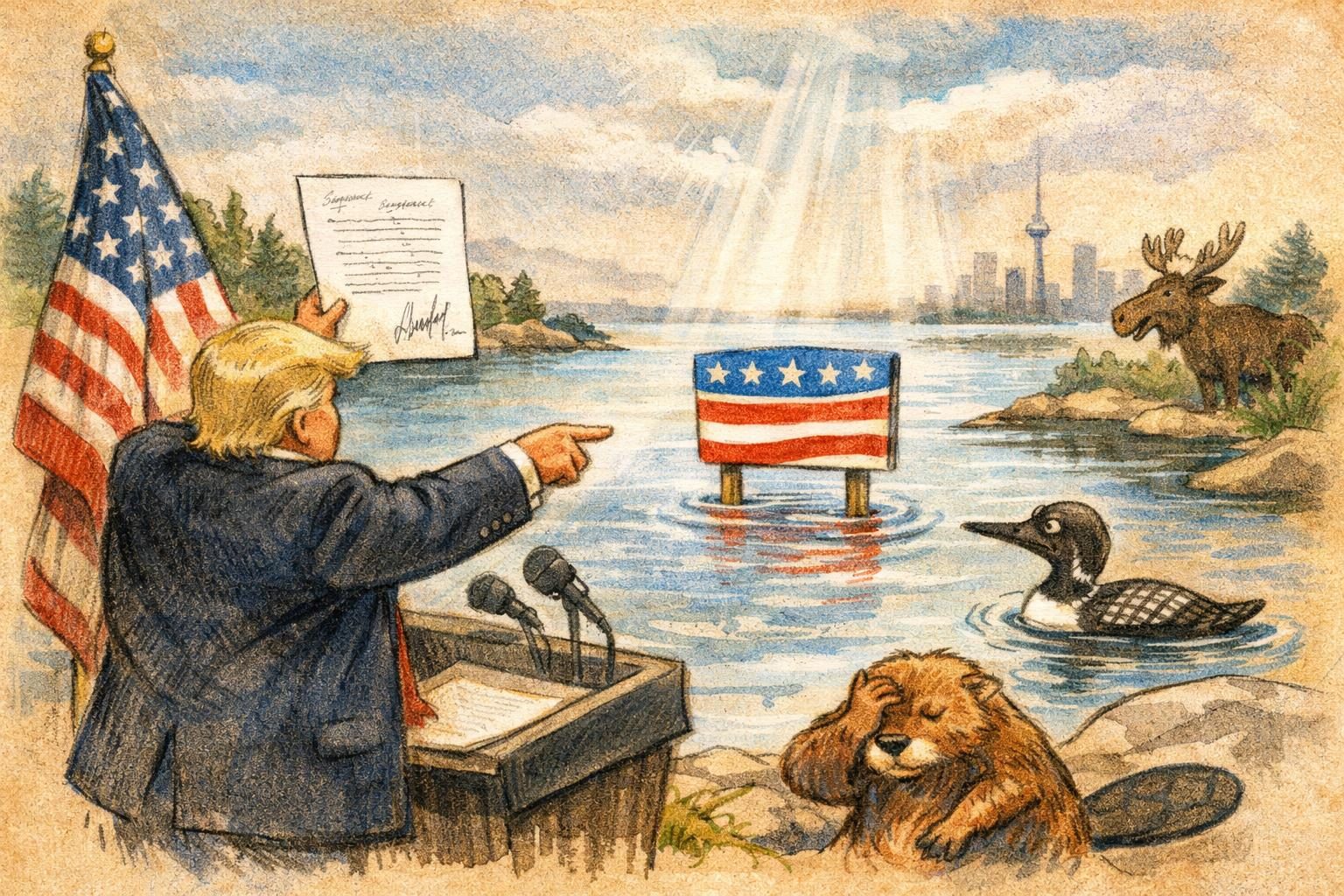
On August 27, the White House posted an executive order with a title that reads like it was drafted as a dare: “Honoring the American History of the Great Lakes and Renaming Lake Ontario as Lake America.” It is not a joke file, a parody screenshot, or a prank assembled by a bored staffer after lunch. It appears on the administration’s own presidential actions page as a real order, which means the government is choosing to spend presidential authority on a symbolic rename that has no obvious practical upside and a very obvious political one. The move fits neatly into a style of governance that treats provocation as both message and method. In that sense, the order is less an attempt to manage water, geography, or federal policy than a performance piece designed to say, loudly, that the president can make everyone talk about whatever he wants, even if what he wants is a new name for a lake.
The underlying politics here are not especially subtle. This is a culture-war stunt dressed up in the language of officialdom, one more attempt to turn the machinery of the state into a stage prop for the base. A renaming order does not solve a budget problem, settle a court case, or improve life in any tangible way for the people who live around the Great Lakes. It does, however, create a fresh excuse for supporters to cheer a symbolic swipe and for critics to roll their eyes at the spectacle of executive power being used for trolling. That is part of the point. The administration has repeatedly shown a preference for actions that are immediately legible as taunts, especially when those actions land on institutions, places, or traditions that carry cultural weight beyond their actual policy value. A lake rename is useful in exactly that way: it is easy to understand, easy to argue about, and easy to frame as either patriotic theater or embarrassing nonsense, depending on which side of the partisan trench you are standing in.
The timing also matters. The order arrived in a week already crowded with more serious legal and policy disputes, which makes the attention-seeking quality of the move feel especially deliberate. Rather than letting the news cycle orbit around difficult questions with real consequences, the White House injected a headline engineered to be silly enough to dominate conversation and irritating enough to keep opponents engaged. That is a familiar media strategy for this presidency: create a shiny object, make the country stare at it, and let everyone else exhaust themselves deciding whether it is beneath notice or too absurd to ignore. The administration benefits either way. If people dismiss it, the White House gets to claim the outrage is overblown. If people get angry, the administration gets to posture as a fearless breaker of norms. If people laugh, the joke still keeps the order in circulation. In other words, the stunt is not merely decorative. It is part of the operating system.
There is also something revealing about the form of the act itself. Executive orders are usually supposed to direct agencies, set priorities, or establish some version of federal instruction. Here, the order is using the structure of presidential power to assign a new label to a body of water and call that a contribution to American history. That is not governance in the ordinary sense; it is branding with a seal on it. It suggests an administration that is deeply invested in symbolic conquest, especially when the symbolism can be packaged as an assertion of national identity against perceived enemies, coastal elites, blue-state institutions, or anyone else useful in the week’s rhetorical crosshairs. The Great Lakes are not, in reality, a battlefield for this kind of thing. They are a shared geographic fact, not a partisan possession. But that is precisely why they are useful in a stunt like this: they can be pulled into the fight even though they were never asking to be.
What makes the order politically revealing is not just that it is unserious, but that it is unserious in a way that is highly disciplined. It takes an ordinary feature of the map and converts it into a loyalty test. It invites supporters to treat the rename as a cultural correction and opponents to treat it as proof that the administration cannot resist needless provocation. The White House can then operate inside that argument, feeding it whenever attention starts to drift. That pattern has become one of the defining features of the current era: govern by spectacle, defend by mockery, and keep the public in a permanent state of reactive conversation. For all the apparent absurdity of calling Lake Ontario “Lake America,” the move is not random. It is a calculated example of how power can be used to pick fights that are easy to stage, impossible to miss, and largely irrelevant to the actual work of government. The result is a kind of official mischief, one that tells you almost everything you need to know about the administration’s priorities without advancing any serious policy at all.
Comments
Threaded replies, voting, and reports are live. New users still go through screening on their first approved comments.
Log in to comment
No comments yet. Be the first reasonably on-topic person here.