
Justice Department says George Washington University medical school discriminated in admissions
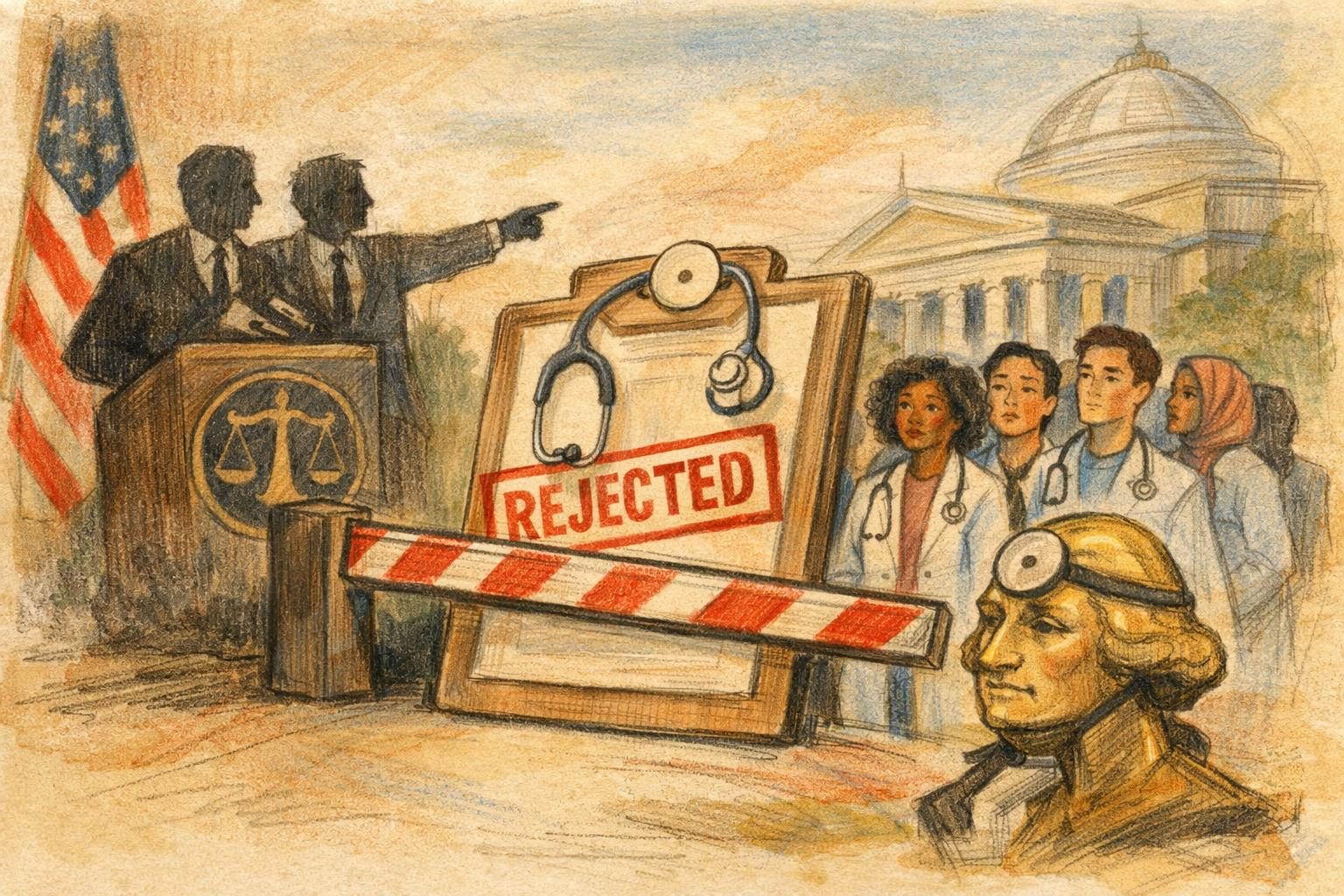
The Justice Department said on Aug. 27 that its Civil Rights Division found George Washington University’s School of Medicine and Health Sciences intentionally discriminated on the basis of race in admissions for its 2024 and 2025 incoming classes. The department said the school’s conduct violated Title VI of the Civil Rights Act and ran afoul of the Supreme Court’s 2023 ruling in Students for Fair Admissions, the decision that sharply curtailed the use of race in college admissions. In practical terms, the allegation is that a prestigious medical school continued to consider race in a way the federal government now says the law does not permit. That puts GW’s medical program squarely in the middle of the administration’s broader campaign against race-conscious decision-making in higher education. It also raises the stakes beyond one campus, because medical schools tend to be watched closely by regulators, accreditors, applicants, and employers alike. When the government turns its attention to a professional school with a national reputation, everyone else in the sector starts reading the fine print.
The finding matters because it is more than a rhetorical shot across the bow. A formal civil-rights determination can lead to negotiations, compliance demands, and possible enforcement steps if the department decides the institution has not changed course. That kind of process is often slow, but it is rarely painless, especially for a school that depends on a careful admissions pipeline and a public image of academic rigor. Medical schools are unusually vulnerable to this kind of scrutiny because their admissions decisions are tied not only to educational policy but also to the perceived legitimacy of the physician workforce they help produce. For years, many institutions argued that considering race, even indirectly, was part of building a class that better reflected the patients those graduates would serve. After the Supreme Court’s 2023 ruling, that argument entered far shakier legal territory, and the Justice Department is now signaling that it believes some schools have not adjusted quickly enough. Whether the government can prove intentional discrimination in this specific case will matter, but the message is already clear: the administration wants schools to understand that compliance is not optional, and it is willing to make an example where it thinks the facts support one.
Civil-rights advocates are likely to see the move as a politically loaded attempt to use anti-discrimination law against efforts to diversify medicine. They will argue that the federal government is taking a narrow reading of fairness and treating any institutional attention to race as suspect, even in fields where longstanding disparities are well documented. Supporters of the department’s action will answer that the law changed, the court was explicit, and schools cannot keep relying on admissions practices that conflict with the current legal framework. Both sides will claim the moral high ground, and both will point to different versions of equality. What is harder to deny is that the administration’s enforcement posture has become more aggressive, especially in education, where every investigation now carries the sense of a broader ideological fight. That tension is especially sharp in medicine, where schools are expected to recruit excellent students while also being judged on whether they are producing a workforce the public can trust. The government is betting that legal compliance should outweigh everything else. Critics will say that if the practical result is a less diverse profession, the enforcement itself becomes part of the problem.
For George Washington University, the immediate cost is reputational, even before any next step is announced. A finding of intentional discrimination is a serious label for any institution, but it lands particularly hard at a medical school that recruits nationally and competes in a highly credentialed market. Applicants, faculty members, alumni, and hospital partners will all be watching to see whether the school disputes the finding, revises its admissions procedures, or enters negotiations over compliance. The broader warning extends far beyond Washington, because elite programs across the country are still trying to figure out how far they can go in trying to preserve diversity without violating the law as interpreted after Students for Fair Admissions. Schools may respond by tightening documentation, stripping discretion from admissions committees, and leaning even more heavily on ostensibly race-neutral criteria that can still produce unequal outcomes. That kind of bureaucratic caution may satisfy lawyers, but it also tends to make admissions more opaque, not less. In the short term, the department’s finding is a jolt to one medical school. In the longer term, it is another sign that the post-SFFA world is becoming less a period of adjustment than a sustained federal crackdown, with schools forced to choose between defending old practices and proving they can build classes under much harsher legal scrutiny.
Comments
Threaded replies, voting, and reports are live. New users still go through screening on their first approved comments.
Log in to comment
No comments yet. Be the first reasonably on-topic person here.