
House energy panel targets drinking water and data centers
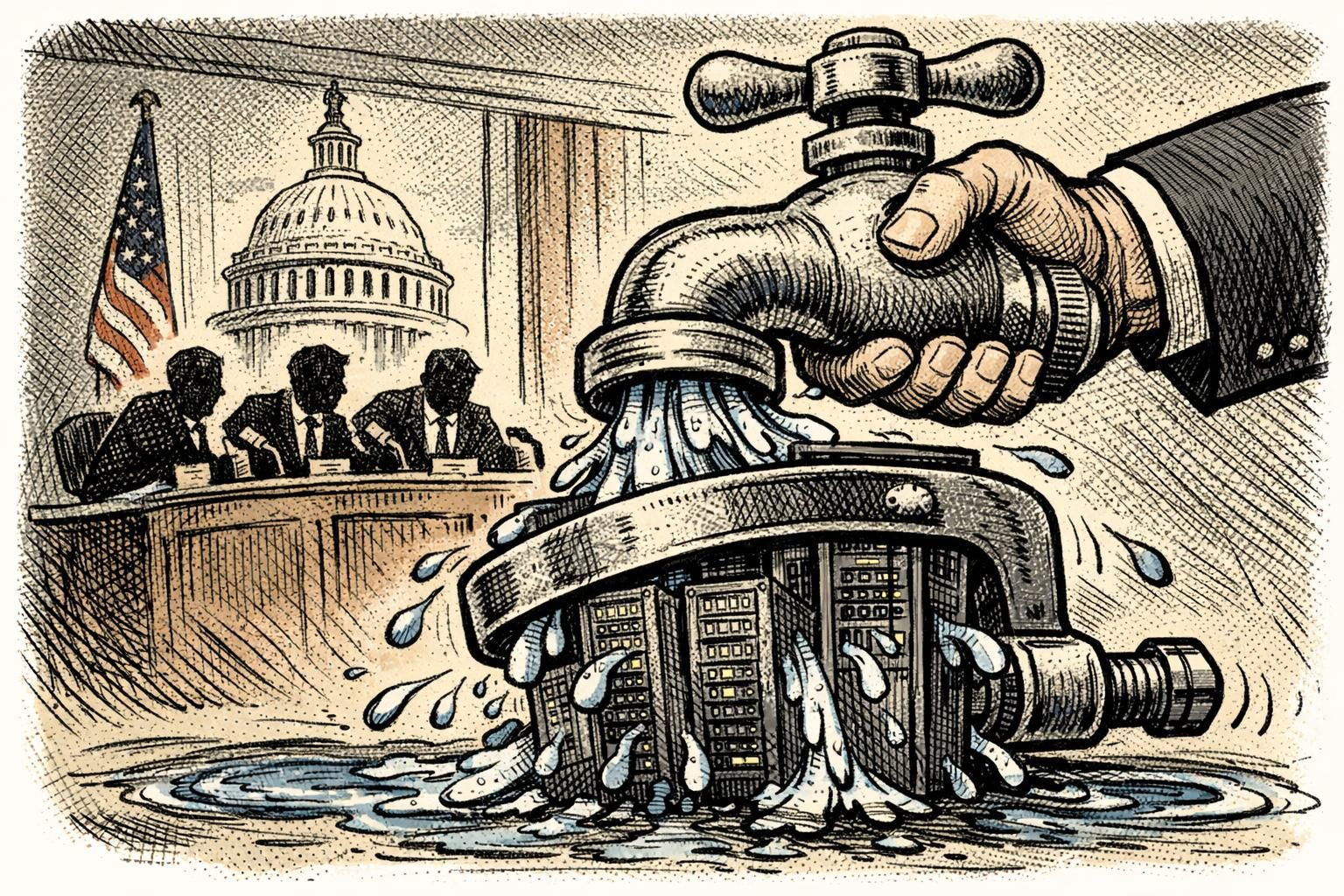
House Republicans on the Energy and Commerce Committee are moving a water-and-infrastructure fight into the open. On August 27, the committee announced a legislative hearing focused on drinking water systems, cyber threats, and the strain that data centers place on local water supplies. The hearing is not just a symbolic gesture. It comes with draft legislation that would shift some of the cost burden onto data-center builders rather than leaving households and municipal systems to absorb it indirectly through higher rates, stressed infrastructure, and delayed upgrades. That makes this a real policy step, even if it is still only an early one.
The timing matters because the underlying pressures have been building for years and are now colliding in plain sight. Data centers are multiplying across the country as cloud computing and artificial intelligence demand ever more power and cooling capacity. That growth does not happen in the abstract; it lands on local systems that need electricity, water, and technical resilience to keep up. In many places, utilities are already dealing with aging pipes, stressed treatment plants, and cyber vulnerabilities that make the infrastructure picture even more fragile. Putting drinking water, cyber threats, and data-center demand into one hearing suggests lawmakers are beginning to see the problem as a connected one, not a series of separate headaches.
The politics are also straightforward, which is part of why the issue is gaining traction. Communities do not usually get much say when a giant digital facility is planned nearby, but they often end up living with the consequences. Those consequences can include higher water demand, more complicated rate structures, and added pressure on systems that were never designed for this kind of load. By considering a draft bill that would make builders pay for the water their projects require, Republicans are acknowledging that the infrastructure boom has a real bill attached to it. The hearing also gives the committee a chance to frame itself as responsive to local concerns, especially in places where residents see new development arriving faster than the pipes and pumps needed to support it.
Still, a hearing is not a fix, and everyone involved probably knows that. It can create a record, force industry representatives and public officials to answer hard questions, and establish a legislative lane for future action. It can also expose how wide the gap is between the promises of digital growth and the physical limits of water systems and power networks. That gap is where a lot of modern policy failures hide, because the hype around technology often moves faster than the budgets and engineering required to support it. The committee’s move suggests Congress is finally trying to catch up, but it is doing so after the buildout is already well underway. That is why this story matters beyond the hearing room.
The broader context only sharpens that point. The White House has also been pushing an aggressive line on power-system security, including a recent fact sheet tied to a national emergency declaration aimed at securing the bulk power system. That does not solve the water problem, and it does not answer the local complaints about who should pay for the infrastructure that supports the digital economy. But it does show that federal officials are increasingly treating energy, water, and cyber resilience as overlapping national concerns rather than isolated technical issues. The House hearing fits into that atmosphere, where infrastructure strain is no longer hypothetical and where the costs of growth are becoming harder to pretend away. For communities facing the squeeze, the question is not whether data centers matter, but whether the people building them will finally be made to account for the systems they depend on.
Comments
Threaded replies, voting, and reports are live. New users still go through screening on their first approved comments.
Log in to comment
No comments yet. Be the first reasonably on-topic person here.