
Judge questions why the Kennedy Center is rushing to restore Trump’s name
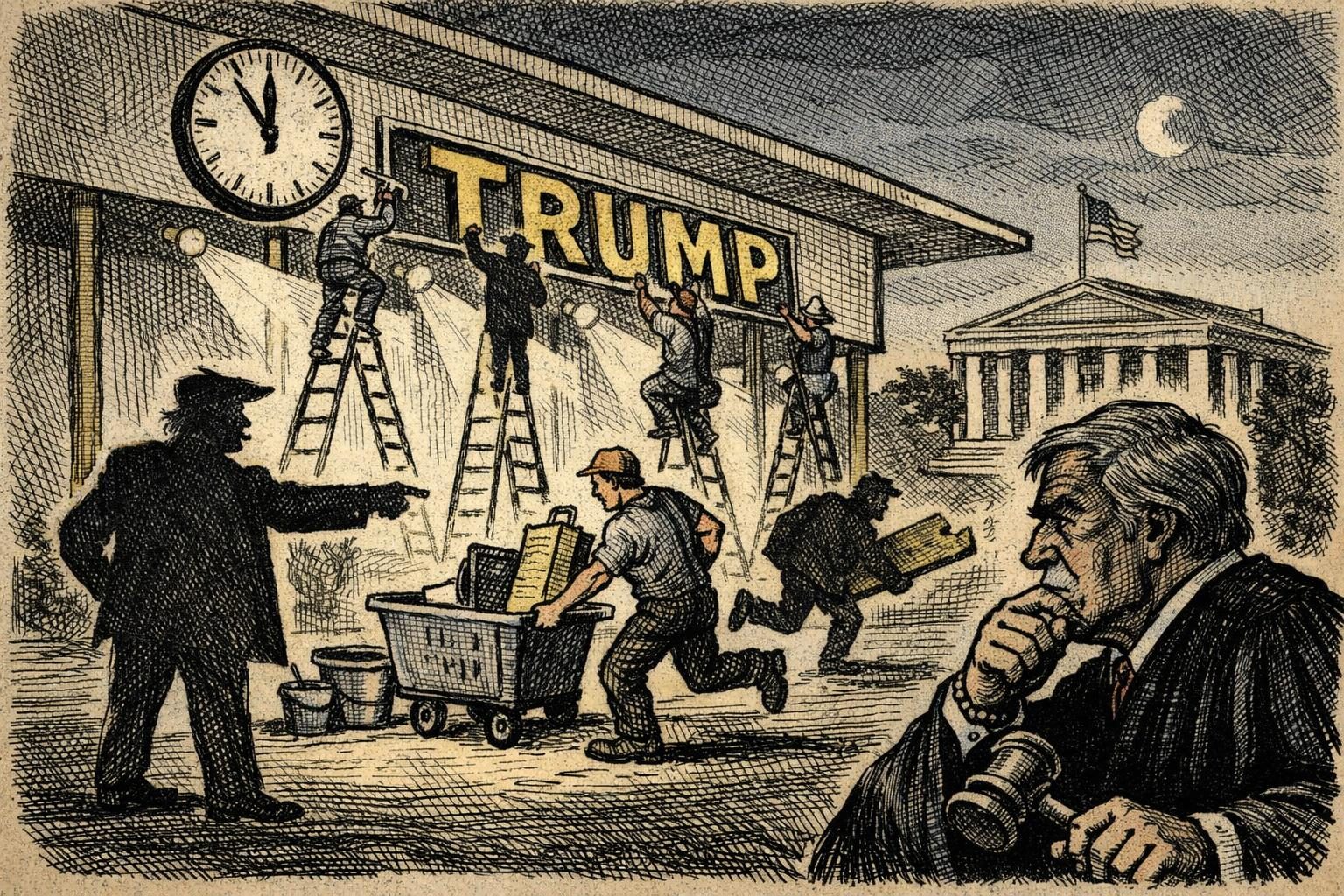
A federal judge on Thursday signaled deep skepticism about the Kennedy Center’s effort to move quickly to restore President Donald Trump’s name to the historic performing arts venue, questioning why the institution is racing toward a Sept. 8 start date for the process. The exchange came during a hearing in a legal fight over the center’s identity, governance and public image, and it underscored how a dispute that might otherwise sound like a matter of signage has turned into a broader test of institutional power. The board, now aligned with Trump, has already shown it wants to reshape the center’s presentation to the public, but the court is not treating the matter as a simple administrative housekeeping issue. Instead, the judge’s questions suggested concern that the timetable itself may be telling. When a court starts asking why something must happen so fast, the answer can matter as much as the action.
At the center of the hearing was a relatively narrow but symbolically loaded question: why the rush? The Kennedy Center’s lawyers were pressed about the push to begin the renaming effort by early next month, and the judge’s tone suggested that the explanation offered so far has not been fully persuasive. A fast-moving schedule can sometimes make sense if there is a clear operational reason, but that did not appear to be the impression left in court. The judge’s concern was not merely procedural nitpicking; it went to whether the board was trying to create momentum before legal challenges had a chance to catch up. That is especially sensitive in a case involving a public cultural institution with national significance, where changes to nameplates and branding carry political meaning well beyond the walls of the building. The rush itself, in other words, became evidence of what the board may be trying to accomplish.
This latest hearing fits into a larger fight over how much a Trump-aligned board can transform the Kennedy Center’s public identity before the courts step in. The institution has already been the site of previous attempts to alter its branding and presentation, some of which were blocked or reversed, and that history makes the new effort harder to view as an isolated administrative matter. What is at stake is not simply whether a name returns to the facade, but whether those running the center can move decisively enough to redefine a national arts venue in a way that reflects their political loyalties. That is why the dispute has become more than a vanity quarrel. Cultural institutions often depend on a perception of stability and neutrality, and once that perception is replaced by overt political signaling, the damage can be hard to undo. The courtroom setting has now made that tension explicit.
The politics of the situation are impossible to ignore. Trump has long treated branding, spectacle and naming as central tools of power, and the Kennedy Center dispute fits comfortably within that pattern. Supporters may frame the return of his name as a correction or a rightful restoration, while critics see an effort to turn a public institution into a marker of personal influence. Both descriptions can exist at once, but the court appears focused on whether the board is moving in a way that serves institutional needs or political symbolism. That distinction matters because public bodies are not supposed to operate like private tribute machines. When leadership looks determined to prove it can impose its preferences before anyone can stop it, the result tends to invite exactly the kind of judicial scrutiny now unfolding. Even if the board has the votes, it does not have the final word.
The broader significance reaches beyond the Kennedy Center itself. Institutions across Washington are watching to see how much a Trump-backed leadership team can remake before legal resistance slows the process, and that makes the case a useful marker for the limits of political capture in public life. If the center pushes ahead and the courts eventually intervene, the fight could become another example of overreach by a Trump orbit that has sometimes mistaken control for immunity. If the board succeeds, the message to other institutions would be equally blunt: move quickly, stake your claim and dare the courts to keep up. For now, though, the judge’s skepticism has introduced an inconvenient question into what the board may have expected to be a straightforward branding decision. Why the hurry? In a case this politically charged, that is not a minor detail. It may be the whole point.
Comments
Threaded replies, voting, and reports are live. New users still go through screening on their first approved comments.
Log in to comment
No comments yet. Be the first reasonably on-topic person here.