
Maryland Father and Son Charged in Fentanyl Case
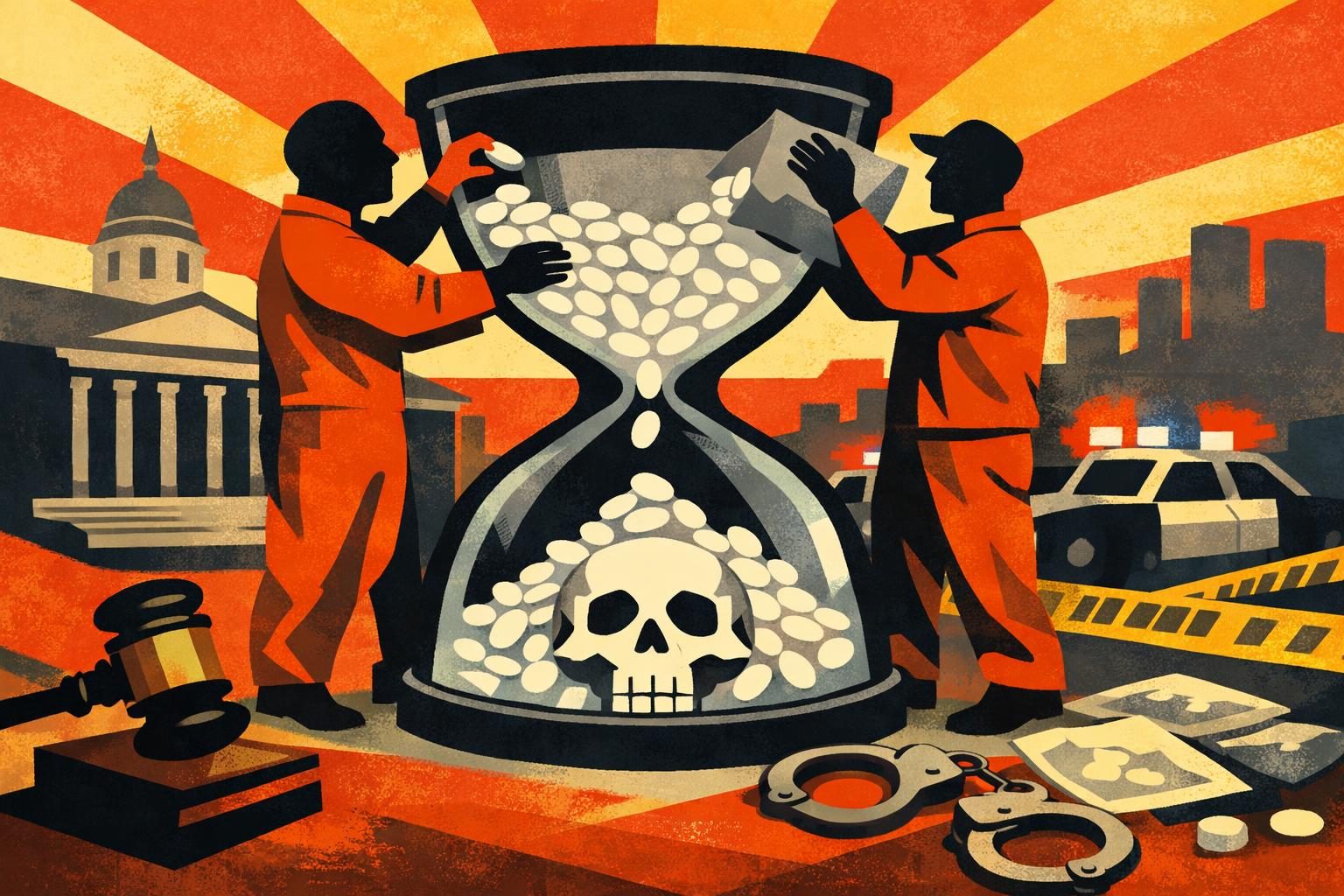
Federal prosecutors in Maryland announced on Aug. 27 that a father and son have been arrested and charged in a fentanyl trafficking case they say involved months of alleged sales and more than a kilogram of the drug. According to the complaint, one defendant is charged with distribution of 400 grams or more of fentanyl, while the other faces a charge of possession with intent to distribute more than 400 grams. The case is being presented as a straightforward federal enforcement action, but it also fits a much larger and uglier pattern: fentanyl continues to move through neighborhoods, families, and informal networks even as law enforcement keeps promising disruption. In that sense, the charges are both routine and grim, another entry in a criminal docket that has become a running ledger of the overdose crisis. What stands out most is not any single dramatic detail, but the plain fact that a drug of this volume and potency allegedly stayed in circulation long enough to draw a federal case.
The complaint, as described by prosecutors, points to a trafficking operation that was not a one-off possession case but a sustained distribution investigation. The allegation that the defendants were involved in sales over a period of months suggests surveillance, investigative patience, and enough corroboration to justify federal charges. That matters because fentanyl cases are rarely built on the kind of instant evidence that comes from a single traffic stop or a lone arrest; they tend to depend on accumulating records, observations, and other investigative steps that take time and manpower. The presence of multiple charges also signals the government’s view that the conduct was serious enough to justify heightened exposure under federal drug laws. In practical terms, that means the defendants are now facing the sort of legal jeopardy that can reshape a person’s life long before any trial. It also means prosecutors believe they have enough to tell a coherent story about how the alleged trafficking worked and how much fentanyl they say was involved.
The larger context is the one that keeps swallowing up these cases: fentanyl remains central to the overdose crisis, and every enforcement action is taking place against a backdrop of continuing deaths, hospitalizations, and public fear. Federal officials often frame arrests like these as interdiction, a way to cut off supply and punish those they believe are feeding addiction and death. That is not meaningless, especially when the quantities alleged are large and the drug is so dangerous in small amounts. But it is also true that arresting individual traffickers does not erase the market that made the case possible in the first place. For every network prosecutors disrupt, others remain in place or quickly reform, adapting to pressure and continuing to move product through street-level distribution channels. The result is a cycle that can make enforcement look decisive in the short term while leaving the broader crisis largely intact. Public-health advocates have argued for years that the answer cannot be enforcement alone, because the demand side of the epidemic, the treatment gap, and the persistent availability of synthetic opioids all keep generating new cases.
The involvement of a father and son adds a particularly stark human layer to the case, even though the complaint itself is about drugs, weight thresholds, and federal charging language. Family ties do not excuse criminal conduct, but they do underscore how deeply the illicit market can penetrate ordinary relationships and routine life. That is part of what makes fentanyl investigations so unsettling: they are not always stories of distant criminal organizations with no connection to the community, but of people whose lives and loyalties may be bound up in the same dangerous economy. The federal response now places both defendants in a system that can impose severe penalties if the allegations are proven, and prosecutors will likely present the case as proof that they are targeting significant sources of supply rather than low-level users. Yet even as the government highlights the arrests, the broader problem remains unresolved. A case like this may remove alleged distributors from the street, but it does not explain why fentanyl is still reaching buyers in such large amounts, nor does it answer why communities keep absorbing the consequences. The arrest is real, the charges are serious, and the evidence may be strong enough to move forward. But so is the scale of the crisis, which continues to outpace the country’s ability to stop it.
Comments
Threaded replies, voting, and reports are live. New users still go through screening on their first approved comments.
Log in to comment
No comments yet. Be the first reasonably on-topic person here.