
Justice Department charges 81 gang members in Puerto Rico in sprawling HSTF case
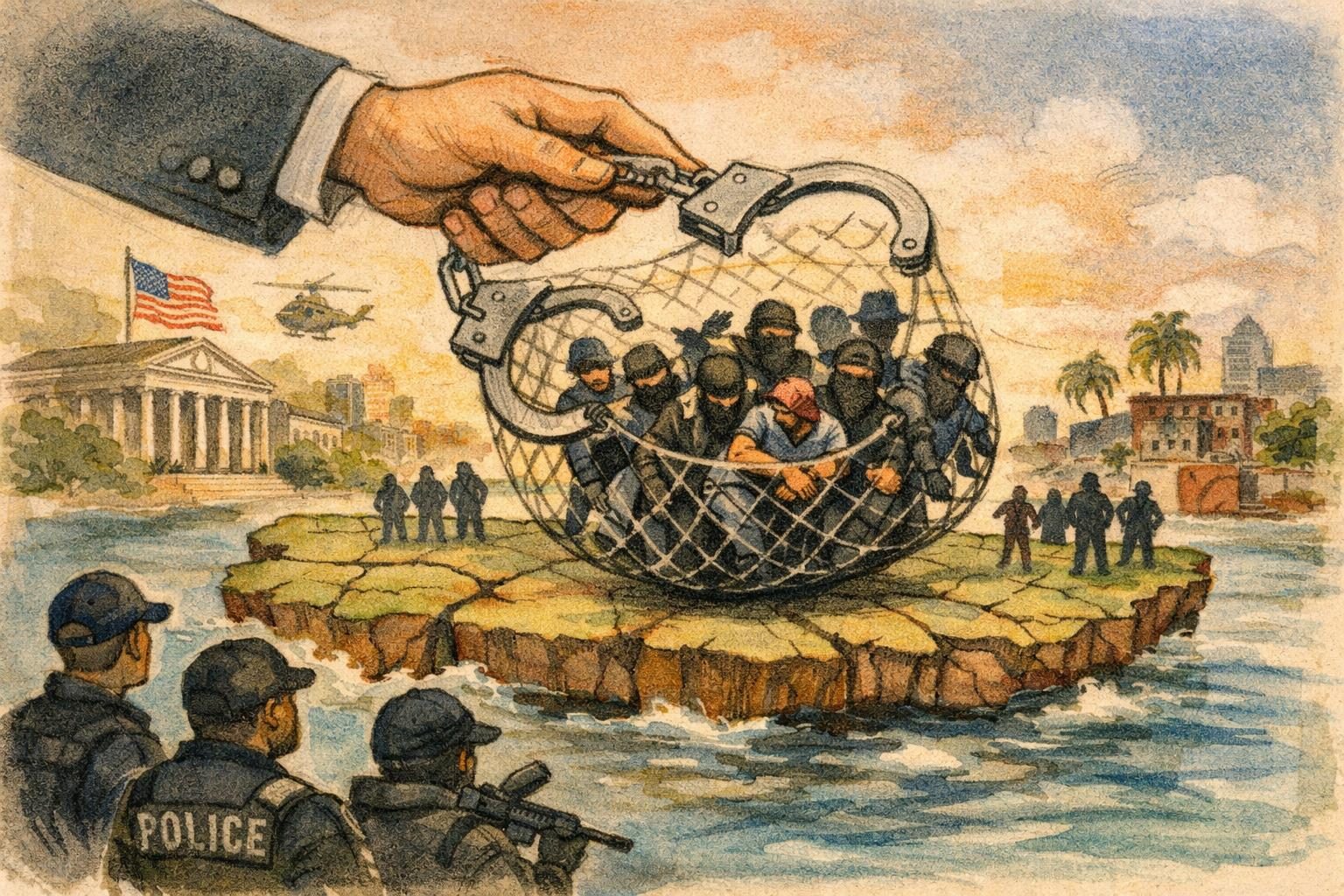
On Aug. 27, the Justice Department said 81 people tied to a violent gang in Puerto Rico had been charged with drug trafficking and firearms offenses in a sweeping federal case built under the Homeland Security Task Force framework. The scale of the indictment package is striking on its own, not just because of the number of defendants, but because it signals an organized effort to hit what prosecutors believe is a deeply embedded criminal network. Federal officials presented the action as a coordinated strike meant to disrupt violence, narcotics distribution, and illegal gun activity across the island. If the allegations prove out, the case would represent one of the more aggressive law-enforcement moves in Puerto Rico in recent memory. It also serves as a blunt reminder that public safety on the island has been shaped for years by organized violence that often outpaces the capacity of local institutions to contain it.
The charging announcement fits into a broader pattern in which federal authorities use mass cases to show they can bring manpower, surveillance, and prosecutorial muscle to bear when a criminal organization becomes too brazen to ignore. That kind of action can produce real results, especially when a gang’s members are moving drugs, carrying weapons, and allegedly helping maintain a climate of fear. But the sweep also underscores how much of Puerto Rico’s security picture has been defined by episodic interventions rather than steady state-building. A major indictment can disrupt a network, yet it does not by itself answer the harder questions about how the network grew in the first place, how guns keep flowing, or why criminal groups are able to recruit and sustain operations over time. Supporters of the effort will point to the arrests, the charges, and the coordination among agencies as evidence that the government is finally taking the problem seriously. Skeptics will say the real test is whether this kind of pressure can be maintained long enough to matter after the cameras leave and the press releases fade.
That tension is especially important in Puerto Rico, where public debate over safety has long been entangled with broader frustrations about governance, economic stagnation, and the uneven reach of government services. When law enforcement announces a case of this size, it is not happening in a vacuum. It lands in a place that has already spent years absorbing the consequences of drug markets, illegal weapons, and violent groups that exploit local vulnerabilities. The Homeland Security Task Force label gives the operation an air of strategic seriousness, and it is clearly meant to signal that federal agencies intend to work across jurisdictions rather than in isolated bursts. Still, the existence of a task-force structure does not resolve the underlying reality that violent crime is rarely just a policing problem. It is also a social, political, and economic problem, which is why high-profile enforcement wins can look impressive while leaving the deeper machinery of criminal life largely intact.
The Justice Department will almost certainly cast the case as proof that it can move decisively when it chooses to concentrate resources on a target. That message is not meaningless, because large-scale cases can fracture criminal organizations, remove armed actors from the street, and create openings for local authorities to regain control. But the uncertainty remains significant at this stage, because charges are not convictions and the government still has to prove the allegations individually and collectively in court. The defendants are entitled to the ordinary legal protections that apply in any serious federal case, and the public should expect the proceedings to unfold over time rather than in one dramatic burst. Even so, the broader policy lesson is already visible: Puerto Rico’s violence problem has become entrenched enough that the federal government is forced to treat gang suppression as a major, coordinated campaign. If the sweep becomes a true turning point, it will be because it is followed by sustained enforcement, institutional repair, and long-term investment, not because of the announcement itself. Until then, the case stands as both a law-enforcement milestone and a measure of how badly the island’s public safety environment has been warped by organized violence.
Comments
Threaded replies, voting, and reports are live. New users still go through screening on their first approved comments.
Log in to comment
No comments yet. Be the first reasonably on-topic person here.