
Raskin Opens Probe Into Trump Jr.’s Venture Fund
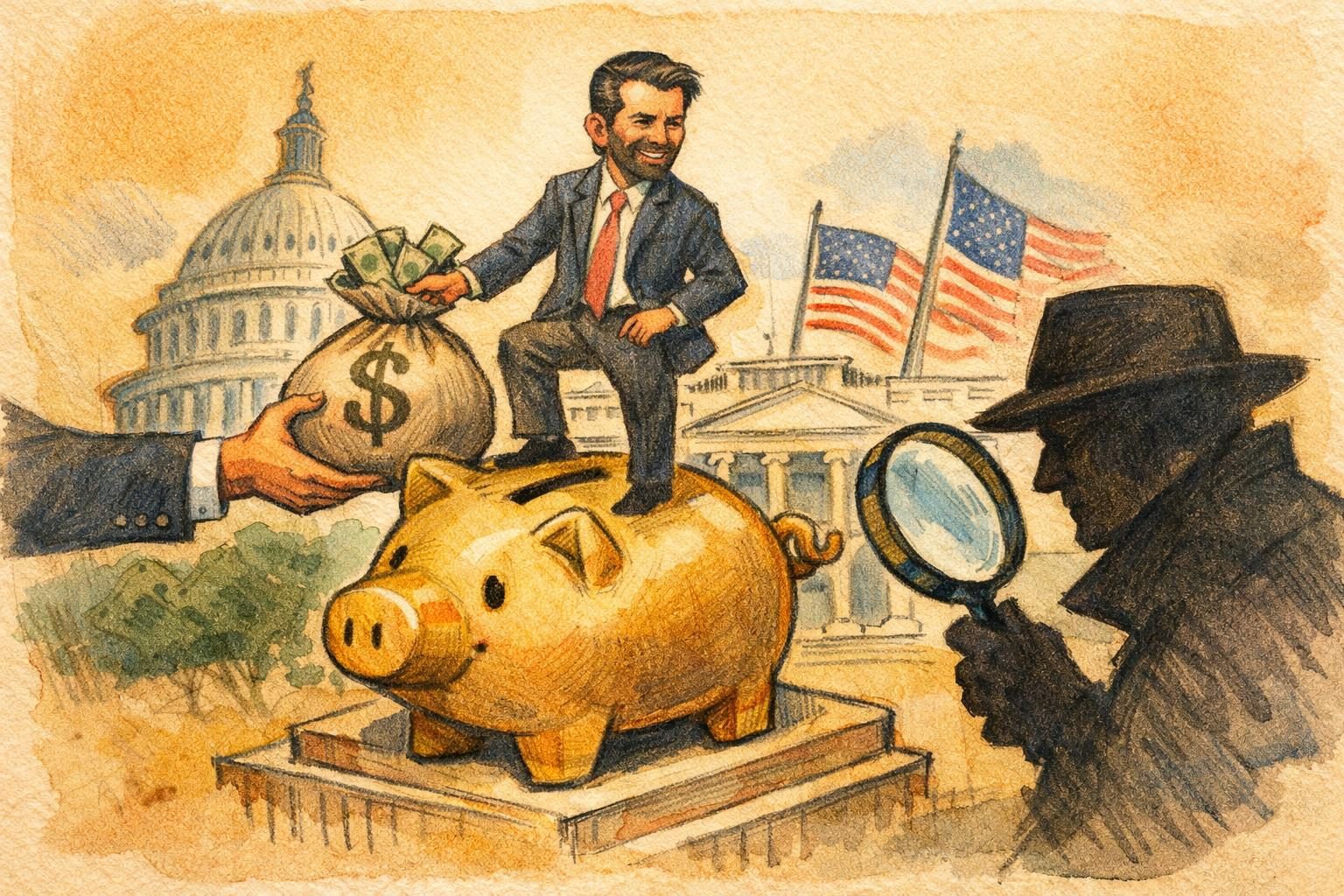
House Judiciary Democrats have opened a new line of scrutiny into 1789 Capital, the venture firm that hired Donald Trump Jr., as Ranking Member Jamie Raskin presses for documents he says may show a pattern of insider dealing, influence trading, and favoritism tied to the Trump family’s political access. The inquiry centers on the uneasy overlap between private investing and public power, especially when the person under scrutiny is not a distant associate but the president’s son. In a formal records request, Raskin is seeking communications, investment materials, and information about federal actions that could have affected the firm’s portfolio. That scope suggests the panel is not merely asking about a single transaction or a stray connection, but about whether proximity to the White House may have been turned into an asset. The allegation has not been proven, and the mere existence of an inquiry does not establish wrongdoing, but the subject matter alone is likely to intensify concerns about whether family ties are becoming a currency in the new political economy.
The move is part of a broader Democratic effort to test whether Trump-world relationships are creating a marketplace where government influence and private profit blur together. Raskin’s request frames 1789 Capital as a case study in what critics see as the monetization of access: a venture firm with a prominent Trump family connection, operating in a climate where policy, regulation, and federal decision-making could materially affect investment outcomes. If the records show that the firm or its investors sought, anticipated, or benefited from official actions, Democrats could argue the matter goes well beyond appearances and into potentially actionable conflicts. If the records instead show ordinary venture activity with no special treatment, the inquiry may still serve a political purpose by forcing the firm to account for its relationships and decisions. Either way, the request underscores how much of the ethics debate around the administration now revolves not just around formal appointments or direct political roles, but around the broader network of relatives, allies, and business partners who may profit from being close to power. For Democrats, that network itself is the problem, because it creates incentives that are difficult to see from the outside and even harder to prove after the fact.
The documents Raskin is demanding could help answer several questions that have become central to modern influence investigations. Did executives at 1789 Capital discuss federal policy, regulatory changes, or government opportunities in ways that suggest the firm believed Trump family connections could be useful? Were investors reassured, directly or indirectly, by the presence of Donald Trump Jr. as a signal of political access or protection? Were any portfolio companies positioned to benefit from administration decisions, appointments, contracts, enforcement choices, or other federal actions? The request also appears designed to capture internal communications that might reveal whether the firm saw its political ties as a business advantage worth advertising or quietly exploiting. None of that proves a quid pro quo on its own, and venture capital by nature often involves companies that are sensitive to policy shifts and market-moving announcements. But when the family of a president is involved, even normal business behavior can take on a different color, because the public has reason to wonder whether the line between lawful networking and improper favoritism is being crossed. That is the terrain Democrats are trying to map, and it is the reason the inquiry could have resonance beyond the firm itself.
The larger political significance is hard to miss. Conflicts-of-interest concerns that once sat in the background of Washington life have moved back to center stage under a presidency that continues to fuse personal brand, family identity, and governing power in ways that invite suspicion. A venture firm hiring Donald Trump Jr. may be entirely lawful, and it may even be an ordinary decision for a business seeking high-profile talent and connections. But in an administration where the president’s relatives are once again part of the political and commercial orbit, every such arrangement invites questions about whether access is being bought, sold, or casually rewarded. Raskin’s probe is unlikely to settle those doubts all at once, especially if the firm resists full disclosure or if the resulting paper trail is ambiguous. Still, investigations do not need to end in prosecution to matter; they can shape the public record, force explanations, and make opaque relationships harder to hide. In that sense, the inquiry into 1789 Capital is less a narrow dispute about one venture shop than another reminder that family money and government power are not always separate spheres in Trump-era politics, and that Democrats intend to keep pressing until they see what the records reveal.
Comments
Threaded replies, voting, and reports are live. New users still go through screening on their first approved comments.
Log in to comment
No comments yet. Be the first reasonably on-topic person here.