
Democratic States Reload Their Challenge to the Mail-Voting Order
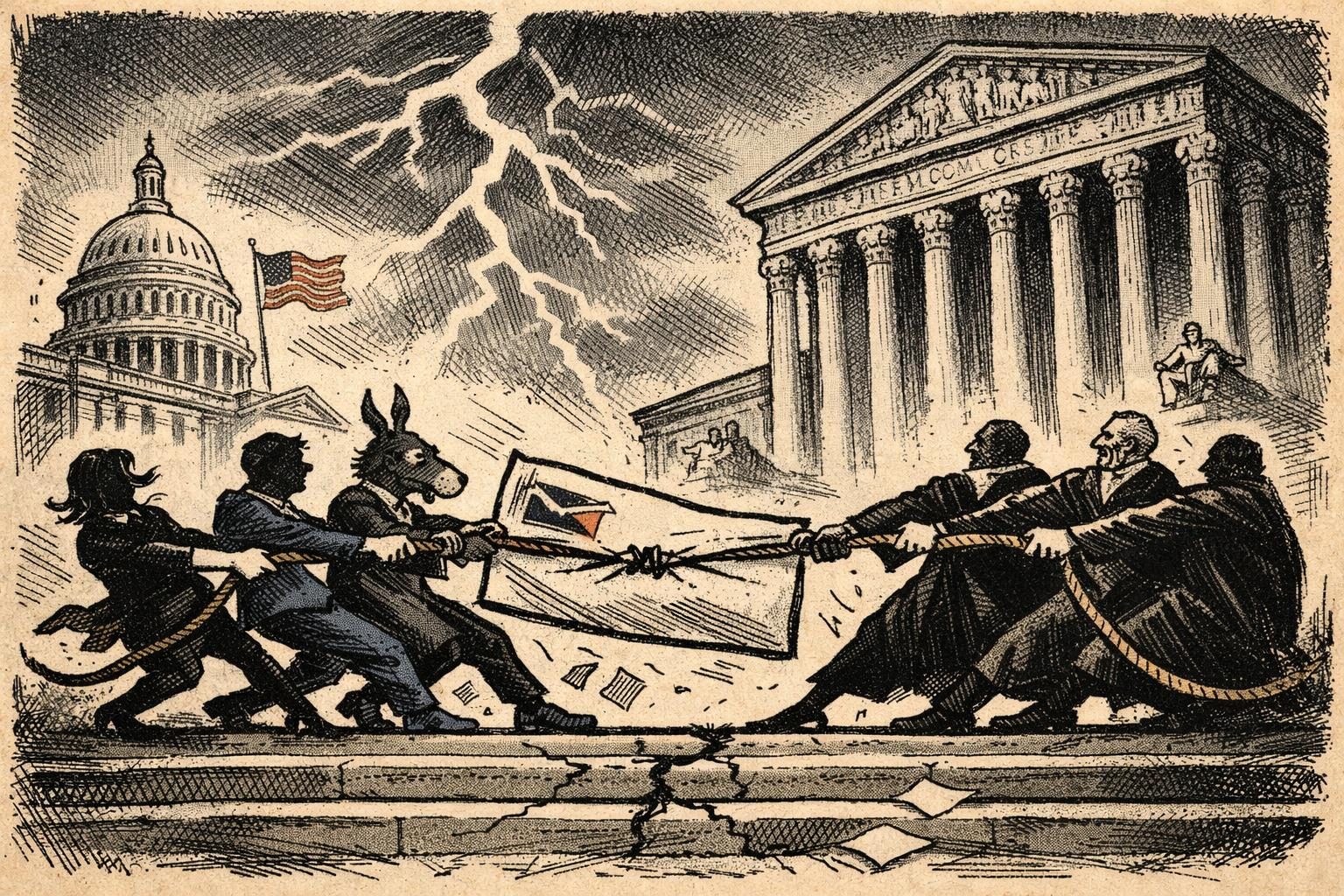
The fight over the administration’s mail-voting order has moved from a procedural skirmish into a full-scale election-season test of how much disruption the courts will tolerate before the calendar runs out. After the Supreme Court issued a ruling on August 24 that reopened the door to litigation without resolving the underlying dispute, the battle did not cool down. It sharpened. By August 26, a federal judge had removed a significant obstacle to enforcement of the ballot-delivery restrictions, and Democratic state officials were already answering with a fresh challenge aimed at the Postal Service’s formal rule. Two days after the high court’s procedural move, the case was no longer about whether there would be a fight. It was about how many fights could be packed into the final stretch before ballots are mailed and deadlines harden into reality.
That speed matters because election administration is built on lead time, not improvisation. States are already in the middle of printing ballots, programming systems, training local officials, and lining up mailing procedures that have to work the first time or not at all. A late federal rule forcing changes to ballot delivery does not arrive as a neat policy adjustment; it lands as a logistical shock. The immediate question is whether states can still get ballots into the mail on schedule and whether local election offices can absorb a new federal directive without breaking the timelines they have spent months building. The legal theory can be argued in courtrooms, but the practical consequences show up in print rooms, postal handoffs, and county election offices that may have little room left to absorb another round of instructions. In that sense, the administration’s move is less a clean legal victory than a race against the clock, and the clock may be the most important litigant in the case.
Democratic attorneys general are trying to turn that procedural opening into a renewed substantive challenge, arguing that the Postal Service’s formal rule has now created a live dispute that the courts cannot shrug off. Their position is that the earlier case may have been premature, but the underlying harm did not disappear just because the Supreme Court said the first challenge came too soon. Instead, they say, the rule itself makes the dispute real and immediate, forcing states to confront a federal directive that reaches directly into how ballots are handled and delivered. That has triggered a fresh round of filings, emergency arguments, and pressure on judges to move fast. The legal back-and-forth reflects a familiar election-year pattern: one side seeks to change the rules in motion, while the other side races to stop the change before it becomes irreversible. Here, the stakes are especially high because every delay can be framed as either necessary judicial caution or strategic erosion of voting access, depending on which side is talking.
Critics of the administration see something more than hardball litigation. They argue that the maneuver fits a broader pattern of manufacturing confusion and then using that confusion as evidence that the system needs to be forcibly tightened. From their perspective, the mail-voting order is not a good-faith effort to improve administration but an attempt to insert federal power into a domain that states have already organized around their own election laws and deadlines. They say the Postal Service rule is both unconstitutional and reckless because it arrives after ballots are already in production and because it threatens to undermine trust in a process that depends on routine and predictability. Supporters of the administration, by contrast, present the move as a necessary correction to mail-ballot handling and a overdue check on fraud risk, even though they still face a difficult public explanation for why such a consequential change had to be imposed so late in the cycle. That tension is part of the larger political problem for the White House: the policy is being sold as a safeguard, but its timing makes it look to many election officials like an act of unnecessary interference. Whether the courts ultimately bless the rule, block it, or leave portions of it standing, the damage from the uncertainty is already visible. Election systems function best when officials can plan weeks and months ahead, not when they are forced to guess what federal law will look like from one day to the next. In that way, the dispute is doing its own independent harm. Even if the challengers eventually lose on the merits, the administration has already injected instability into the most sensitive point in the voting calendar, right before ballots go out the door. And that kind of instability has a way of outlasting the injunctions and the opinions that created it. It can shake confidence, complicate local administration, and make ordinary voters wonder whether the machinery of the election is being pulled apart just as it is supposed to be put to work.
Comments
Threaded replies, voting, and reports are live. New users still go through screening on their first approved comments.
Log in to comment
No comments yet. Be the first reasonably on-topic person here.