
States sue over HHS attack on Title X, warning the administration is trying to booby-trap family planning funds
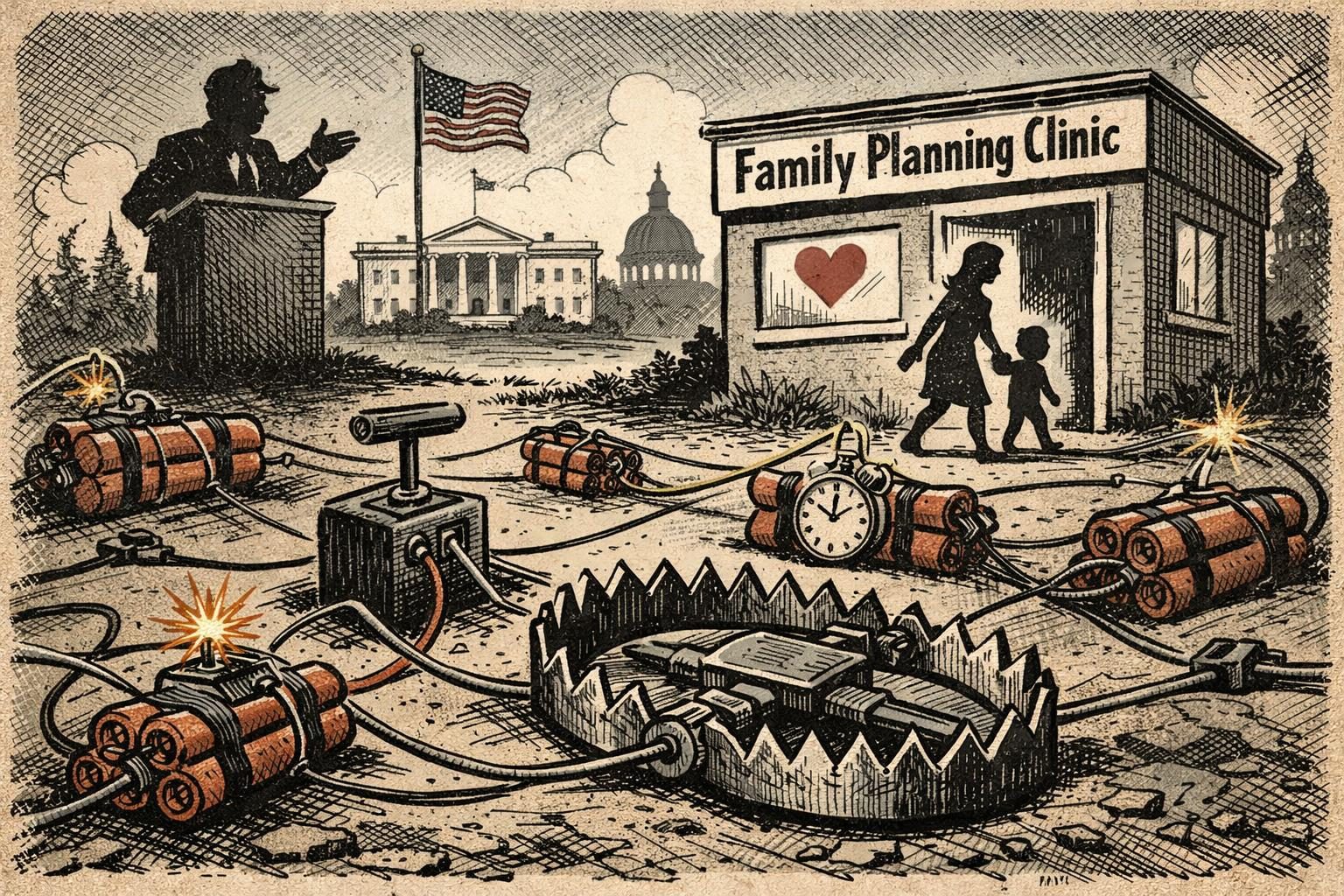
A multistate coalition filed suit on Aug. 27 to block the Trump administration’s new restrictions on Title X family-planning funding, accusing the Health and Human Services Department of trying to turn a long-running public health program into an ideological filtering system. The challenge centers on fresh conditions attached to federal money that the states say are so unclear that providers cannot tell what the government would consider compliant. In plain terms, the lawsuit argues that the rules are vague enough to create risk for anyone who depends on Title X grants, and that uncertainty is the point. The states want a court to stop enforcement before clinics, health departments, and other participating providers make staffing, budgeting, or service decisions based on requirements that may never be adequately explained. Title X has existed for more than 50 years and was built to help people access contraception, cancer screenings, pregnancy testing, and other basic reproductive health services, often at low cost. The coalition says the new conditions threaten to upend that structure without a lawful justification.
At the heart of the dispute is a familiar fight over how far the federal government can go when it uses grant money to steer conduct. The states say the administration is attaching restrictions that are unrelated to Title X’s purpose and therefore exceed the government’s authority. That claim matters because federal funding programs often come with conditions, but those conditions are not supposed to become a backdoor method for rewriting the program itself. The lawsuit presents the administration’s approach as less a routine policy adjustment than a deliberate effort to make participation so burdensome that providers will leave. That kind of pressure is especially consequential in family planning, where clinic budgets are often thin, reimbursements are limited, and patients already struggle with transportation, insurance gaps, and local shortages of care. If providers decide the new rules are too risky, the practical result would not be abstract legal drama; it would be fewer sites offering services and fewer people able to get them.
State attorneys general backing the suit are framing the move as an attack on reproductive health access dressed up as administrative housekeeping. Their argument is not only that the conditions are unlawful, but that they are also destabilizing by design, creating enough ambiguity to force providers to choose between participation and caution. Small clinics, in particular, may be the most vulnerable because they usually do not have teams of lawyers or compliance staff to parse shifting federal guidance. Even if a provider ultimately intends to comply, the uncertainty alone can chill participation, delay applications, or prompt organizations to pull back services rather than risk losing funds. The coalition says that would be especially damaging in areas where Title X is one of the few sources of affordable preventive care. For patients, the consequences would likely show up in very ordinary but very serious ways: longer waits, fewer nearby appointments, more travel, and a narrower menu of low-cost options. The states are asking the court to intervene now because once clinics reduce services or exit the program, rebuilding that network can take far longer than a lawsuit.
The administration’s position, at least as described by the challengers, is that the new conditions are justified under its authority to manage federal grants and keep the program aligned with its intended use. But the lawsuit says that authority is not unlimited and cannot be used as a blunt instrument to impose policy preferences that Congress did not authorize. That is why the case has become more than a technical dispute over grant language. It is really a test of whether the executive branch can use funding rules to pressure health providers into political compliance while still claiming to preserve a public health program. The states are betting a judge will see the new requirements as an unlawful overreach, or at minimum as too murky to enforce without causing immediate harm. If the court grants an injunction, the administration would be forced to pause implementation while the legal questions play out. If it does not, clinics may have to make hard choices under a cloud of uncertainty, and patients could pay the price long before any final ruling arrives. In that sense, the lawsuit is about more than one program’s paperwork. It is about whether the government can make a basic health safety net so cumbersome that the people who need it most are the ones left navigating the wreckage.
Comments
Threaded replies, voting, and reports are live. New users still go through screening on their first approved comments.
Log in to comment
No comments yet. Be the first reasonably on-topic person here.