
White House doubles down on Lake Ontario rename stunt
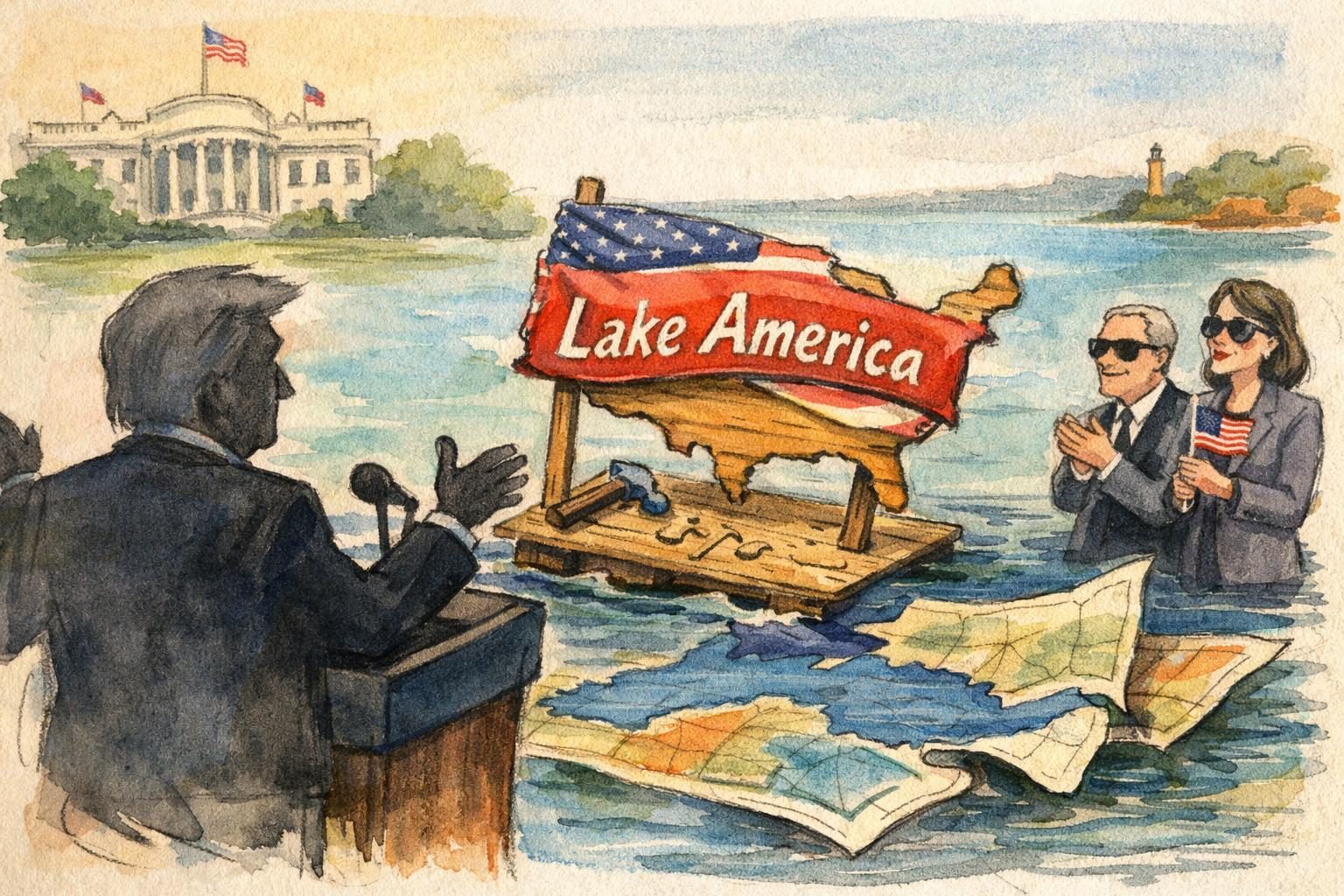
The White House found time on August 27 to add another item to its presidential-actions page: an order framed as honoring “the American History of the Great Lakes” and renaming Lake Ontario as “Lake America.” On its face, the move is plainly symbolic, and no amount of official formatting can make it otherwise. A body of water does not accept a name change because a federal webpage says so, and geography is generally less pliable than messaging. Still, the administration chose to post it as a presidential action, which makes the gesture more than a passing gag and less than serious governance. It is a neat reminder that in Washington, even a stunt can be given the trappings of authority.
That is part of what makes the episode irritating rather than merely silly. The administration is spending political oxygen, staff time, and presidential branding on a move that is unlikely to change any map, treaty, shipping practice, or international understanding. It is the kind of action that seems designed to land as a loyalty signal for one audience and a provocation for another. Canada is the most obvious target for the annoyance factor, but the larger audience is domestic, where naming fights have become a cheap way to stage cultural combat. If the point is to prove toughness, the White House has selected one of the easiest possible arenas in which to do it: a symbolic rename with no practical payoff. That is not policy, even if it is posted where policy usually lives.
The deeper problem is not the lake itself so much as the governing habit it reflects. The White House keeps treating gestures of symbolic domination as if they were substitutes for actual administrative competence. It is the executive-branch version of changing the wallpaper while the plumbing is failing. Household costs remain household costs. Health coverage remains health coverage. Public safety still requires real coordination, not decorative declarations. Infrastructure does not improve because a webpage carries a new title, and national security is not strengthened by rebranding a landmark in a way that mainly invites ridicule. Yet this kind of performance keeps appearing alongside the administration’s claims that it is focused on seriousness, order, and results. The contrast is hard to miss. If the presidency can mobilize quickly to produce a ceremonial rename, it can also mobilize quickly to avoid producing something useful.
There is also a broader political cost to this sort of spectacle, even if the immediate fallout is mostly reputational. Every minute spent arguing about Lake Ontario being rechristened “Lake America” is a minute not spent explaining the cost of living, defending federal actions in court, or accounting for the consequences of aggressive executive overreach. The White House may enjoy the attention, but attention is not the same as credibility, and spectacle does not become substance just because it is wrapped in patriotic language. Officials may insist that the order is about heritage, history, or reclaiming a narrative. That explanation may be enough for supporters who like the symbolism and do not care about the mechanics. For everyone else, it looks like a distraction dressed in official fonts, another example of a government that seems more interested in performing confidence than earning it. The administration can call that leadership if it wants, but from the outside it reads more like branding with executive power.
That matters because political habits harden into political expectations. When a White House repeatedly rewards itself for producing headline-friendly gestures, it teaches observers to expect more of the same and less of anything difficult. The result is a governing style that confuses novelty with achievement and provocation with strength. A renamed lake may not break the government, but it does contribute to the impression that the administration is willing to spend its time turning established facts into talking points. That is a bad habit in any presidency. In a time when the public is already asked to sort through emergency declarations, legal disputes, and a steady stream of performative governance, it becomes more than a bad habit. It becomes a signal that the people running the place may understand attention better than they understand administration.
Comments
Threaded replies, voting, and reports are live. New users still go through screening on their first approved comments.
Log in to comment
No comments yet. Be the first reasonably on-topic person here.