
Alaska judge tosses challenge to Trump’s outer-continental-shelf rollback
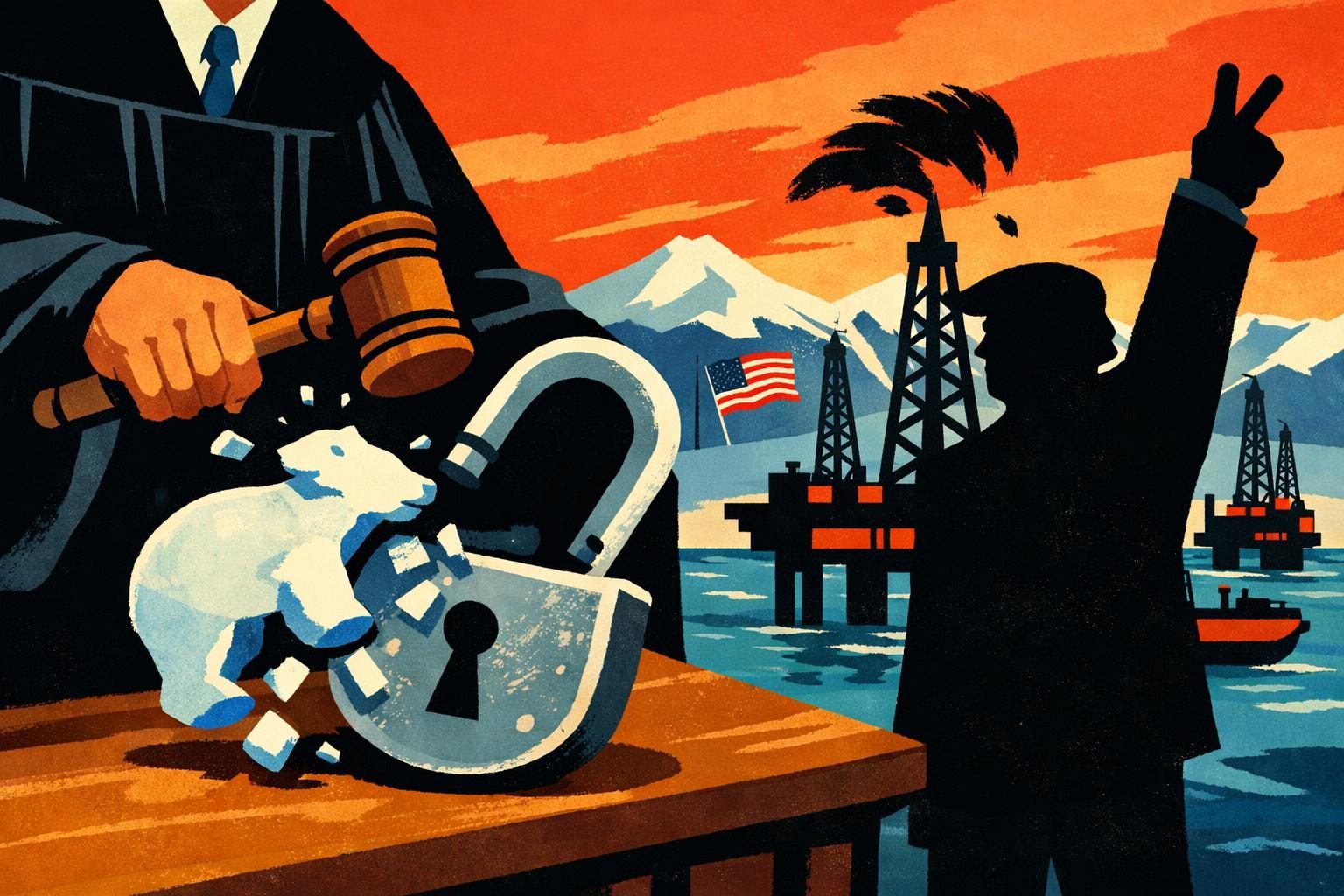
A federal judge in Alaska has dismissed a challenge to President Donald Trump’s move to rescind withdrawals that had kept parts of the Outer Continental Shelf off limits to oil and gas leasing, handing the administration a notable legal victory in its campaign to reopen more offshore acreage to development. The ruling, announced by the Justice Department on Aug. 28, gives the White House a fresh opening to argue that federal energy policy should favor expanded drilling access and a broader use of public waters for fossil-fuel production. It is not a final verdict on the political fight over offshore drilling, but it does remove one obstacle in the path of a central administration goal. For an administration that has tried to cast energy expansion as both an economic necessity and a matter of national strength, the decision is the kind of court win it can point to immediately. It also underscores how much of the energy debate is now being fought through litigation rather than legislation.
At issue was the administration’s decision to undo prior withdrawals that had protected certain offshore areas from future leasing. Those withdrawals were created under earlier presidential authority, and the Trump administration’s position has been that a later president can reverse them. Critics of the rollback have argued that protected waters are not supposed to be treated like a temporary zoning designation that changes with every administration, especially when the land and waters in question are tied to fisheries, coastal ecosystems, and long-term climate risks. The judge’s dismissal does not settle every legal theory that could be raised in a broader challenge, but it does provide the administration with a practical advantage in its effort to translate executive power into more drilling opportunity. That matters because offshore leasing decisions often become precedent-setting tests of how much discretion a president has to reorder federal energy policy. The decision suggests, at least for now, that the administration’s reading of that power has enough legal footing to survive in court.
The ruling is also part of a larger pattern in which the administration has tried to move quickly to reduce regulatory barriers and accelerate fossil-fuel development across the country. Offshore leasing is especially sensitive because it sits at the intersection of national energy strategy, environmental protection, and the economic interests of coastal states. Supporters of the rollback are likely to describe the decision as restoring certainty and strengthening supply, while opponents will say it weakens hard-won protections and treats coastal communities as expendable in a broader ideological fight. The Justice Department framed the outcome as a defense of national energy security and a rejection of state efforts that it said would obstruct federal authority. That framing fits neatly with the White House’s broader habit of presenting energy policy as a test of sovereignty, resilience, and economic common sense. But even with a legal win in hand, the administration still faces the basic reality that offshore drilling remains politically and environmentally divisive, and courts do not remove those tensions. The question is not whether the issue will keep generating conflict, but how much momentum this ruling gives the administration while that conflict continues.
Environmental groups and coastal-state critics are likely to view the dismissal as one battle in a longer campaign, not the end of the story. The ruling could be appealed, and even if it stands, other lawsuits or administrative actions could shape how much of the offshore frontier actually opens to leasing. States that depend on healthy marine ecosystems and stable coastlines will continue to argue that drilling expansion puts fisheries, tourism, and resilience planning at risk, especially as climate change makes coastal communities more vulnerable. Industry allies, by contrast, will probably see the decision as evidence that the legal and policy environment is tilting back toward development and away from blanket restrictions. That difference in interpretation is exactly why offshore leasing remains such a potent political flashpoint: one side sees security and opportunity, the other sees exposure and irreversible harm. For now, the administration can claim that a court has cleared a path for its approach, but the broader fight over who controls the offshore commons, and how aggressively it should be used, is very much alive. The ruling may help the White House in the short term, yet it also sets up the next round of arguments over whether federal energy policy should be defined by expansion or restraint.
Comments
Threaded replies, voting, and reports are live. New users still go through screening on their first approved comments.
Log in to comment
No comments yet. Be the first reasonably on-topic person here.