
The government extended the pause on Big Bend border construction after another court scramble
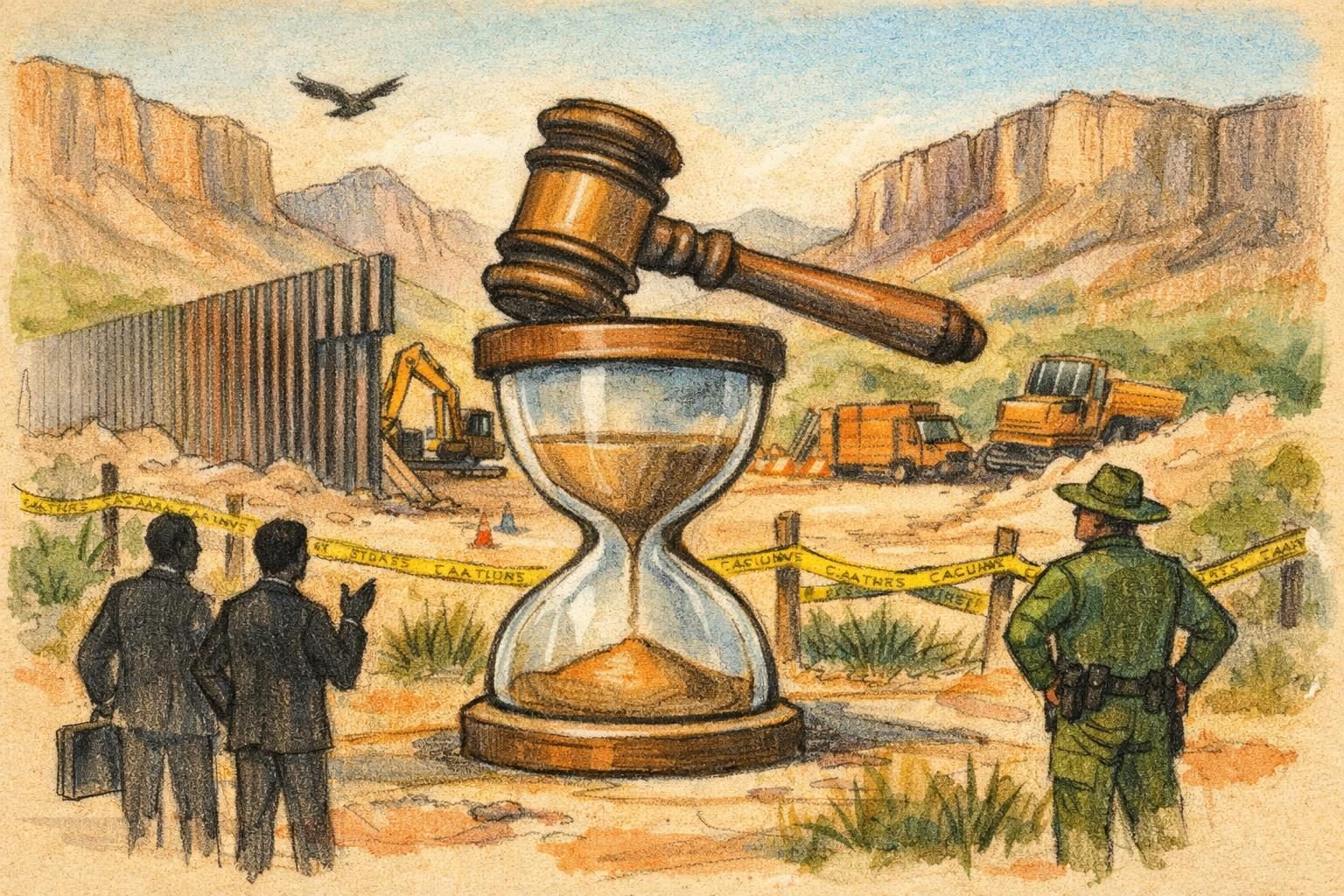
The federal government has agreed in court to extend a pause on border-related construction in Big Bend National Park until mid-September, buying challengers more time while the legal fight keeps grinding on. The move does not end the dispute or amount to a final loss for the administration, but it does keep a controversial project from moving ahead for now on protected public land. A Justice Department lawyer said the pause also applies to a section of land near the park, widening the immediate relief for opponents. For the moment, the practical result is simple enough: the project remains stalled, and the bulldozers are still sitting still. That is not the outcome officials backing the construction appeared to want when they pushed the plan forward.
The delay matters because Big Bend is not just any patch of ground on the map. It is one of the country’s best-known national parks, a place whose desert landscape and river corridor carry both ecological value and symbolic weight. Any attempt to force border infrastructure into that setting is likely to trigger strong resistance, and this one has already done exactly that. Conservation advocates, park supporters, and local critics of heavy border construction have argued that the government is treating protected land as if it were ordinary federal property that can be repurposed on command. The administration, for its part, has leaned on border-security arguments and has tried to frame the work as necessary rather than elective. The court fight now unfolding suggests those claims are being tested against harder questions about what the law actually allows.
That is where the politics run into the paperwork, and the paperwork is often where ambitious border plans slow down. Officials can talk all day about urgency, enforcement, and control, but a court will still ask what Congress authorized, what statutory limits apply, and whether environmental or land-use rules constrain the government’s reach. Those are not abstract questions in a case like this. They determine whether the project can proceed as planned, whether it must be narrowed, and whether the government has been reaching beyond its authority in a place that is supposed to be preserved rather than bulldozed. The fact that lawyers agreed to extend the pause suggests the administration may prefer delay over a sharper legal setback. In other words, the government appears to be wagering that time is less painful than an immediate ruling that could do more damage to the project or the broader argument behind it.
The extension also gives challengers a more comfortable runway to build their case, which is no small thing in litigation over border infrastructure. A temporary pause can become meaningful when it prevents a project from becoming a fait accompli before the courts have a chance to sort out the merits. That is especially true in sensitive places like a national park, where once the work starts, the physical and political damage can be hard to reverse. The administration’s border posture has often depended on projecting momentum, but this case is another reminder that momentum can be interrupted by judges, statutes, and the stubborn fact that public land is not the same thing as empty land. For critics, the delay is proof that a dramatic border move is not always as inevitable as the rhetoric suggests. For the administration, it is an inconvenient sign that the legal road ahead may be longer and rougher than planned.
Comments
Threaded replies, voting, and reports are live. New users still go through screening on their first approved comments.
Log in to comment
No comments yet. Be the first reasonably on-topic person here.