
Justice Department sides with an Oklahoma aluminum smelter plan
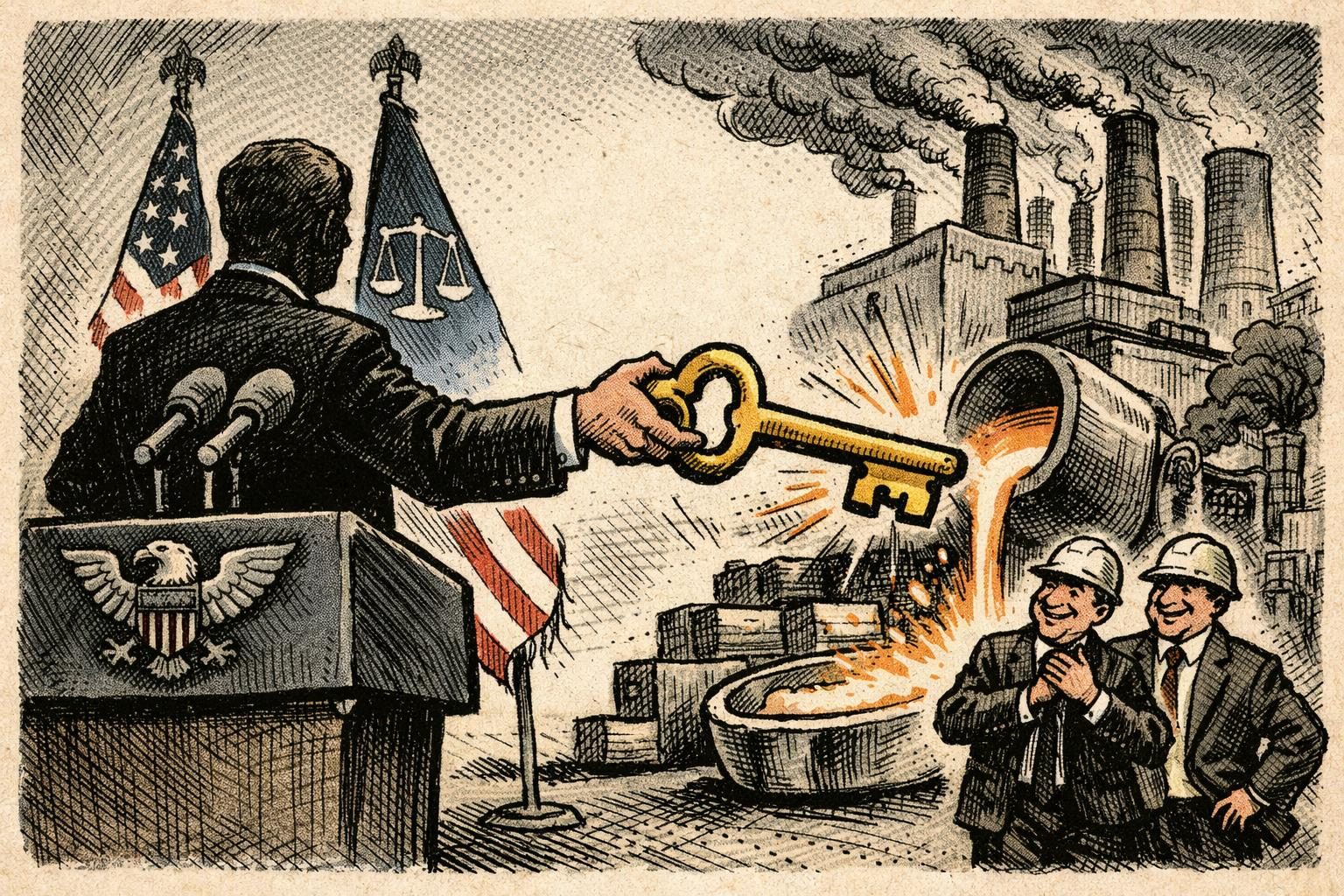
The Justice Department moved on August 28 to put its weight behind a proposed primary aluminum smelter in Inola, Oklahoma, filing a statement of interest in a lawsuit tied to the project. In plain English, that means federal lawyers are telling the court that the government thinks the project matters enough to deserve attention, even though the dispute itself is not a criminal case or a classic public corruption fight. The filing is notable less because it resolves the lawsuit than because it signals where the administration is willing to spend institutional capital. A primary aluminum smelter is not a trivial piece of industrial machinery; it is the kind of heavy manufacturing project that carries symbolic and economic value in a country still talking itself into a domestic industrial comeback. The federal government does not usually advertise itself as a cheerleader for one plant in one town, so the move stands out as another sign that this White House is comfortable mixing policy objectives with legal intervention.
That blend is not inherently scandalous, and it may even be easy to defend on the merits if the administration wants to argue that domestic manufacturing deserves every possible boost. Supporters of industrial policy would say the federal government should be more willing to use its power to accelerate projects that create jobs, strengthen supply chains, and reduce dependence on foreign production. On that view, a smelter project fits neatly into a broader strategy of rebuilding industrial capacity, especially in sectors tied to critical materials and manufacturing resilience. The trouble is that the administration tends to package these arguments in a style that makes the line between public policy and political favoritism hard to see. When the Justice Department steps in, it is not just offering a legal view; it is also lending prestige, momentum, and the implicit message that this project has been singled out as worthy of federal help. That may be exactly what local boosters wanted, but it also invites the old question of why this project, why now, and on what standard the government is choosing its side.
The broader concern is not that the federal government ever acts in support of economic development. It is that this administration increasingly appears to use litigation and legal filings as part of its policy delivery system, turning courtrooms into another venue for political signaling. That can be effective in the short term, because a statement of interest from the Justice Department can alter expectations and shift leverage in disputes involving state regulators, local opponents, or private challengers. A project with federal backing often looks more durable, more legitimate, and more likely to survive procedural resistance. But the same tactic also makes it harder to separate strategy from theater. If the government is serious about revitalizing manufacturing, it would ideally present a clear doctrine, a transparent standard for support, and a process that does not depend on who is closest to the political center. Instead, the pattern so far suggests a rolling series of interventions that sound ambitious in isolation but do not always add up to a coherent policy architecture. That is why a filing like this can read as both pro-growth and vaguely favoritistic at the same time.
The immediate practical effect is that a private project now benefits from federal legal muscle, which can matter a great deal in a fight where every filing affects bargaining power. Even if the Justice Department’s position does not decide the case, it can change how other parties calculate risk and can shape the pace and tone of the litigation. The larger effect is institutional. Each time the department steps into a dispute on behalf of a favored industrial project, it normalizes the idea that federal litigation is not just about enforcing neutral rules but about advancing chosen economic outcomes. That may be fine, or even desirable, if the government is candid about what it is doing and why. But it also makes the department look more political every time it acts like an economic development arm with a law degree. For now, the Oklahoma smelter filing is a relatively small example of a much bigger habit: this administration’s willingness to weld industrial policy, executive messaging, and the Justice Department into a single machine, one that promises to build things while quietly deciding who gets to build them first.
Comments
Threaded replies, voting, and reports are live. New users still go through screening on their first approved comments.
Log in to comment
No comments yet. Be the first reasonably on-topic person here.