
House GOP Rolls Out Another “Election Integrity” Push
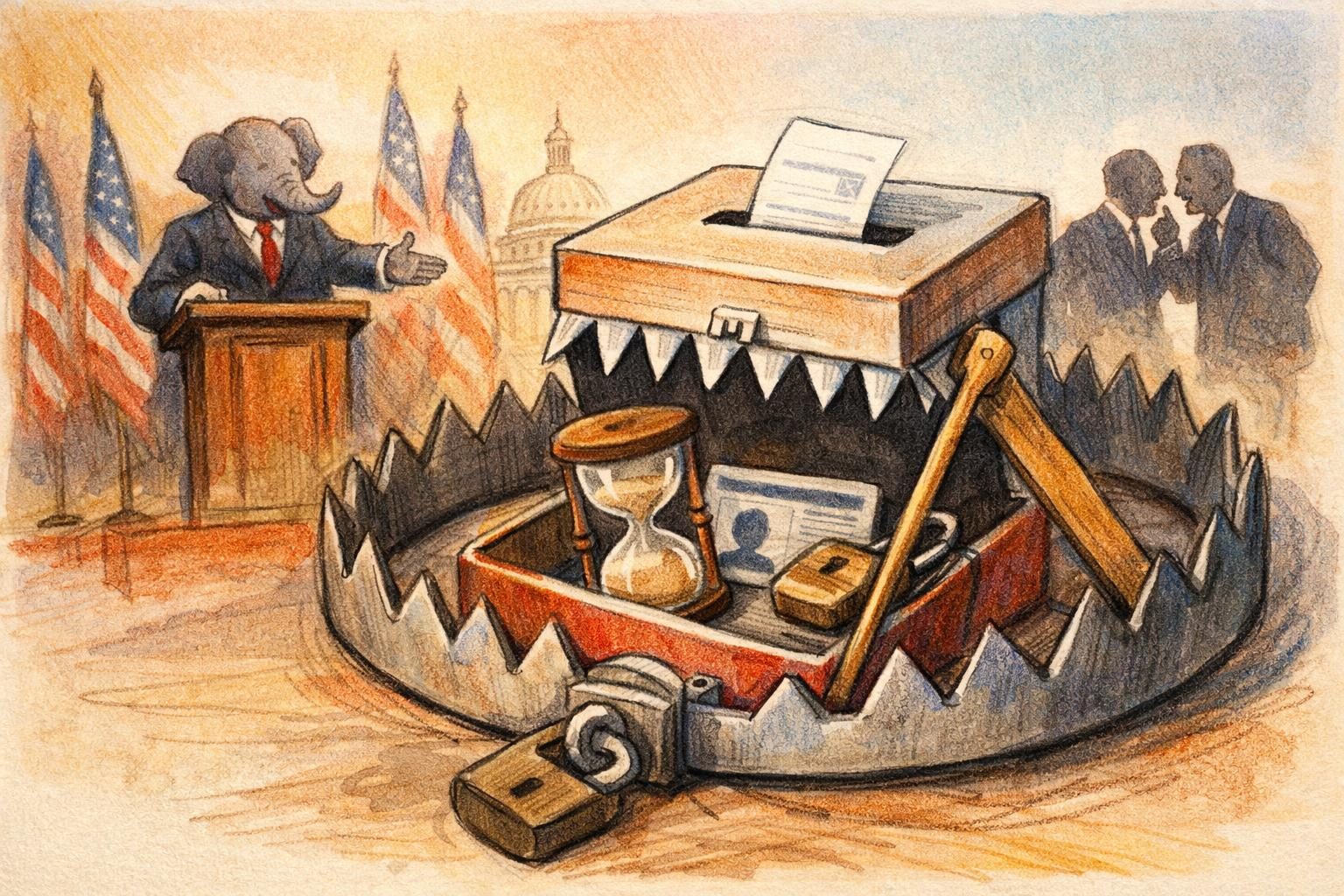
Rep. Claudia Tenney is once again trying to rebrand voting restrictions as common-sense reform, this time with a 2026 plan she has dubbed “Make Voting Great Again.” The rollout fits neatly into a familiar Republican script: describe elections as vulnerable, present new rules as fixes, and wrap the whole thing in the language of security and accountability. Tenney’s office framed the proposal as part of an election-integrity push, signaling that the goal is not just to talk about voting rules but to keep the issue politically alive heading into another contentious cycle. That is a useful posture for Republicans who want to make election administration sound like an emergency even when the evidence for sweeping new barriers is far from settled. It also gives the party another opportunity to define criticism as complacency and skepticism as indifference to fraud. But branding is not the same thing as proof, and the pitch still depends on persuading voters that more restrictions automatically mean better elections.\n\nThe timing is what makes the announcement more than a routine messaging exercise. It lands while courts are already wrestling with President Donald Trump’s order on mail voting, and while voting-rights advocates are working to block federal intrusion into election administration. In that environment, a new Republican “integrity” plan does not read like an isolated policy idea. It arrives inside an ongoing fight over who gets to set the rules of participation, who gets to enforce them, and what problem the country is actually trying to solve. Republicans are clearly hoping to keep the upper hand by insisting that tighter rules are simply the price of cleaner elections. That argument has political traction in some conservative circles, especially among voters primed to see fraud as a major threat. But the wider public has seen this movie before, and many voters are likely to notice that the same playbook keeps returning with a different title and a fresh font. When the debate is already tied up in litigation and executive-branch overreach, another “reform” rollout can look less like a solution than a pressure campaign.\n\nCritics are likely to say that is exactly the problem. Voting-rights advocates have long argued that broad “election integrity” pushes often create more friction for eligible voters than protection against actual wrongdoing. They warn that the restrictions tend to land hardest on people who already face obstacles in the voting process, including voters who depend on mail ballots, voters with limited access to transportation, and local election offices already stretched thin by administrative demands. Democrats and election officials have also repeatedly argued that big new rules can generate confusion, force counties to spend time and money on compliance, and leave voters guessing about what is allowed from one election to the next. Tenney’s proposal does not prove any of those concerns on its own, and it would be premature to treat a rollout as a finished policy battle. Still, it does reinforce a pattern that has become hard to miss. The right keeps presenting election security as if it were self-evidently improved by more hurdles, while opponents keep asking why the supposed remedy so often looks like a fix in search of a crisis. That disagreement is not just rhetorical. It shapes whether election policy is built around access and administration or suspicion and deterrence.\n\nFor now, the immediate effect of Tenney’s plan is political rather than legislative. It gives House Republicans another talking point at a moment when election law is already under intense scrutiny, and it offers hardliners a fresh way to frame the next round of battles over voting rules. The rollout may also help Republicans signal that they intend to stay on offense even as courts and advocates push back against efforts to centralize or narrow election administration. That matters because these announcements often serve as previews of future bills, campaign messaging, and courtroom arguments, even when they have no immediate force of law. Tenney’s plan may never become the centerpiece of an enacted package, but it still contributes to the broader narrative Republicans want to build: that voting access is too loose, the system is too vulnerable, and stronger controls are the obvious answer. The trouble is that many Americans have heard that argument before, and they know the consequences can fall on voters who did nothing wrong. So while the release may satisfy a base eager for tougher rhetoric, it also invites the same skeptical question that has shadowed so many similar launches: if the country keeps being told elections are broken, when does anyone have to show that the cure is better than the disease?
Comments
Threaded replies, voting, and reports are live. New users still go through screening on their first approved comments.
Log in to comment
No comments yet. Be the first reasonably on-topic person here.