
DHS slaps a $103,265 price tag on H-1B petitions in a move engineered to set fire to the tech labor market
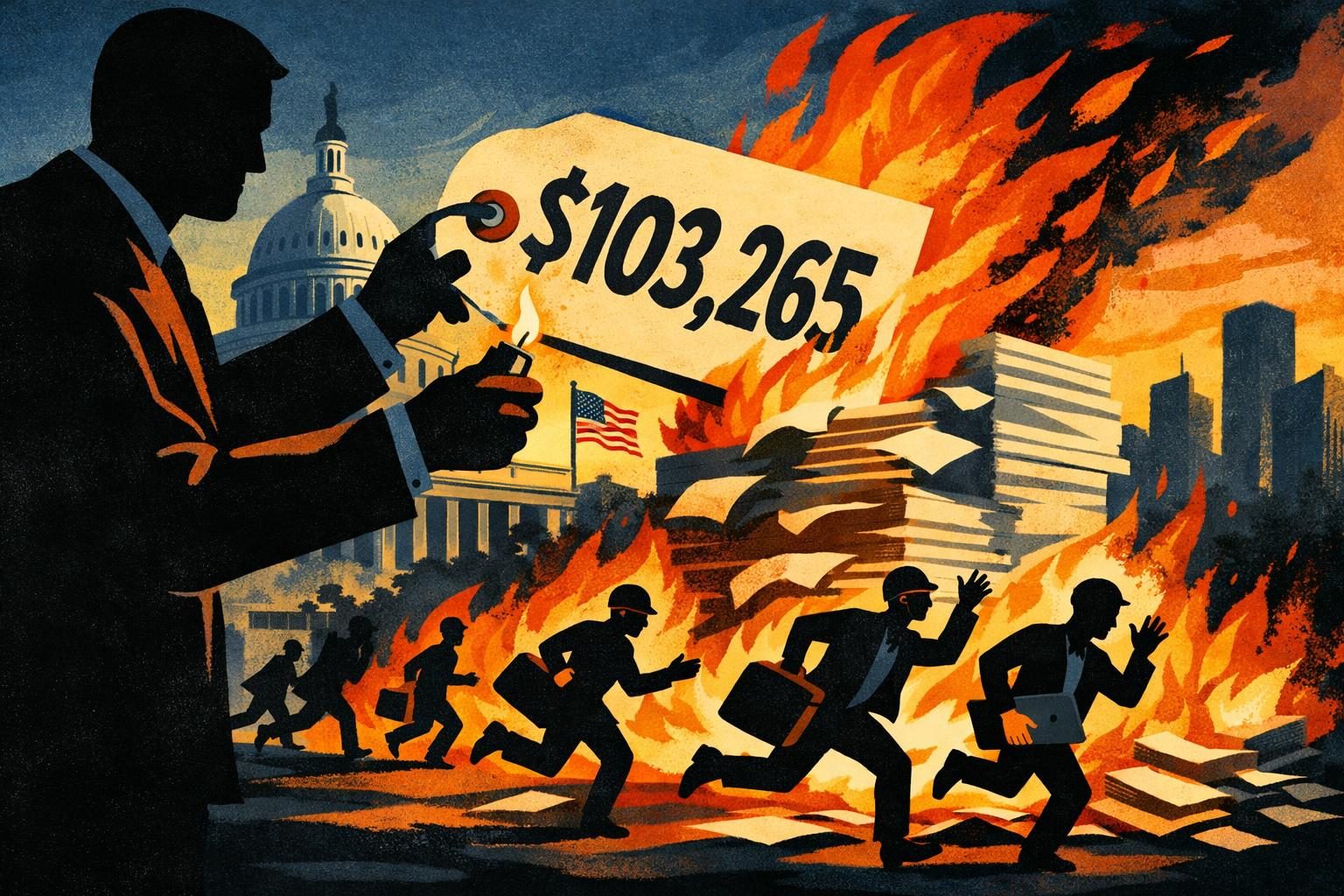
The Department of Homeland Security has proposed a fee of $103,265 for all H-1B cap-subject petitions, including petitions that would ordinarily qualify for the advanced-degree exemption, a move that would transform one of the country’s most important employment visas into an extraordinary cost item before a case is even filed. The proposal was published in the Federal Register on August 25, 2026, and it would require payment at the time of filing rather than after a petition is approved or a worker is placed. That detail matters because it means employers would have to absorb the hit up front, without any guarantee that the petition will be approved. The department says the charge is meant to recover government costs associated with administering the lawful immigration system. But whatever bureaucratic language is attached to it, the number itself is so large that it effectively reads as a policy shock rather than a routine user fee adjustment.
The H-1B program is not a side alley of the immigration system. It is a core hiring channel for employers seeking workers in specialty occupations, and it has long been used by companies in technology, research, health care, consulting, and higher education. Because the visa is tied to employment and subject to annual caps, it already comes with a dense thicket of compliance rules, filing deadlines, and uncertainty. A six-figure fee would change the math dramatically for nearly everyone who uses it. Larger firms with deep cash reserves might be able to treat the charge as a painful but manageable expense, while smaller employers could find the program effectively out of reach. Universities, labs, hospitals, and startups would likely face the sharpest pressure, especially if they depend on individual specialists whose work cannot easily be shifted to another visa category or filled by domestic applicants on short notice. In practical terms, the proposal would not merely raise the cost of hiring; it would reshape which employers can realistically participate in the market for H-1B talent at all.
That is why the proposal is likely to be viewed by critics as much more than a fee schedule revision. A charge this steep can function as a barrier even if it is formally described as cost recovery, and the distinction between those two things is likely to become central if the policy is challenged. The administration has not presented this as a temporary surcharge, a narrow anti-fraud measure, or a limited administrative correction aimed at a discrete problem. Instead, it is a blunt and sweeping financial burden that applies across the board to cap-subject petitions, including advanced-degree cases that are typically framed as a way to encourage higher-skill hiring. That breadth will probably invite arguments that the government is using fee authority to accomplish an immigration restriction that would be harder to enact through ordinary legislation. Whether that argument succeeds would depend on the legal details, but politically the proposal already carries the appearance of an intentionally punitive measure dressed in the language of administration.
The broader context makes the move even more combustible. The Trump administration has repeatedly tried to tighten the screws on legal immigration pathways while presenting those changes as efficiency reforms, enforcement upgrades, or administrative housekeeping. This proposal fits that pattern by turning a standard employer-sponsored visa into a far more expensive gamble. The immediate reaction is likely to be a mix of panic, spreadsheets, and contingency planning, as employers try to determine whether any position could justify a six-figure filing fee before counting attorney expenses, prevailing wage obligations, and other standard costs. The likely ripple effects include fewer filings, more offshoring of specialty work, and a tilt toward the largest firms, which can spread the cost across global operations instead of treating each petition as a standalone business decision. Even if the proposal never survives intact, it signals a government willing to use the price tag itself as an instrument of immigration policy. That may be defensible as a theory of administration in the abstract. In practice, it looks more like a wrecking ball with a government seal on it.
Comments
Threaded replies, voting, and reports are live. New users still go through screening on their first approved comments.
Log in to comment
No comments yet. Be the first reasonably on-topic person here.