
HHS opens civil-rights reviews of five medical schools
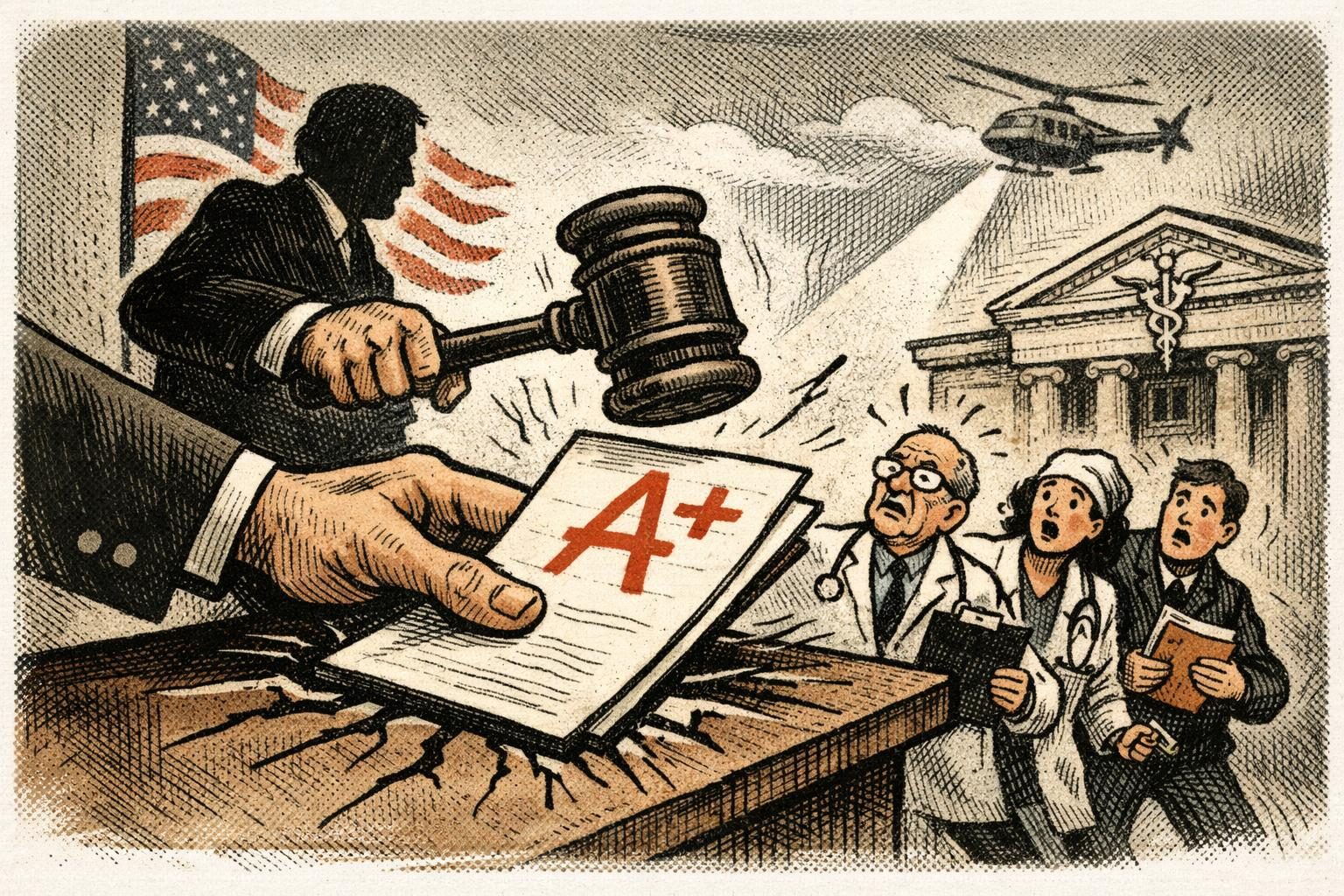
The Department of Health and Human Services said Thursday that its Office for Civil Rights is opening compliance reviews of five medical schools over possible violations of federal civil-rights law, escalating an enforcement campaign that the administration has tried to frame as a search for “merit” rather than a political purge. In the agency’s telling, the move is meant to enforce Title VI of the Civil Rights Act and Section 1557 of the Affordable Care Act, two provisions that prohibit discrimination in federally funded health and education settings. The schools were not named in the public announcement, but HHS said the reviews will examine admissions, hiring, training and other practices that may implicate civil-rights obligations. The department’s language was careful and bureaucratic, but the signal was unmistakable: the administration wants medical schools to know they are in the crosshairs. In the current political climate, even a compliance review can land like a warning shot.
HHS is packaging the effort as part of its “Merit-Based Opportunity Enforcement Initiative,” a phrase that does a lot of ideological work in very few words. On paper, the initiative presents the federal government as correcting discriminatory systems and restoring neutral standards in institutions that receive taxpayer money. In practice, it fits neatly into the administration’s broader crackdown-driven approach to education policy, in which enforcement actions are used not just to police conduct but to reshape how institutions talk, hire, admit and train. That does not mean the reviews are illegitimate on their face. Federal civil-rights law gives the government real authority to investigate possible discrimination, and schools that receive public funds are not insulated from scrutiny simply because they are academically prestigious or politically connected. But the branding matters because it shows how the administration wants the public to understand these actions: not as ordinary oversight, but as a correction to what it sees as a broken ideological order.
The choice of medical schools is especially revealing because these institutions sit at a sensitive intersection of higher education, workforce development and public health. Medical schools control access to high-status training programs, and their admissions and employment systems can shape the composition of the health-care pipeline for years at a time. That makes them a natural target for any administration looking to exert pressure through civil-rights enforcement rather than legislation. A compliance review can require document production, interviews, internal audits and legal review, all of which consume time and money even before any formal finding is made. Schools already balancing accreditation, faculty recruitment, clinical partnerships and student demands will likely treat the reviews as a serious operational burden. Administrators may respond by tightening procedures, slowing decisions and relying more heavily on lawyers to avoid even the appearance of a problem. Those are not trivial effects, particularly when the investigation itself has not yet identified any wrongdoing.
The political significance goes beyond the individual institutions involved. The administration has repeatedly shown a willingness to use the machinery of civil-rights enforcement as a lever in fights over race, admissions and campus policy, and this announcement fits that pattern closely. Supporters will argue that such scrutiny is exactly what federal law requires when there is evidence of discriminatory practices, and that elite institutions should not be allowed to hide behind good intentions or vague diversity rhetoric. Critics will see something narrower and more strategic: a government that is redefining civil-rights oversight into a one-way crackdown on disfavored institutions while elevating claims of discrimination that align with the White House’s own political narrative. Both readings are plausible, and the truth may depend on what the reviews actually uncover. For now, the only certainty is that HHS has opened a real federal process with real consequences, and it has done so in a way that invites a broader fight over who gets to define fairness in American education. Whether the reviews become a substantive civil-rights intervention or another ideological weapon will turn on the evidence, but the administration has already made clear that it intends to use enforcement as part of its governing style.
Comments
Threaded replies, voting, and reports are live. New users still go through screening on their first approved comments.
Log in to comment
No comments yet. Be the first reasonably on-topic person here.