
Justice Department pushes immigration fee hikes that promise a brutal bill for people already trapped in the system
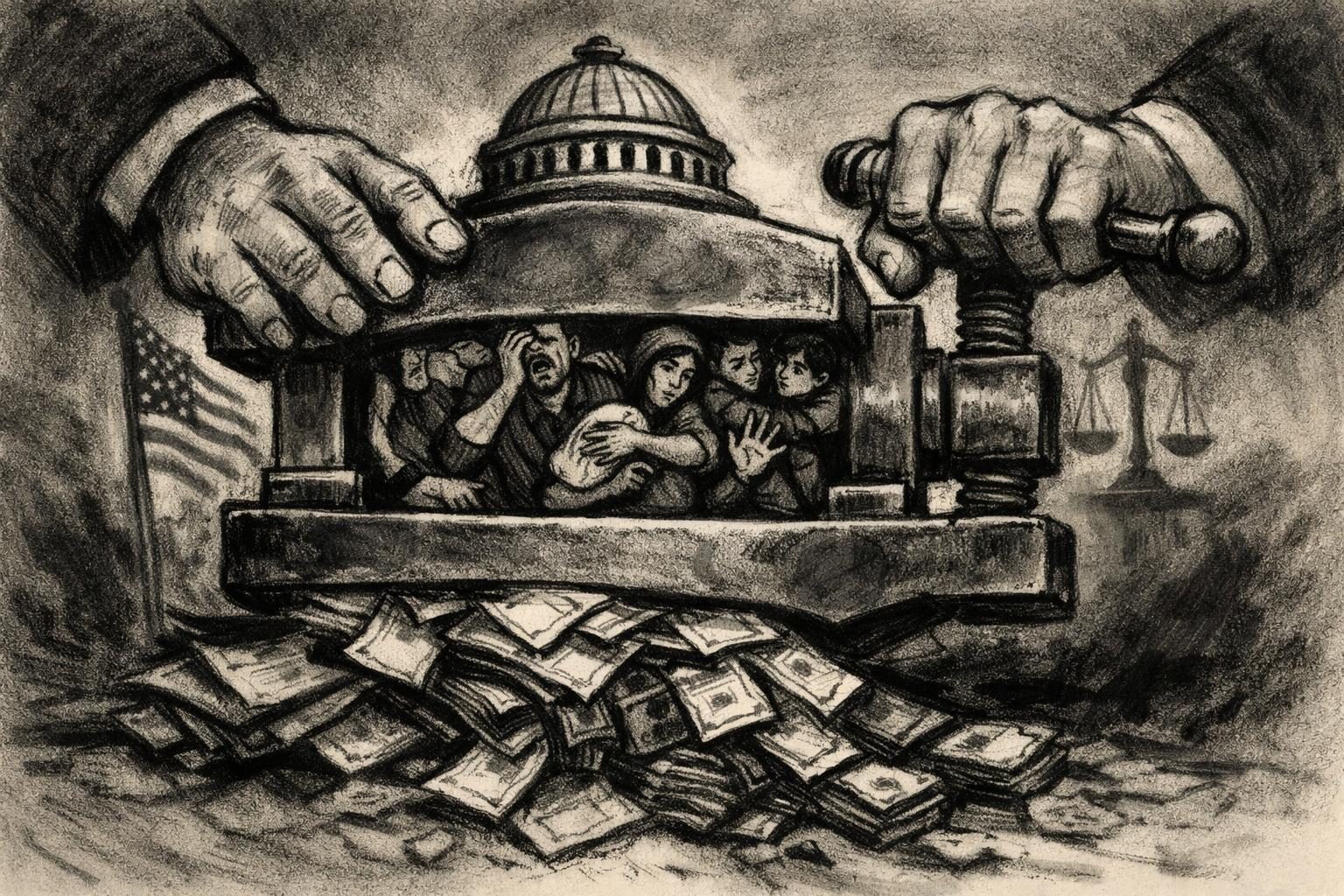
The Justice Department moved on August 28 to formalize inflation-based immigration fee adjustments for filings handled by the Executive Office for Immigration Review, setting the stage for higher costs in fiscal year 2027 under the One Big Beautiful Bill Act. On paper, the action reads like a routine administrative notice. In practice, it lands squarely in a system already defined by delay, confusion, and constant financial pressure. Immigration court is not a clean, efficient machine that can absorb a price change without consequence. It is a backlog-heavy, deadline-driven process where every added expense can change who gets to keep fighting and who gets pushed out. That is why this notice matters beyond the narrow mechanics of fee-setting. It is a policy choice that makes an already punishing system more expensive for the people least able to tolerate another cost increase.
The decision is especially consequential because it arrives in the middle of an immigration enforcement environment that has been tightening for months. Respondents in removal proceedings, asylum seekers, and other people trying to regularize their status are often forced to navigate the system under severe time pressure, with limited access to counsel and little room for error. Higher filing fees do not just affect a budget line at the federal level; they alter the practical odds of participation in the process. A person who has to choose between paying a fee and paying rent may simply fall out of the system, not because a judge ruled against them, but because the system became too costly to keep up with. Legal service providers face the same squeeze from another angle, since they are asked to absorb more demand while clients confront higher barriers to entry. Even when a fee increase is framed as an inflation adjustment, the lived result is a stronger financial gate around relief, compliance, and defense.
Supporters of the move are likely to argue that the government is simply following the statute and aligning immigration-related charges with system costs. That argument may have legal force, and the notice itself may well be presented as straightforward implementation rather than a policy shift. But administrative labels do not erase the practical effect. If the purpose is to make the system pay for itself more fully, the federal government is shifting more of the burden onto people who are already trapped in a process they did not design and often cannot control. Critics will likely see that as a form of taxing desperation while calling it administration. The deeper issue is that this kind of fee policy tends to hit hardest at the moment when people are least able to absorb it. A wealthier filer may see a higher fee as annoying. A detained respondent, a low-income asylum seeker, or a family already paying for translations, travel, filing help, and missed work can experience the same increase as a barrier that is effectively structural.
The broader political significance is not that this is the largest immigration development on the calendar, but that it shows how federal power can harden through bureaucratic details. A fee schedule does not have the dramatic shape of a border crackdown or a courtroom ruling, yet it can still reshape access to justice one filing at a time. The likely fallout is easy to predict even if the exact numbers are not the headline: more pressure on legal aid budgets, more disputes over fee waivers, and more applicants trying to decide whether they can afford to keep their cases alive. That is the kind of harm that rarely arrives as a single explosion. It accumulates through paperwork, deadlines, and small financial hurdles that look neutral from afar and coercive up close. If the government intends this as orderly implementation, it is still likely to feel like another tollbooth on due process for the people standing in line. And in a system where access already depends on money, time, and endurance, even a modest increase can have a brutal effect.
Comments
Threaded replies, voting, and reports are live. New users still go through screening on their first approved comments.
Log in to comment
No comments yet. Be the first reasonably on-topic person here.