
Court blocks the postal mail-voting rule again, and the states are already suing back
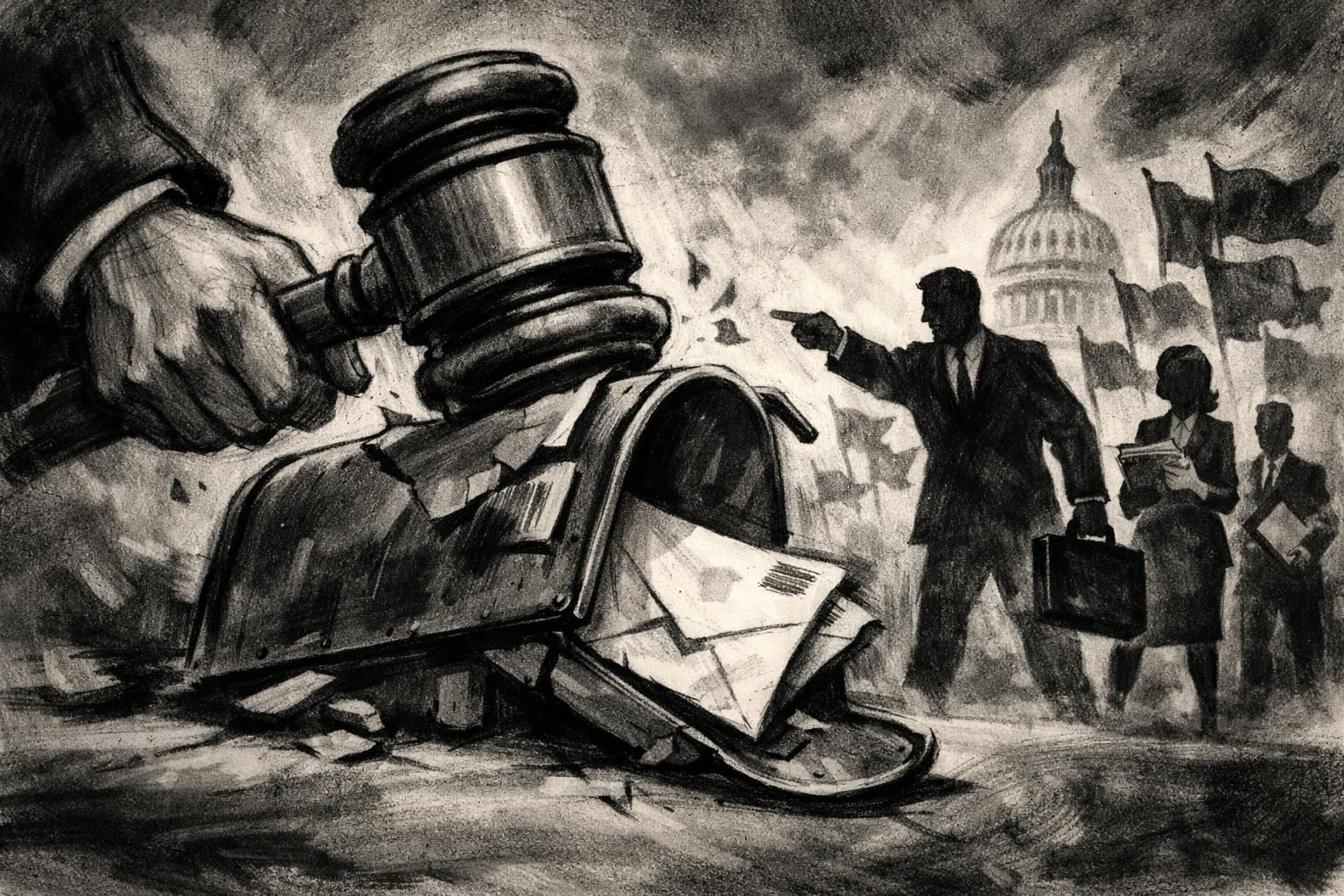
A federal judge in Boston has once again put the brakes on a Postal Service rule tied to Donald Trump’s executive order on mail voting, setting off yet another round of emergency litigation just as states are trying to finalize election procedures for November. The ruling matters because it does not merely pause a minor administrative change. It stops a federal directive that election officials say could have forced them to overhaul ballot handling, return-envelope procedures, and other parts of their vote-by-mail systems on a timetable that no state could realistically meet. State attorneys general immediately moved to keep the rule from taking effect, arguing that it would land in the middle of the most sensitive stretch of the election calendar, when ballots are about to go out and local officials have the least room for error. The federal government appealed on Friday, so the fight is now headed straight back into the courts with little time to spare. In practical terms, the judge’s order gives states temporary breathing room, but only for as long as the injunction survives the next appeal.
The Postal Service rule is being challenged not because it looks tidy on paper but because it would scramble how states already run mail voting. Officials say the rule would force them to deal with a new federal portal, new ballot and return-envelope procedures, and other logistical requirements that would have to be folded into systems already in motion. That is why the dispute has become so urgent. Election offices do not have the luxury of putting their work on hold while lawyers sort out whether the federal government can impose new conditions on mail ballots. Deadlines for printing, packaging, mailing, and processing ballots are already set, and even small changes can ripple outward into delays, confusion, or a shortage of time to correct mistakes. State officials have made clear that the rule is not just inconvenient; in their view, it is unworkable on the schedule the government is demanding. If it had been allowed to take effect immediately, the likely result would have been a scramble at precisely the moment election administrators want stability and predictability. The risk would not fall evenly, either, because mail voters and local election workers would be the ones dealing with the fallout first.
Attorneys general from multiple states have framed the rule as part of a broader effort to disrupt long-standing vote-by-mail systems and expand federal involvement in election administration beyond what they say the Constitution permits. Their legal objections are rooted in logistics as much as in constitutional theory. When they describe the rule as unlawful, they are also pointing to the paperwork, deadlines, staffing, and technical changes that would have to be made almost overnight. That is a useful reminder that election-law disputes are often won or lost in the details, not in the slogans. A court can hear arguments about federal authority and state control, but the practical question remains whether officials can actually implement a new rule without throwing existing systems into chaos. State leaders say the answer is no. They also appear to believe that if the rule were allowed to stand even briefly, it could create confusion that would be difficult to unwind later, especially once ballots start moving through the mail and voters begin relying on the procedures they were told to follow. The rapid appeal filed by the federal government suggests the administration understands that delay is not neutral here; every day that passes without the rule in place makes it harder to impose before election operations lock in.
The larger story is that this latest injunction is another sign that Trump’s election-order agenda is running into steady resistance from judges and state officials who are willing to litigate fast and often. Even when the federal government scores a procedural victory, it keeps meeting the same obstacle course: emergency motions, state lawsuits, judicial skepticism, and the simple reality that election administration is driven by calendar math. That is not the same thing as a final ruling on the merits, and it would be premature to say the rule is dead. The appeal could produce a different result, and the courts may still end up sorting out the federal government’s authority in more detail. But for now, the immediate effect is straightforward: the rule is blocked again, states are pushing back again, and the nation’s mail-voting machinery remains caught in a fight that is making the approach to November look more like a legal siege than a managed election process. At minimum, the episode shows how hard it is to use federal power to rewrite election procedures on short notice, especially when state officials are prepared to go to court at the first sign of disruption. And it leaves election administrators doing what they have been doing all year: trying to run the clock while lawyers set it on fire.
Comments
Threaded replies, voting, and reports are live. New users still go through screening on their first approved comments.
Log in to comment
No comments yet. Be the first reasonably on-topic person here.