
Lisa Cook pushes back hard as Trump revives his threat to fire her
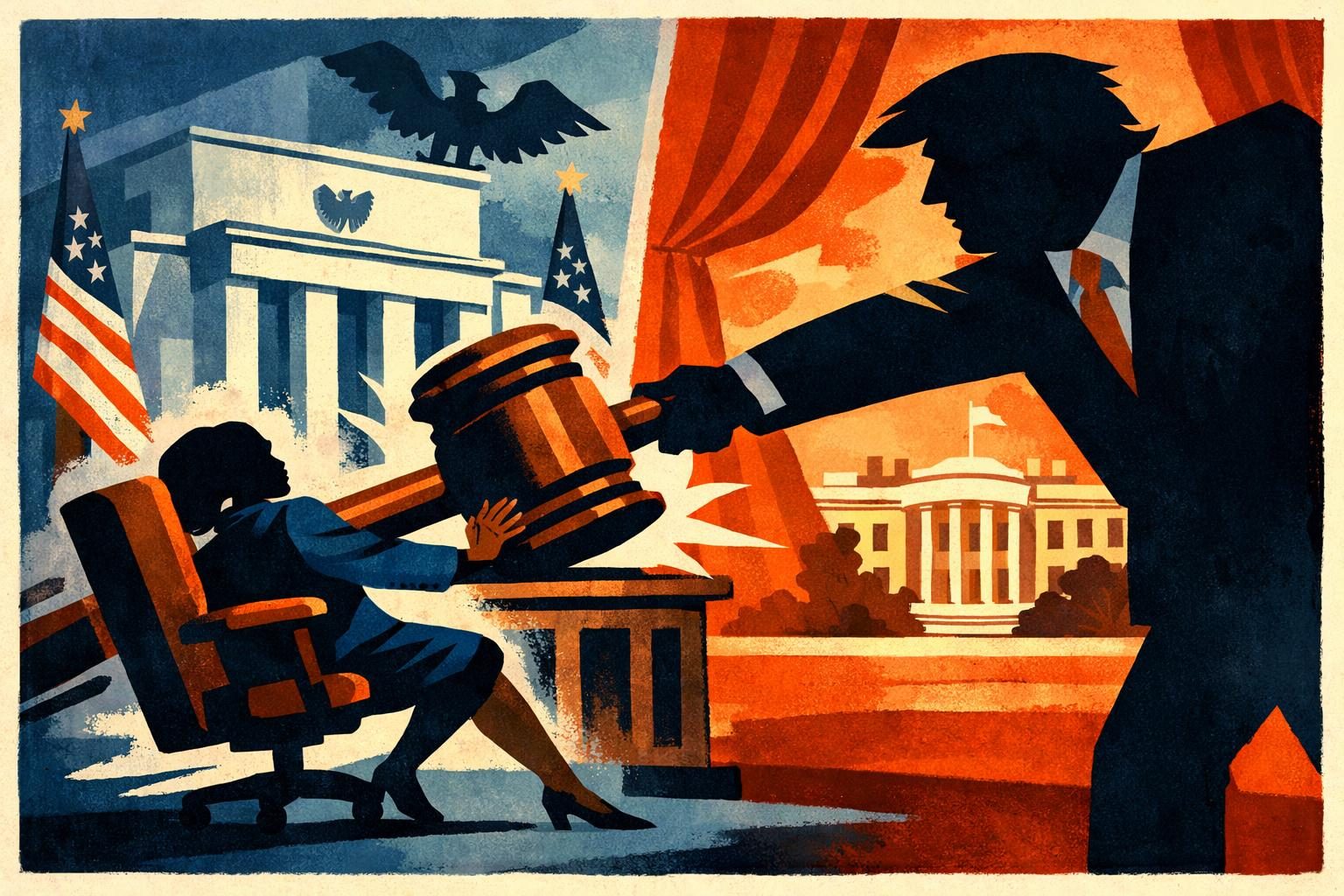
Federal Reserve governor Lisa Cook has moved from quiet resistance to open confrontation, telling the White House that it has no legal basis to remove her from the central bank’s board after President Donald Trump renewed his threat to fire her. Her response sharpened what was already becoming a high-stakes test of presidential power and Fed independence. What might have been dismissed as another Trump pressure campaign now looks more like a direct challenge to the structure that has kept monetary policy at least somewhat insulated from day-to-day politics. Cook’s position is simple in concept but sweeping in implication: a president does not get to decide that a Fed governor is gone just because he wants a different answer from the central bank. That matters because the independence of the Fed is not a decorative principle or a ceremonial phrase; it is one of the few guardrails meant to keep economic management from becoming a personal loyalty test.
The immediate fight is over legal authority, but the broader conflict is about leverage. The administration appears to be trying to construct a case for removal, while Cook is drawing a hard line against the idea that the White House can invent a firing power by treating allegations or political friction as a substitute for law. The precise details of the dispute are less important than the precedent it could set if the president succeeds in pushing a governor out under pressure. A successful removal would signal that the Fed’s board is vulnerable to the same kind of intimidation that presidents sometimes use on agencies they already control. That would be a meaningful shift, because the central bank’s credibility rests in part on the belief that its officials can make decisions without worrying about whether they have crossed the president of the moment. In practice, this conflict is not about one official’s future alone; it is about whether the administration can use removal threats as a way to bend policy outcomes in its direction.
That is why Cook’s pushback landed so forcefully. Her message did not present the matter as a routine personnel dispute or a bureaucratic misunderstanding. Instead, it framed the threat as an effort to force the central bank to conform to the president’s wishes, which is exactly the kind of pressure Fed critics have long feared. Supporters of central-bank independence are likely to view the episode as part of a broader political style that treats expertise as a nuisance and oversight as disloyalty. In that view, the playbook is familiar: attack the institution, cast doubt on the people inside it, and then insist the real problem is accountability rather than coercion. Cook’s refusal to go along with that framing raises the stakes for the White House, because it makes the dispute public, explicit, and harder to reduce to backroom maneuvering. It also forces the administration to justify its actions in legal terms rather than political ones, which is a much tougher ask if the aim is simply to exert pressure. The White House can keep threatening, but it still has to explain where the law gives it the power it claims.
The stakes extend well beyond Washington’s internal power struggle. Financial markets tend to react badly when the Fed looks politically compromised, because investors know that a central bank subject to presidential mood swings becomes less predictable and therefore less trustworthy. Lawmakers, too, may be forced to reckon with the implications if the administration turns a personnel dispute into a test of institutional control. If the president can casually threaten to remove a governor, then the line between independent monetary policy and partisan management begins to blur in ways that could unsettle both domestic and global confidence. None of that means Cook has already won the fight, or that the administration will back down; it only means the confrontation is now larger than a single seat on the board. Cook’s letter has made the conflict harder to ignore and harder to repackage as ordinary governance. It has also put the White House in the uncomfortable position of having to defend not just a threat, but the principle behind it, and that is where the real political danger begins.
Comments
Threaded replies, voting, and reports are live. New users still go through screening on their first approved comments.
Log in to comment
No comments yet. Be the first reasonably on-topic person here.