
Federal court blocks USPS mail-voting rule after a 25-state challenge
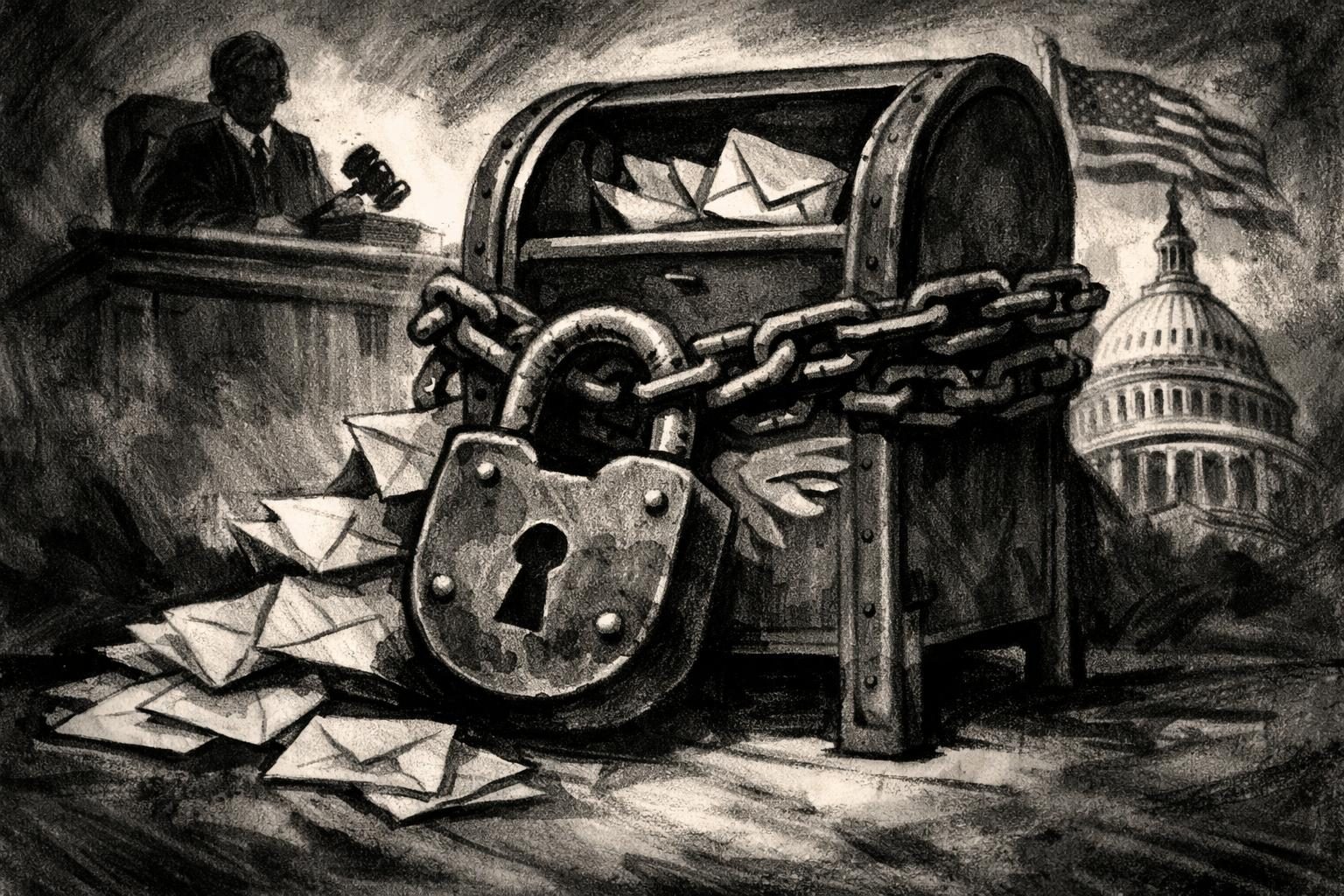
A federal judge on August 28 temporarily blocked the U.S. Postal Service from enforcing a new rule affecting mail ballots in the November general election, after Washington and 24 other states challenged the policy in court. The order immediately shifted the balance in favor of election officials who had warned that the rule would inject confusion, cost, and delay into an already compressed voting timeline. Washington Secretary of State Steve Hobbs and Attorney General Nick Brown both said the ruling protects voters and preserves access to the ballot while the case moves forward. The court’s initial conclusion was pointed: the Postal Service appears unlikely to have authority under federal law to dictate election procedures in the first place. That is not a minor technical dispute, especially when ballots are already being prepared and mailed.
The case lands in the most delicate part of the election calendar, when states are supposed to be finalizing procedures rather than fighting over them. Once ballots start going out, even small rule changes can create outsized problems for county election offices, mail handlers, and voters who are trying to follow instructions that are supposed to be stable and clear. According to the officials who sued, the new Postal Service rule would have forced states to adjust to fresh compliance burdens with very little warning. That kind of midstream change is exactly what election administrators spend months trying to avoid, because once a system is in motion, any extra layer of uncertainty can ripple through printing, processing, signature verification, and return deadlines. The practical effect, at least for now, is that states can keep operating under the existing framework instead of scrambling to accommodate a rule that may not survive legal review.
The broader dispute is about power as much as procedure. The Postal Service exists to deliver mail, but the challengers argue it cannot use that role to regulate how elections are run or how states manage absentee and mail ballots. That argument appears to have persuaded the court enough to justify an immediate restraining order, though the case is still only at an early stage and the final outcome is not settled. Washington’s filing framed the issue as an unlawful attempt to step outside the agency’s lane and into an area traditionally reserved to states. Brown said the ruling was important because it stops what he described as an unlawful mail-ballot rule that threatened to disrupt the election process. Hobbs also cast the order as a win for voters, arguing that keeping the rule off the books avoids unnecessary barriers at a moment when election offices should be focused on access and accuracy rather than litigation.
The timing of the Postal Service’s move is what made the whole fight look so reckless. Election rules are supposed to be boring on purpose, especially when the vote is close enough that clerks are already under pressure and voters are making decisions based on material they have in hand. Introducing a new federal rule in that environment naturally raised suspicions that the agency was overreaching and creating a problem rather than solving one. Supporters of the lawsuit say the government was trying to improvise a fix where none was needed, then asking states to absorb the cost and confusion. If the temporary order holds, it will amount to more than a one-case rebuke; it could also signal that federal agencies cannot casually wander into election administration by repackaging policy preferences as postal regulation. For now, though, the immediate reality is simpler: the rule is blocked, states are free to keep preparing ballots under existing procedures, and voters are spared one more piece of last-minute nonsense in a cycle that already has enough of it.
Comments
Threaded replies, voting, and reports are live. New users still go through screening on their first approved comments.
Log in to comment
No comments yet. Be the first reasonably on-topic person here.