
Judge freezes Trump’s mail-voting power grab again
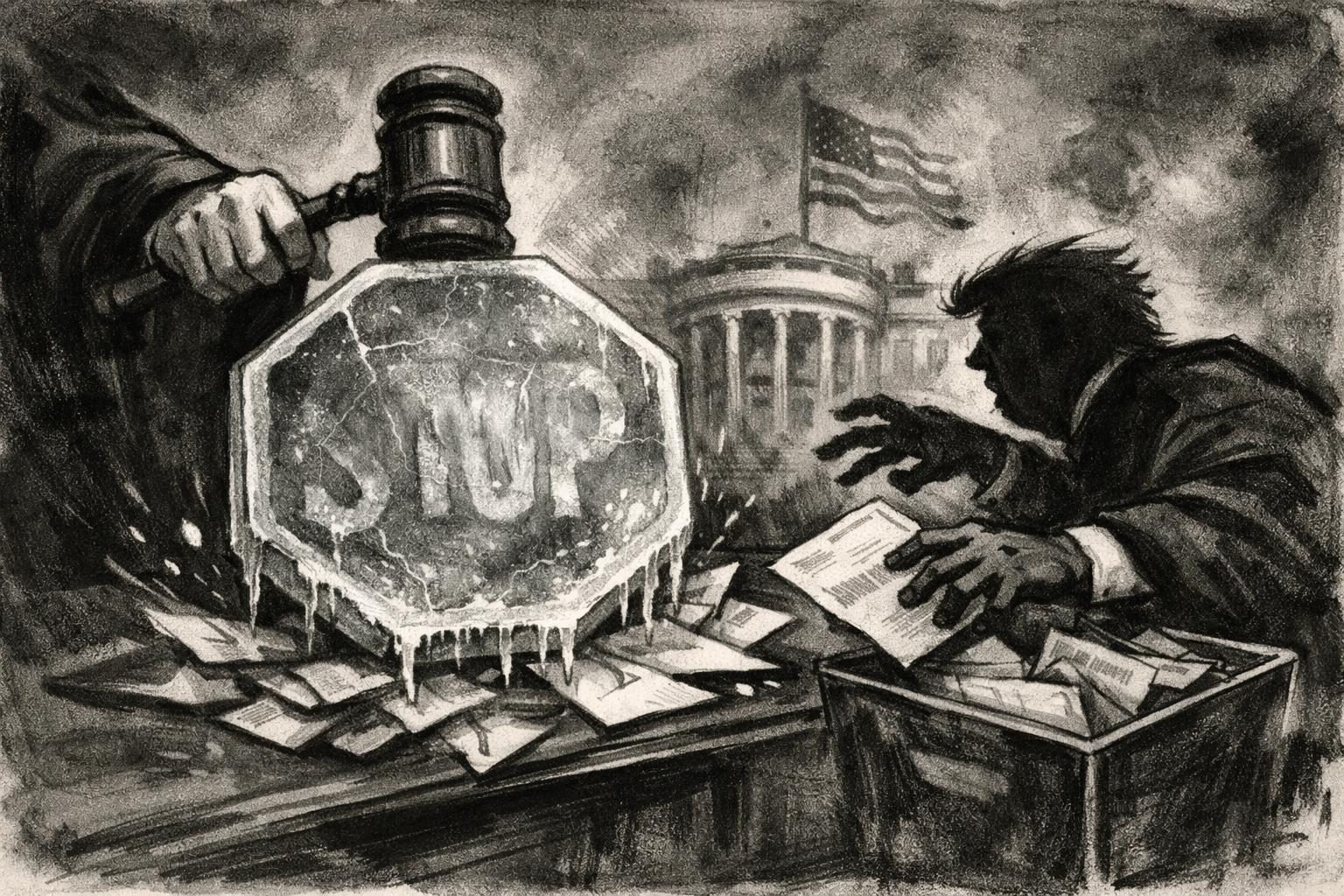
A federal judge in Boston on Friday temporarily blocked a new Postal Service rule that would have pulled the federal government deeper into the mechanics of mail voting just as the 2026 election cycle begins to take shape. The order is the latest setback for a Trump-backed effort to put Washington in a more active role in how states handle absentee ballots, a move critics say went well beyond any normal postal function. Under the challenged rule, the Postal Service would have been required to help regulate and approve ballot-envelope design and to oversee a federal database tied to absentee voters. The judge found that the states challenging the policy had shown likely constitutional problems and a risk of irreparable harm, which was enough to justify freezing the rule while the case moves forward. The White House said it would appeal immediately, signaling that the fight is far from over.
The practical significance of the ruling is bigger than a routine administrative pause. The Postal Service has never been a traditional election administrator, and the rule would have shifted it toward something closer to a gatekeeper for how ballots are sent, received, and tracked across the country. That is exactly why opponents described the policy as an overreach: it would have put federal officials in the middle of a process the Constitution largely leaves to the states. Supporters of the challenge argued that the rule was not simply about mail logistics, but about who gets to shape the rules of voting itself. The court’s early intervention suggests those arguments landed enough to convince a judge that the status quo should remain in place while the legal questions are sorted out. In other words, the administration did not get the benefit of the doubt this time. The ruling also undercuts the broader political argument that federal power can be stretched whenever the White House decides state election procedures are too permissive or too uneven.
For state officials and Democratic attorneys general who challenged the rule, the order amounts to an important early victory in a dispute that could have serious consequences for election administration nationwide. California Attorney General Rob Bonta and other plaintiffs cast the Postal Service policy as an attempted federal takeover of a process that belongs to the states, not an effort to improve ordinary postal operations. The judge’s decision gives them immediate relief and a concrete legal win before the midterms, which matters because election rules often become harder to unwind once agencies start implementing them. It also gives them a stronger public argument that the rule was sufficiently dubious to be blocked before it could do any damage. At this stage, the litigation is not over, and the government is expected to keep defending the rule on appeal. But the fact that the court acted quickly suggests the states were able to make a credible showing that the policy could disrupt established election procedures before any final ruling. That kind of early judicial skepticism can shape the rest of a case, especially when the underlying issue touches on federalism and voting rights.
The broader pattern is what makes this fight especially notable. Trump-aligned officials have increasingly tried to move first and justify later when it comes to election administration, pushing out rule changes that can be framed as technical but have obvious political consequences. Courts have already shown a willingness to scrutinize these efforts closely, particularly when they appear to expand federal authority into territory usually managed by state and local election officials. The Postal Service rule fits neatly into that pattern because it would have created a new federal role in the handling of absentee ballots without the kind of long-established statutory foundation that normally comes with such a shift. If the administration’s goal was to project toughness on voting procedures, the immediate result is another public reminder that federal agencies cannot simply declare themselves empowered to redesign election rules. For now, the judge’s order keeps the Postal Service out of the middle of mail voting and forces the administration to defend the move in court rather than through implementation. Whether the rule survives that process is uncertain, but the latest ruling ensures that Trump’s attempt to tighten control over mail voting has hit another fast stop sign.
Comments
Threaded replies, voting, and reports are live. New users still go through screening on their first approved comments.
Log in to comment
No comments yet. Be the first reasonably on-topic person here.