
Supreme Court docket gets another late-summer legal grenade
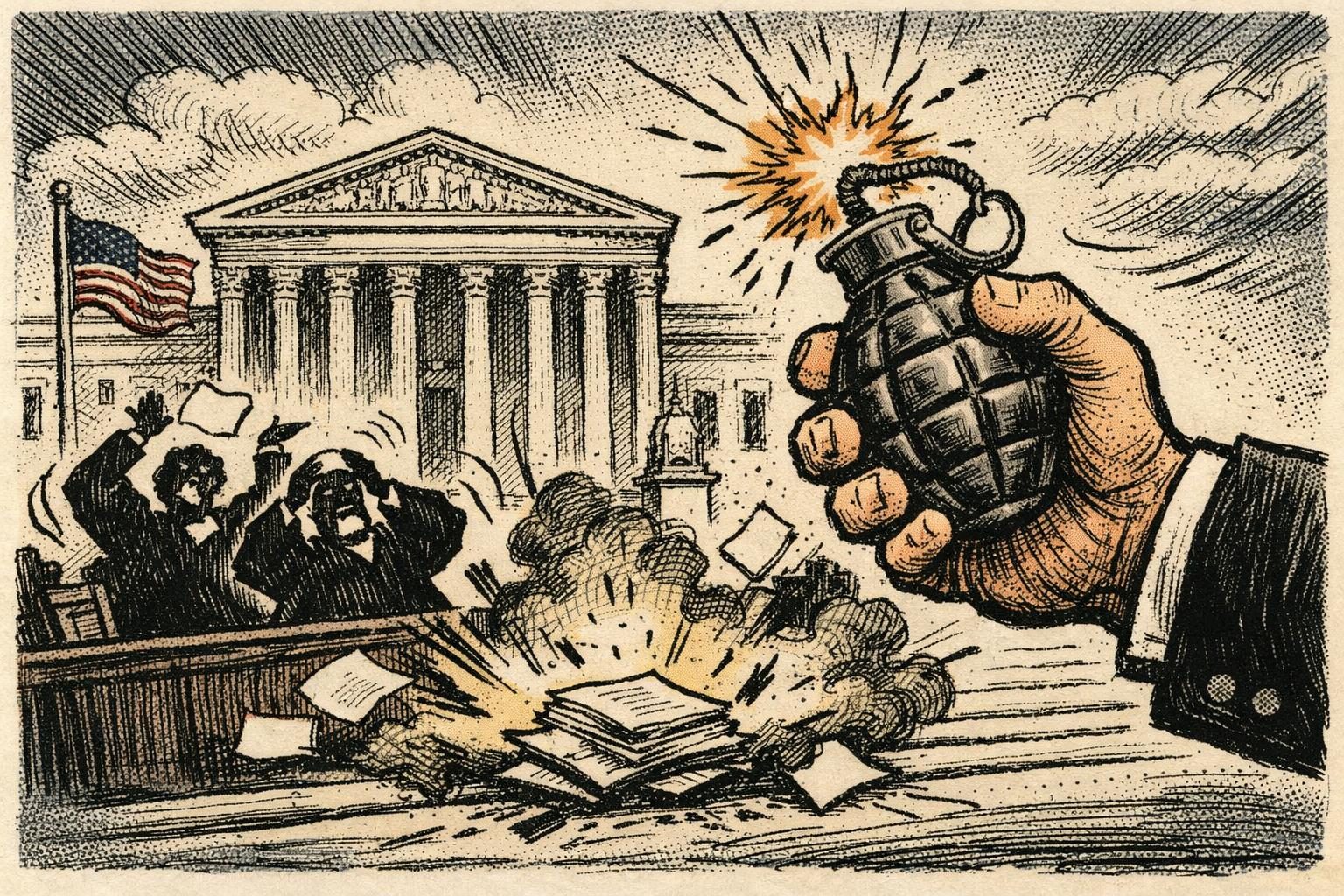
The Supreme Court’s public docket picked up fresh emergency activity on August 28, putting the justices back in the middle of a fast-moving dispute tied to the Trump administration. The filing did not amount to a final ruling, and the Court has not yet resolved the underlying merits, but the docket entry itself is another sign that the machinery of emergency review is moving. In the Supreme Court world, that matters. A live application on the emergency docket can change the pace of a fight, alter the leverage of the parties, and force everyone involved to behave as if the next order may arrive at any moment. Even when the Court says little, the fact that it has been asked to act can ripple outward through government agencies, courtrooms, political operatives, and the people who have to make decisions while the legal ground is still shifting.
The public docket shows that the matter had already been referred to the Court earlier in the week, which is the sort of procedural step that may sound dry but often signals that the case is now inside the justices’ immediate orbit. That does not mean the Court has endorsed the request, or even that a majority is inclined to do so. It does mean the dispute has reached the place where emergency intervention is being actively considered rather than merely anticipated. For people watching from the outside, docket activity can seem like a minor administrative note. Inside the legal system, though, these entries are the smoke that tells everyone a fire is still burning. The Court does not need to issue a lengthy opinion for the consequences to begin, because the possibility of emergency relief alone can change how the parties behave.
That is one reason the emergency docket has become such a central feature of modern political conflict. The Supreme Court is increasingly the place where the executive branch, states, advocacy groups, and regulated industries race to get relief before a lower-court fight can fully play out. The result is a kind of constitutional triage in which the justices are asked to step in quickly, often with compressed briefing and limited explanation. Supporters of this system say it is necessary because some disputes move too quickly for ordinary appellate review, and delays can themselves create irreversible harm. Critics say the emergency process has become a shortcut around the slower work of lawmaking and deliberation, allowing major policy disputes to be decided in a haze of urgency. Both arguments have force, which is part of why the docket has become such a fraught place. It is not just a list of cases. It is a map of where American political power is colliding most violently.
The practical effect is that uncertainty becomes its own form of policy. Agencies may hold back or accelerate enforcement. States may prepare for one legal outcome while publicly insisting they expect another. Businesses and public institutions may have to rework planning on the assumption that an order could land with little warning. That is especially true when the dispute is tied to the Trump administration, because almost anything involving Trump-era legal fights tends to draw intense attention and immediate strategic response. The Court’s intervention may end up narrow, temporary, or procedural. It may also become the first step in a larger ruling that clarifies how far the executive branch can go, what lower courts can block, and how quickly emergency relief can be obtained when the political stakes are high. For now, the only certain thing is that the Supreme Court has been drawn back into another emergency dispute at a time when its docket is already crowded with politically charged questions. That alone says something important about the current state of American government: too many fights are arriving at the Court in emergency form, and the Court is increasingly being asked to manage the country’s crises before the country has settled the law behind them.
Comments
Threaded replies, voting, and reports are live. New users still go through screening on their first approved comments.
Log in to comment
No comments yet. Be the first reasonably on-topic person here.