
Justice Department Locks in $400 Million TikTok Privacy Settlement
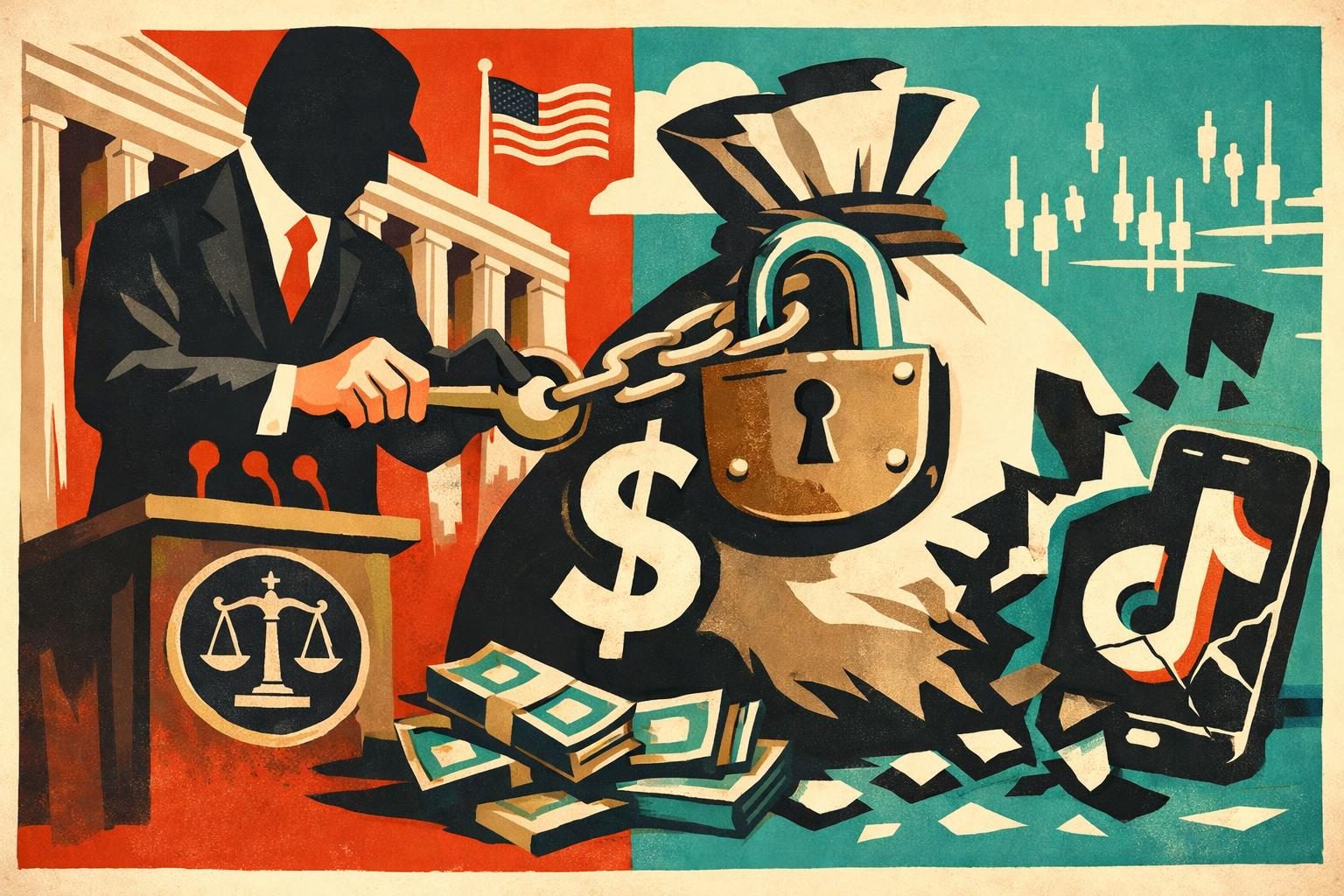
The Justice Department said Friday that it has reached a $400 million settlement with TikTok and its parent company, ByteDance, to resolve children’s privacy litigation, turning a long-running legal fight into a costly official rebuke. The size of the agreement immediately signals that the government viewed the underlying conduct as serious, and not merely as an isolated technical violation that could be shrugged off with a warning. In practical terms, the settlement closes one case, but it does not settle the larger political and regulatory dispute over whether the platform can be trusted with the data of young users. TikTok gets a measure of legal closure, and the government gets to point to a large number that suggests enforcement had real teeth. What it does not get is a final answer to the broader question of how much power a platform like this should have over children’s attention, behavior, and personal information.
The privacy stakes are especially high because the case involves children, a category of users that regulators tend to treat as uniquely vulnerable. That matters not just because minors deserve added protection, but because repeated privacy controversies have helped create a public impression that major tech companies cannot be relied on to police themselves. Years of promises about internal safeguards, product changes, and responsible data practices have often been followed by new revelations, new investigations, and new settlements. A penalty of this scale suggests the government believes there was something more systematic at issue than a simple mistake or one-off failure. It also gives critics fresh ammunition for the argument that the problem is structural: a platform built to maximize engagement will always have strong incentives to collect, infer, and monetize information in ways that can collide with user privacy, especially when the users are children or teenagers. The settlement does not erase that concern. If anything, it adds another data point to a pattern that has become difficult for defenders of the company to dismiss.
There is also an obvious political layer to the announcement, because this administration has spent considerable energy warning about foreign-owned platforms, digital influence, and the need to protect children online. A settlement like this lets officials claim that they are not just talking about the issue, but acting on it. At the same time, the deal underscores a familiar weakness in privacy enforcement: punishment often arrives after the harm has already occurred, and after the public has been asked for patience while the system works through the courts. That tends to produce a press release and a headline more readily than it produces durable structural reform. The government can say it imposed a major penalty, and TikTok can say it resolved a dispute, but the larger public-policy question remains open. If a company can absorb a giant settlement and continue operating much as before, then the deterrent effect may be real in symbolic terms without being transformative in day-to-day practice.
The likely aftermath is split between corporate cleanup and renewed criticism. TikTok will almost certainly present the settlement as a step toward putting the litigation behind it and moving forward, while privacy advocates and skeptics of the platform will point to the agreement as evidence that the core debate is far from over. What remains unresolved is the broader problem of how to regulate a service that sits at the intersection of youth culture, political speech, entertainment, and data extraction. That combination makes the platform unusually powerful and unusually hard to police, because the same features that make it popular also make it difficult to separate harmless use from risky collection and misuse. The $400 million figure is large enough to sound like accountability, and in a narrow legal sense it is. But the underlying issue is much bigger than one settlement. Until regulators can do more than punish past misconduct, the public will keep getting expensive evidence that the system detected a problem only after it had already grown large enough to require a nine-figure fix.
Comments
Threaded replies, voting, and reports are live. New users still go through screening on their first approved comments.
Log in to comment
No comments yet. Be the first reasonably on-topic person here.