
Treasury Announces Sanctions Package Targeting ‘Far-Left Terrorist Networks’
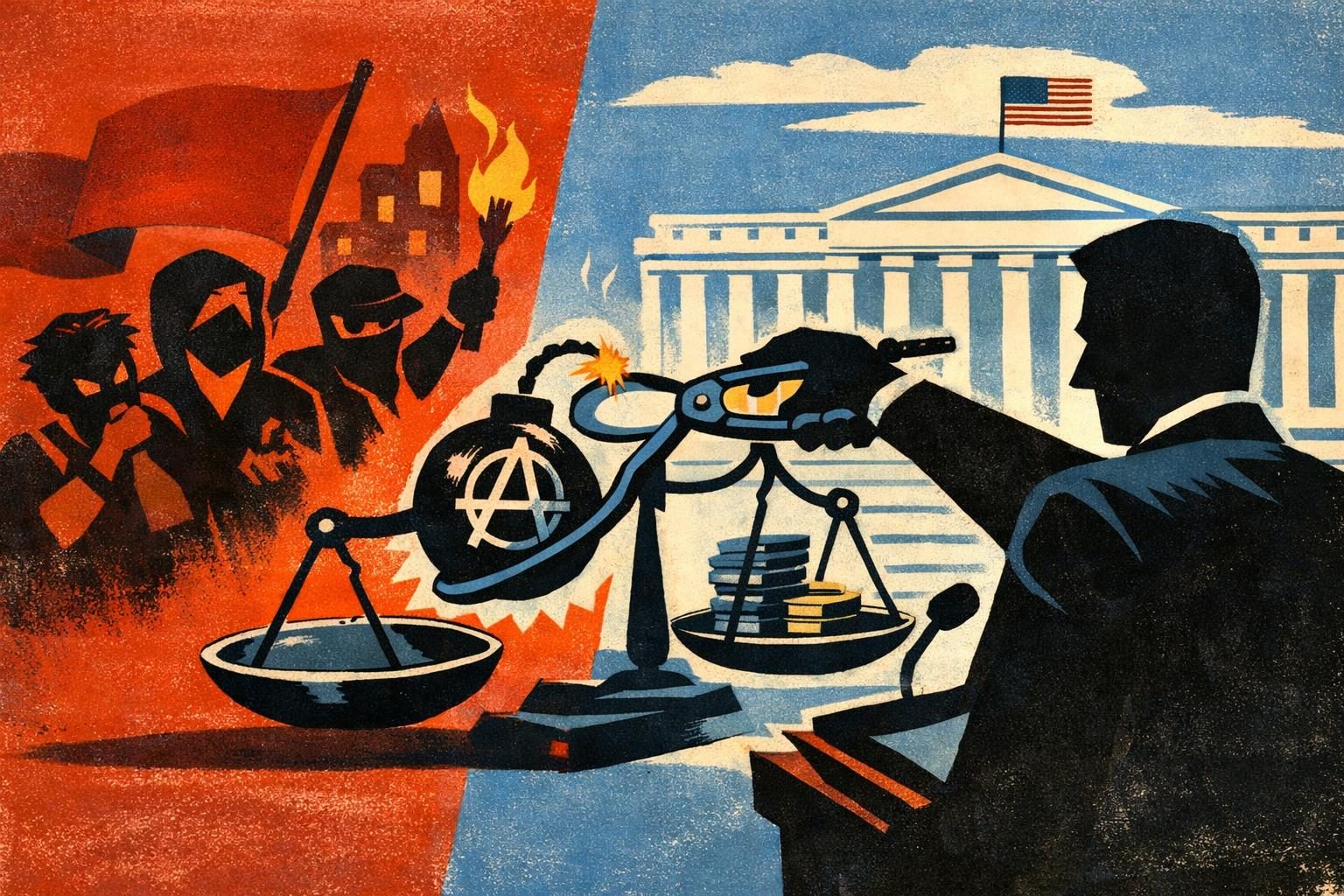
The Treasury Department on Friday announced a new sanctions action aimed at what it described as violent far-left terrorist networks, a move that instantly widened a political fight that has been building around protests, extremism, and the federal government’s role in policing ideological violence. Sanctions are usually the kind of financial weapon Washington reserves for foreign governments, militant groups, narcotics traffickers, or other overseas targets that can be isolated from the banking system. Applying that tool in a domestic political context is therefore unusual, and it gives the administration a way to frame a public-order issue as a national security problem. The choice of language was itself striking, because it signaled that Treasury is not treating the matter as a narrow law-enforcement matter but as part of a broader campaign against organized political violence. That makes the announcement less like a routine enforcement update and more like a deliberate escalation in how the government is choosing to talk about ideological conflict. It also ensures the action will be scrutinized not only for what it does, but for what it says about where the administration believes the line should be drawn.
The practical effects of sanctions are what make this move politically sensitive. When Treasury designates a person or group, the consequences can include blocked property, frozen assets, and exclusion from large parts of the financial system, along with serious downstream problems for anyone connected to the target. Even a contested designation can have immediate reputational damage and operational consequences, which is one reason sanctions are often treated as one of the most severe administrative tools available short of criminal prosecution. That is why critics are likely to ask whether the evidence behind this package is tight enough to justify such a consequential step, especially if the targets are described in broad ideological terms rather than through clearly documented acts. Supporters will almost certainly argue that violence is violence regardless of political label, and that the federal government has both the authority and the obligation to choke off funding or support networks tied to attacks or intimidation. But opponents may see something different: a government using an unusually blunt financial instrument to make a political point. In that reading, the issue is not merely whether violence exists, but whether the state is stretching an enforcement mechanism designed for foreign adversaries to fit a domestic culture-war narrative.
That tension helps explain why the announcement is likely to become a flashpoint far beyond the Treasury Department. Sanctions actions carry the aura of national security, and once that framework is applied to domestic ideological conflict, the stakes rise quickly. Questions about evidence thresholds, due process, and the definition of extremism become harder to avoid, particularly if the public record does not clearly spell out what conduct triggered the designations and how directly the targets are linked to violent acts. The administration appears to be betting that the political benefit of projecting toughness will outweigh those concerns, especially among supporters who want a harder line on unrest, intimidation, and attacks on property or people carried out under activist banners. But there is also a real risk that the move will be seen as overbroad or selective, especially if the category of “far-left” is used in a sweeping way that appears to conflate radical speech, protest activity, and criminal conduct. That kind of ambiguity can be politically useful in the short term because it allows officials to sound decisive without immediately boxing themselves into a narrow factual explanation. It can also backfire if the public concludes that the government is blurring the distinction between dangerous actors and unpopular beliefs.
The broader significance is that this action adds another front to an already crowded fight over how the federal government responds to political violence. The administration is clearly signaling that it is willing to use harsh, traditionally external-facing tools in a domestic ideological dispute, and that alone will be read as a warning shot by critics who worry about mission creep. If Treasury follows the announcement with a detailed factual record and a narrow explanation of why the designated targets fit the legal criteria, the action may hold up as an aggressive but defensible enforcement step. If, instead, the record remains vague or the designations look more symbolic than evidentiary, the package could become a case study in how financial punishment can be repurposed for partisan combat. For now, the announcement sits squarely in the overlap between security politics and culture-war messaging, where the administration gets to signal toughness and its opponents get a fresh example of federal power being used in ways they consider politically loaded. However it is ultimately justified, the move confirms that sanctions are no longer being treated only as a foreign-policy instrument; they are increasingly being folded into the domestic fight over what counts as extremism, who gets to define it, and how far the government can go in responding to it.
Comments
Threaded replies, voting, and reports are live. New users still go through screening on their first approved comments.
Log in to comment
No comments yet. Be the first reasonably on-topic person here.