
Trump loses another bid to move hush-money case federal
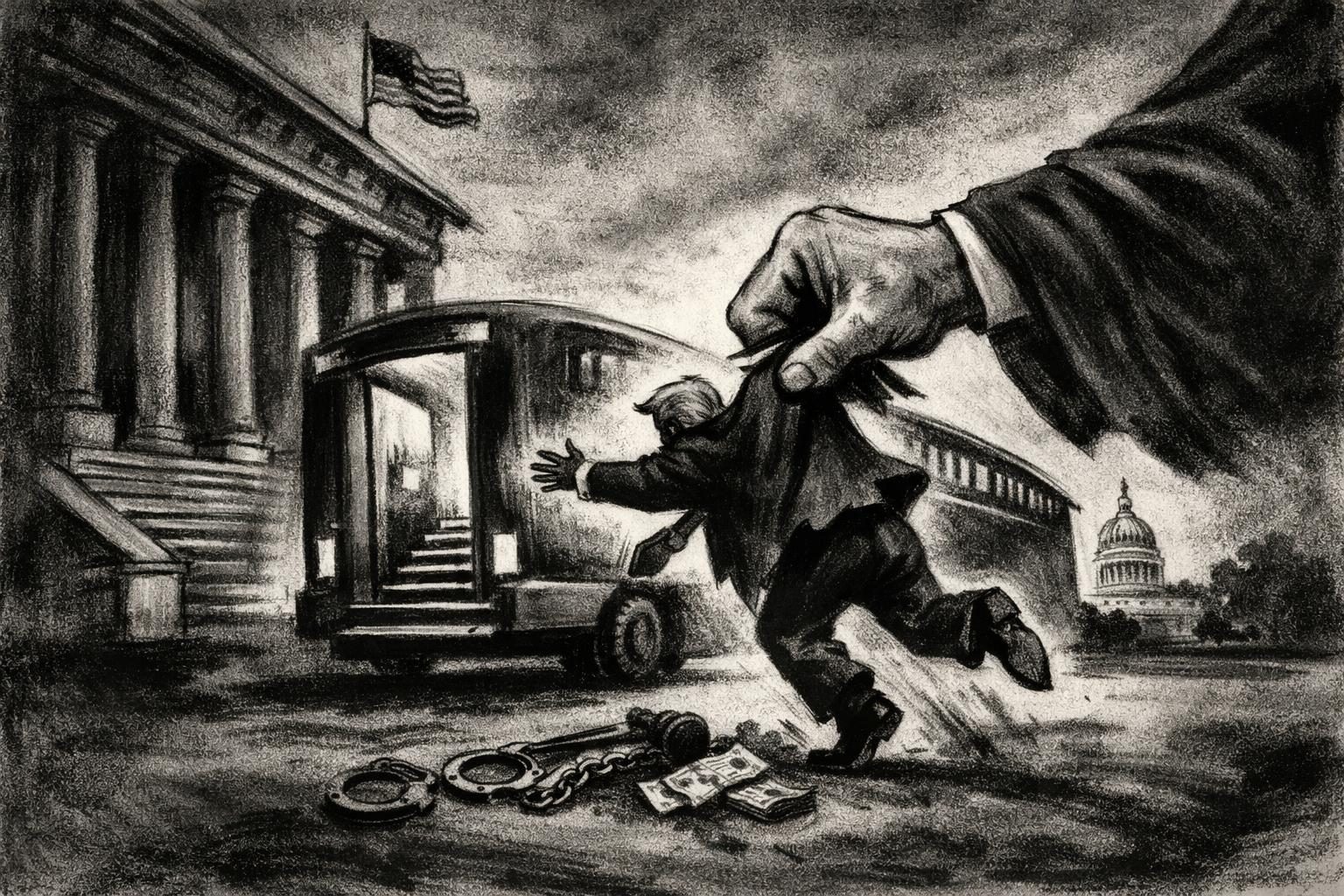
A federal judge on Thursday rejected Donald Trump’s latest attempt to pull his hush-money conviction out of state court and into federal court, handing him another defeat in a legal fight that has already stretched across years of motions, appeals, and increasingly creative arguments. The decision leaves the case right where Trump least wants it: in a public state proceeding that continues to shadow both his presidency and his political image. Trump’s team had tried to use the Supreme Court’s recent expansion of protections for official presidential acts as a foundation for moving the matter into a different forum, but the court was not persuaded that the case fit that framework. That means the conviction remains intact in state court unless a higher court eventually says otherwise. For Trump, who has repeatedly tried to recast legal losses as temporary inconveniences, this is another reminder that the judicial system has not been willing to let the case vanish on command.
The ruling is significant not just because it blocks a procedural maneuver, but because it reflects a broader pattern in which judges continue to separate presidential power from personal conduct. Trump’s legal team has spent months trying to extend the logic of presidential immunity into areas that could weaken older criminal cases, including this one. The argument has been that if courts recognize stronger protections for official acts, then some prosecutions tied to a sitting or former president should be reconsidered or moved into federal court. But the judge’s decision suggests that courts remain wary of turning those protections into a catchall escape hatch. The hush-money case, unlike disputes over policy choices or executive action, concerns alleged private behavior and personal conduct. That distinction has proven important, and this ruling adds to the list of decisions signaling that judges are not interested in blurring it just because Trump’s lawyers keep asking them to.
Trump can still appeal, and that part of the legal road map is almost certainly not finished. But an appeal is not the same thing as a win, and another rejection only deepens the sense that his strategy is running into the same wall over and over again. In practical terms, the ruling keeps the conviction alive and the case visible, which is exactly the opposite of what Trump’s political operation would prefer. The president has long relied on delay, disruption, and procedural complexity to keep legal threats from landing with maximum force. That approach has often bought time, but it has not produced the kind of clean legal reset his team seems to be chasing. Instead, each failed motion becomes one more public marker that the case remains active and that the courts are not willing to indulge a theory that would move a personal criminal matter into a more favorable setting simply because the defendant now occupies the White House.
The broader political effect is hard to miss. Trump has spent years treating every adverse ruling as proof of bias, bad faith, or some grand conspiracy against him, but the cumulative record here points to something less dramatic and more damaging: judges keep saying no. That repeated resistance matters because it keeps the hush-money conviction from fading into the background, especially when Trump would much rather frame his presidency around power, grievance, and control than around unresolved legal jeopardy. The case remains a reminder that being president does not automatically erase the consequences of prior conduct, even when the White House can change the optics around the fight. For Trump, the embarrassment is not only that the conviction survives another round, but that he is still being forced to litigate a chapter he would like to bury. The ruling leaves him with the familiar mix of appeal, delay, and denial, but no actual exoneration — and for a president who has built so much of his political identity on never really losing, that is a problem that keeps getting harder to spin away.
Comments
Threaded replies, voting, and reports are live. New users still go through screening on their first approved comments.
Log in to comment
No comments yet. Be the first reasonably on-topic person here.