
Voting-Rights March Puts Civil Rights Back on the Mall
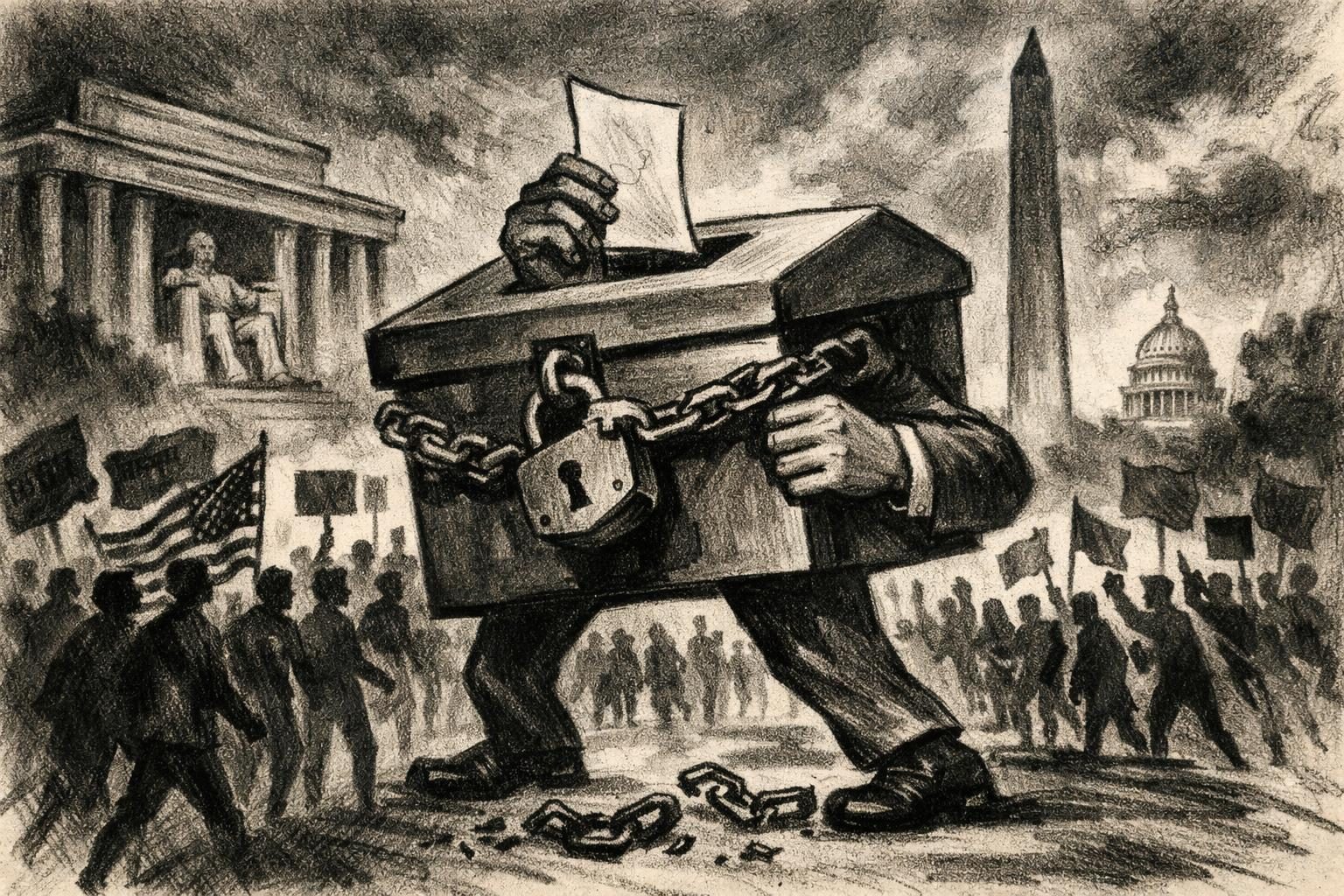
Thousands of demonstrators filled the National Mall on August 28 for a voting-rights march that was equal parts commemoration, protest, and warning. Civil-rights leaders and allied organizers framed the gathering around a familiar but newly urgent concern: that access to the ballot is being narrowed just as the stakes around representation keep rising. The crowd came to Washington under banners for racial justice and democratic participation, turning a historic public space into a stage for present-day arguments over who gets to vote, whose votes count, and who gets to draw the lines that determine political power. The message was not subtle. Organizers wanted to show that voting rights are no longer being discussed as a procedural issue tucked inside law books and court filings, but as a central fight over the country’s political future. The scale of the march suggested that, for many participants, the issue has moved far beyond partisan talking points and become a test of whether democratic institutions are still keeping faith with the public.
The timing mattered. The demonstration unfolded in the shadow of a Supreme Court decision that altered the terrain of Voting Rights Act litigation and gave civil-rights advocates fresh reasons to worry about how hard it will be to challenge discriminatory election maps and rules. At the same time, activists are confronting a landscape shaped by redistricting battles, voting-law changes, and a steady stream of legal and administrative moves that they say can make it harder for Black voters and other communities to translate population into political influence. The concerns are not abstract. They are tied to the mechanics of elections: district lines, registration rules, early voting access, mail ballot procedures, and the standards courts use when judging whether lawmakers have crossed the line. What made the march notable was not just its turnout, but the fact that so many people appeared to understand those details as part of a larger struggle over racial representation. For civil-rights advocates, that kind of public attention is valuable because it turns what can seem like technical election law into a visible political problem.
The criticism directed at Republican-led changes to voting rules and district lines was blunt, but the broader complaint went further than any one party. Activists and voting-rights lawyers have argued for months that the federal protections built in an earlier era have not kept pace with the current wave of restrictions and court decisions. They say that even when no single change looks decisive on its own, the cumulative effect can be to make participation harder and to dilute political power in communities that have already had to fight for access. That is why the march carried weight beyond its symbolic value. A large turnout suggests the argument is resonating outside the legal community, which matters in politics because public pressure can raise the cost of anti-voting measures even when it cannot immediately undo them. It can also help keep the issue alive in state capitols, on Capitol Hill, and in local races where the next round of election rules is often decided. In that sense, the march was not just about grievance. It was also about trying to shift the environment in which lawmakers and judges operate.
The immediate consequences are likely to be political rather than legal, at least in the short run, but that does not make the demonstration any less consequential. Events like this help define the frame for future lawsuits, campaign messaging, and turnout battles heading into the midterms, where voting rules and district lines can shape outcomes before a single ballot is cast. They also remind both parties that election-law fights do not happen in the abstract. They play out in public, in front of people who understand that the structure of democracy is not a side issue but the arena in which all other issues are decided. For supporters of the march, that is the point: to make it harder for politicians and judges to treat voting restrictions as routine housekeeping. For opponents, the size of the crowd is a sign that the backlash to those moves is becoming harder to ignore. Either way, the march on the Mall underscored a plain reality. The fight over voting rights is not waiting for the election calendar to catch up. It is already here, and the people gathered in Washington were there to say that the country cannot claim to defend democracy while making it harder to practice.
Comments
Threaded replies, voting, and reports are live. New users still go through screening on their first approved comments.
Log in to comment
No comments yet. Be the first reasonably on-topic person here.