
Wyoming opens a probe into DOJ election monitors after GOP governor calls them aggressive
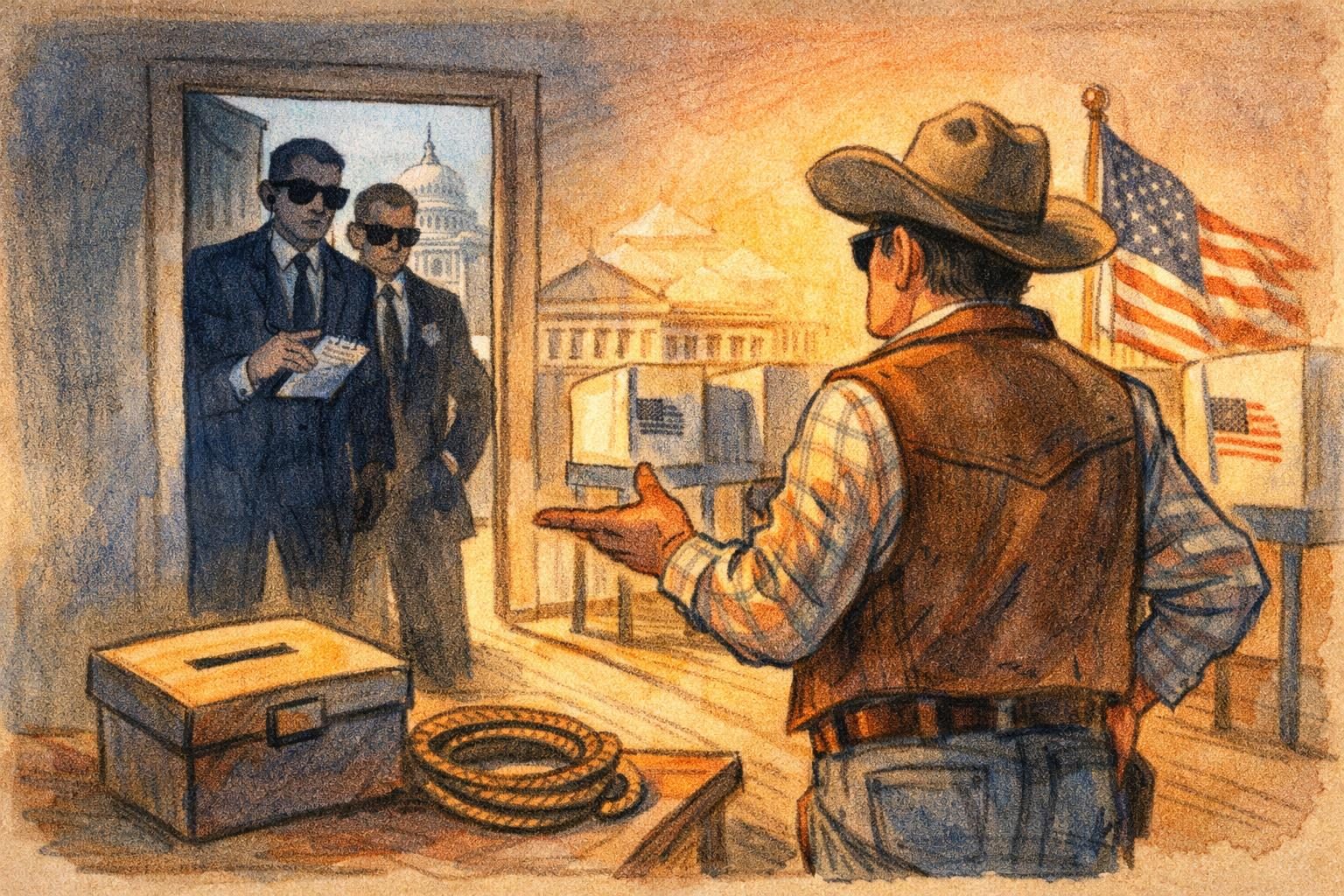
Wyoming’s attorney general has opened a review into the conduct of two federal election monitors who were present during the state’s Aug. 18 primary, turning a small-scoped episode into a larger fight over how Washington oversees voting in places that are not expecting to be supervised. The scrutiny began after Republican Gov. Mark Gordon said the officials’ behavior struck him as “a bit aggressive” and “irregular,” language that is unusually pointed for a governor from one of the country’s reddest states. In a state where federal election intervention is not exactly a daily feature, that kind of criticism carries extra weight. It suggests the problem was not merely a misunderstanding in the usual bureaucratic sense, but something that felt off to people tasked with running the election. And because the complaint is coming from Republican officials rather than partisan critics on the left, it is landing with an awkward force that could be harder for federal authorities to dismiss.
The allegations themselves are still murky, and that uncertainty matters. What is known is that the monitors were present to observe poll workers and voters, which is the normal broad function of federal election oversight when it is used. What remains unclear is how closely they approached polling-place operations, what questions they asked, how they interacted with voters, and whether their presence crossed from observation into something that local officials perceived as interference. That is why this episode is not yet a definitive verdict on the Justice Department’s conduct, even if the political implications are already obvious. Election monitors are supposed to serve a narrow purpose: reassure the public that the rules are being followed and that voters are not being pressured or excluded. If they instead leave local administrators and governors feeling scrutinized, second-guessed, or crowded, the monitors can become part of the problem they were supposed to prevent. In that sense, the fact pattern matters as much as the optics, because the public reputation of election oversight often turns on whether people believe the observers were calm, restrained and professional.
The dispute also arrives at a moment when the Justice Department’s voting-rights role is under unusually sharp suspicion from civil-rights advocates and election-law watchers. Those critics have argued that the department under Trump has not been approaching election issues with the same consistency or traditional emphasis on protecting access and equal treatment that previous administrations claimed as their standard. They say the current posture looks more selective and more politically charged, especially when federal attention seems to focus on some states and not others. That broader argument is not settled by what happened in Wyoming, but the state’s complaint gives it a vivid new example. It is one thing for advocates to warn in abstract terms that federal election oversight can be weaponized or politicized. It is another when a Republican governor in a Republican state says the federal observers themselves behaved in a way that prompted an official investigation. That does not prove improper intent, but it does show how quickly trust can erode once the people on the ground start to feel that the outsiders are no longer just watching.
The larger institutional problem is that election monitoring depends less on force than on legitimacy. Federal observers cannot really police a polling place in the way law enforcement might, and they usually do not need to. Their value comes from being seen as neutral, restrained and clearly limited in role, so that voters and local officials understand they are there to document conditions, not to influence them. When that perception breaks down, the work becomes politically combustible very quickly. Wyoming’s reaction is notable because it reflects an internal alarm inside a state that is not predisposed to exaggerate federal overreach for partisan gain. Even so, there is still a lot that has not been established about what these two officials actually did, how the state interpreted their actions, and whether any rules were violated. The investigation may ultimately show that the episode was a matter of tone, not substance. But even a tone problem can matter in election administration, because public confidence is fragile and easy to damage. For an administration that keeps presenting itself as the defender of election integrity, having a red-state governor question its monitors is the kind of distraction that is hard to spin as anything other than a warning sign.
Comments
Threaded replies, voting, and reports are live. New users still go through screening on their first approved comments.
Log in to comment
No comments yet. Be the first reasonably on-topic person here.