
No publishable five-candidate update without filler
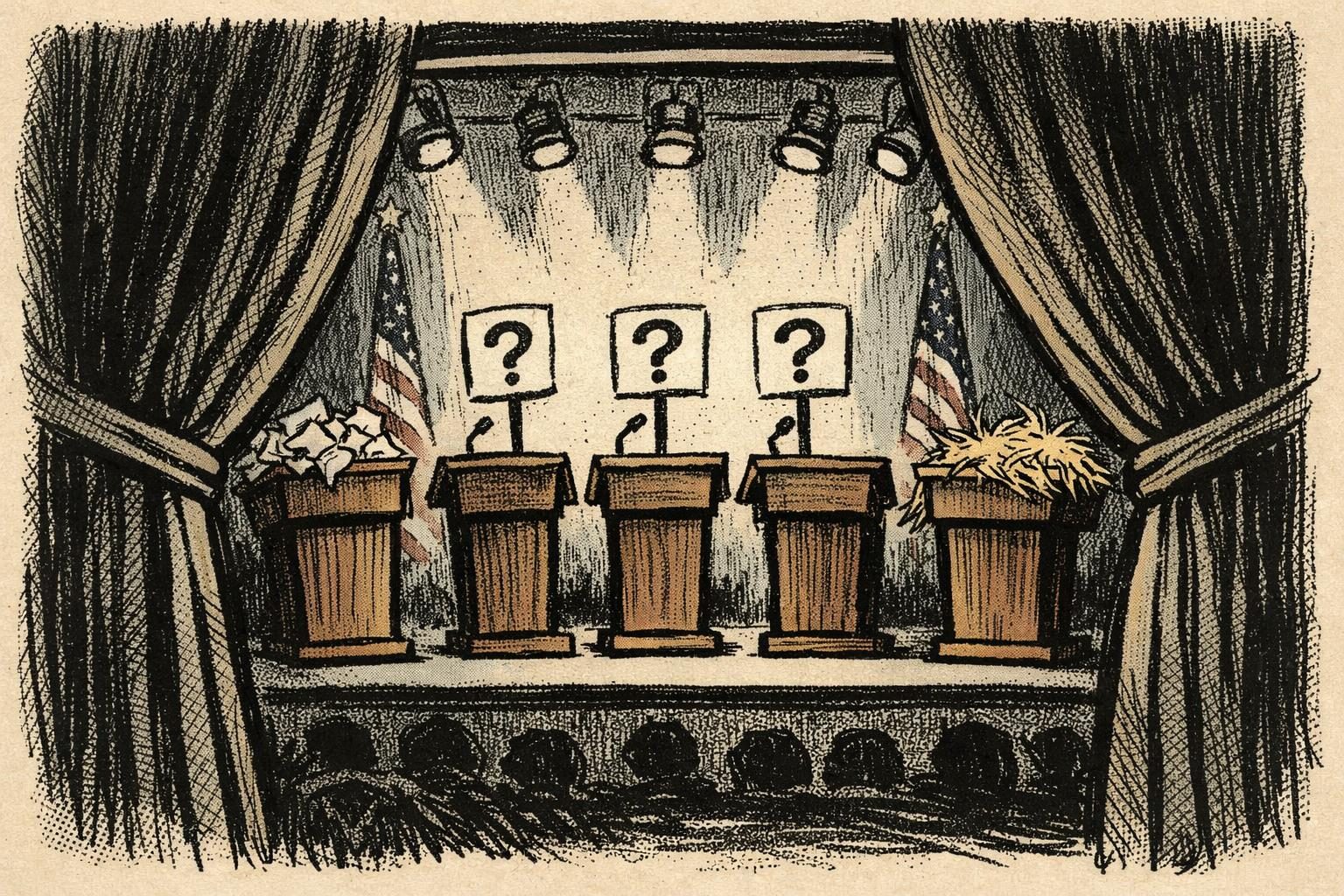
The overnight research window for August 29 and August 30 did not produce five separate political developments that could be cleanly and responsibly turned into a full update package. The material available in the feed pointed to a narrow set of overlapping themes rather than a broad spread of distinct events. A new state lawsuit targeting a Trump administration wind-related action stood out as the clearest fresh item, while federal enforcement and rulemaking continued to generate movement in the background. There were also White House and agency actions that had relevance, but several of them were either too closely connected to one another or too stale to satisfy the standard for a distinct same-day update. Rather than stretch the available evidence into a larger roundup, this edition stays inside the limits of what can actually be supported.
That restraint matters because update mode is meant to capture what materially changed on the current Eastern calendar day or the one immediately before it. It is not supposed to turn a policy trend into a pseudo-burst of breaking developments simply because the overall subject area is active. In a thin news window, it is easy to start slicing one underlying event into multiple angles and presenting those fragments as if they were separate stories. That approach can make a homepage look fuller, but it does not improve the information value for readers. It also creates a risk that the archive starts treating commentary, repetition, and incremental paperwork as if they were news events with independent consequence. When the evidence is thin, the better editorial choice is often to say so plainly.
The clearest reason for caution here is that the strongest items in the available feed were clustered rather than dispersed. The White House fact sheet on President Donald Trump declaring a national emergency to secure the bulk power system points to a significant federal move, but by itself it does not create multiple unrelated update candidates. The same is true of the Office of the Comptroller of the Currency’s ongoing news release stream, which may contain relevant regulatory or supervisory items but does not automatically yield several publishable stories unless the entries are truly distinct in substance and timing. The California attorney general’s announcement of a lawsuit challenging a Trump action is more obviously a standalone development, and it likely deserves coverage on its own merits. Even so, one strong litigation item does not solve the broader problem of breadth. In this window, the available evidence suggested a handful of real developments, not the five discrete and well-supported events that update rules require.
The practical result is a cleaner, narrower edition rather than a padded one. That is not the same as saying nothing happened. Federal agencies were still active, the White House continued to move on energy and system reliability issues, and state officials continued to challenge Trump administration actions in court. It is also not the same as saying the events that did surface are unimportant. They may well shape subsequent litigation, regulatory responses, or political messaging in the days ahead. But an update package has to reflect what has actually changed, not what might later become important if the story develops. In this run, the most defensible editorial position is to acknowledge the limited field, avoid overlap, and keep the archive from pretending there was more breadth than the source material can support. The publisher’s duplicate filter will still do its own review, and any story that survives that process should be genuinely distinct in both event and consequence. For now, the record is straightforward: the Eastern-day window was thin, and the evidence did not justify forcing five separate drafts across the finish line.
Comments
Threaded replies, voting, and reports are live. New users still go through screening on their first approved comments.
Log in to comment
No comments yet. Be the first reasonably on-topic person here.